
Slim Food Waste Disposer: What It Actually Solves in Tight Kitchens
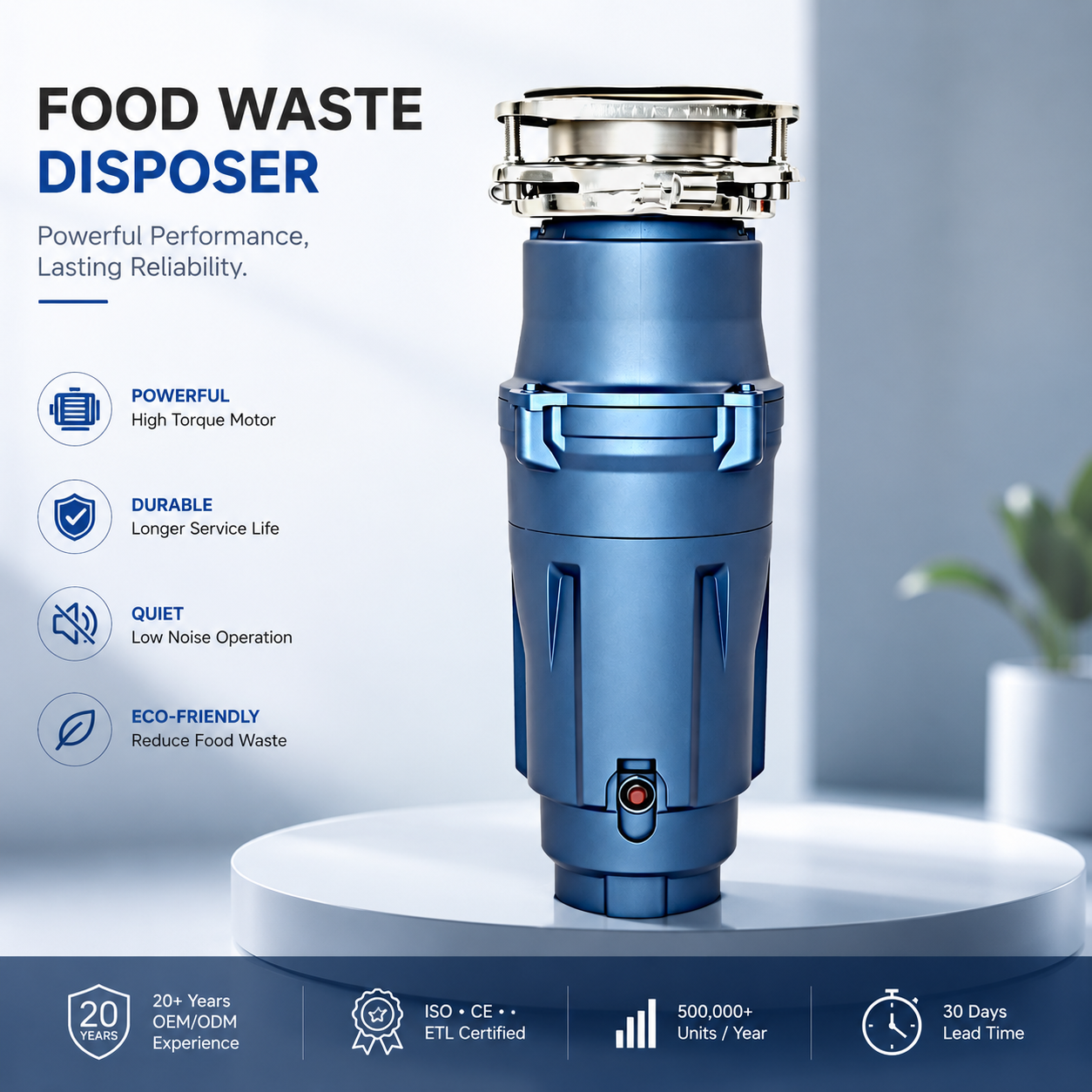
Anyone shopping for a slim food waste disposer usually has the same problem: the cabinet under the sink is already crowded with a water filter, a P-trap, or a stack of cleaning supplies, and a standard unit simply won't clear the pipework. A compact garbage disposal isn't a marketing category, it's a response to a real plumbing constraint. This guide answers the questions people actually search before buying one.
What Makes a Food Waste Disposer "Slim"?
A slim disposer is usually shorter, narrower, or both, than a standard model, with dimensions reduced to help it fit around existing plumbing and limited cabinet space. That difference matters because under-sink clearance, not counter space, is what limits most kitchens. Manufacturers achieve this by changing the housing layout and internal packaging, so the unit still contains a full grind chamber and motor assembly.
Why Do Small Kitchens Need a Compact Disposer?
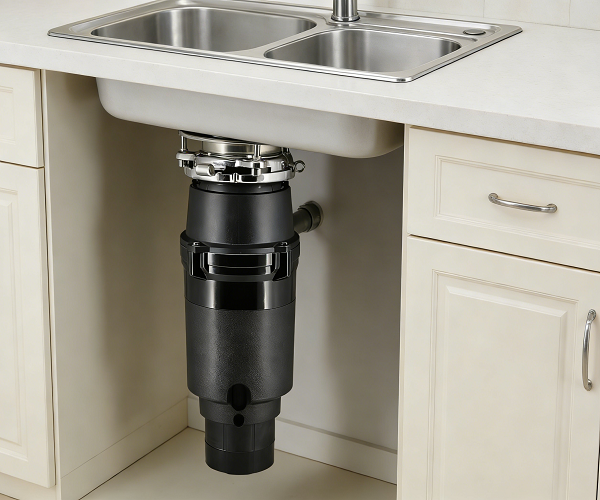
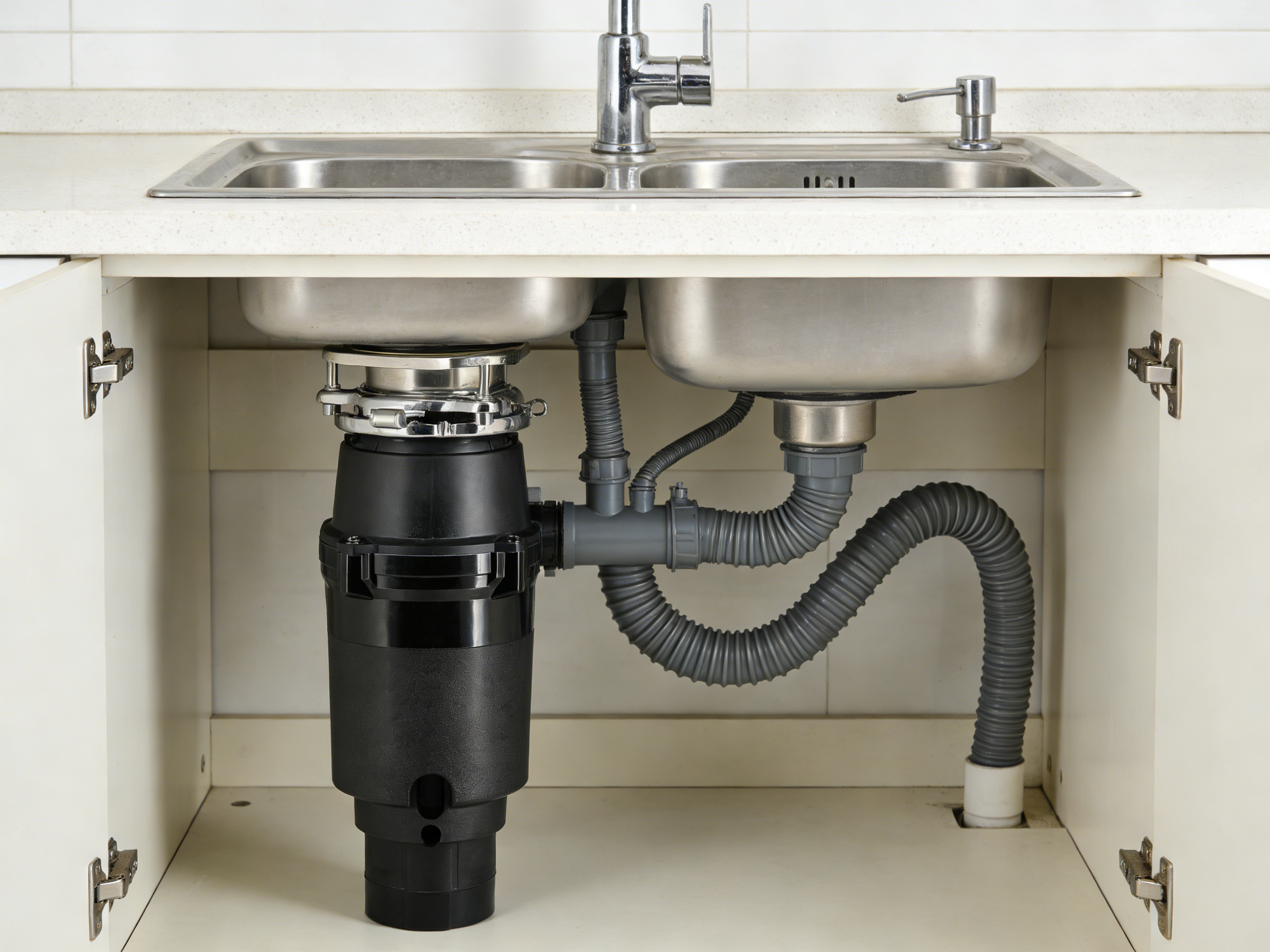
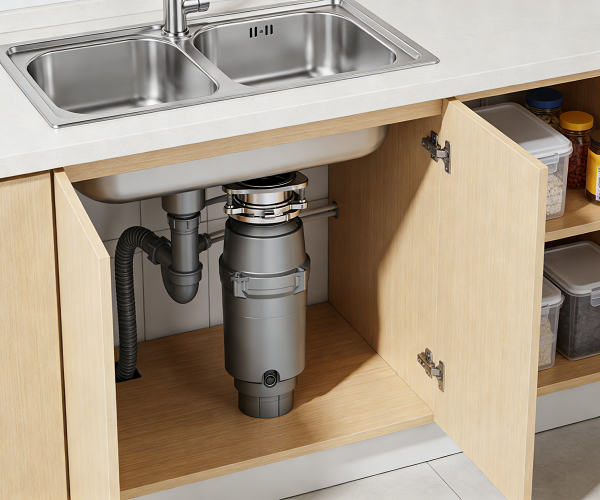
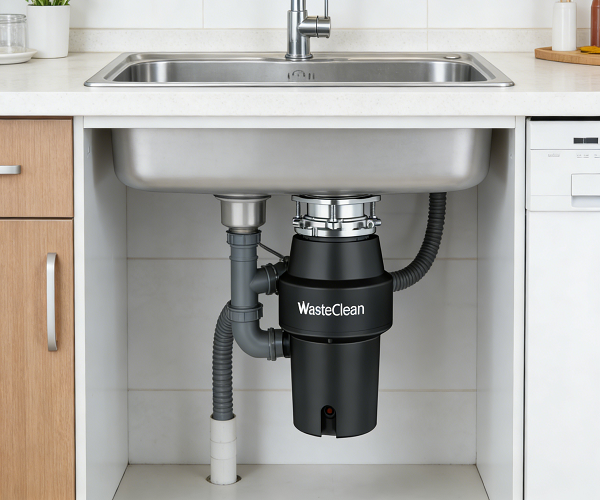
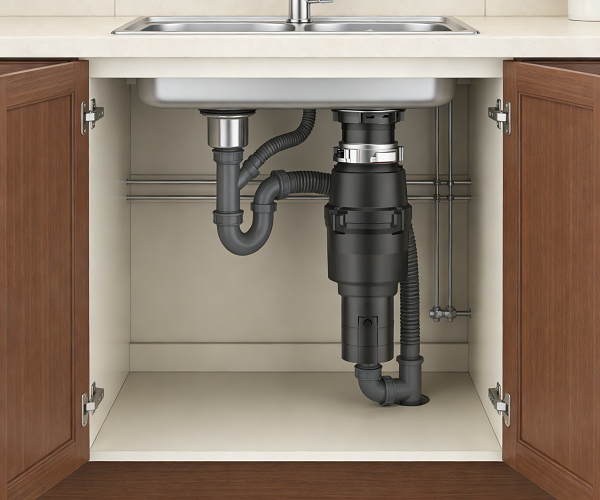
Older homes, apartments, and RVs often have shallow sink cabinets or crowded plumbing layouts that leave very little usable clearance. A standard disposer can collide with the trap arm, the cabinet base, or nearby accessories, and it may leave no practical room for installation or service access. A slimmer housing sidesteps that fight entirely, which is why renovation contractors specify it more often than homeowners realize.
Does a Slim Design Reduce Grinding Performance?
Not inherently. Grinding performance depends on motor output, grinding components, and how the unit handles waste flow, not on housing height alone. A well-engineered slim unit can perform similarly to a larger model in everyday use, though a smaller grind chamber may require feeding waste more gradually, especially with fibrous scraps like celery or corn husks. Think of it less as a weaker tool and more as a shorter one doing the same job in smaller strokes.
| Feature | Standard Disposer | Slim Disposer |
|---|---|---|
| Typical height | Larger overall | Smaller overall |
| Grind chamber volume | Often larger | Often reduced |
| Best fit | Deep cabinets | Shallow or narrow cabinets |
| Motor options | Wide range | Wide range, unit-dependent |
Exact dimensions vary by brand and model, so always confirm against the manufacturer's spec sheet before ordering.
How Much Does a Slim Food Waste Disposer Cost?
Retail pricing for compact units generally sits close to standard models of similar motor class, since the main cost drivers are the motor, grinding components, and materials rather than housing shape alone. Bulk or OEM pricing depends heavily on order volume, voltage configuration, and certification requirements, so a single retail number won't tell buyers much until they get a quote against their actual specification.
What Should You Check Before Buying One?
Three things decide whether a slim disposer actually fits your kitchen:
- Vertical clearance between the sink flange and the cabinet floor or shelf
- Trap arm position, since some units may still need offset plumbing adjustments
- Voltage and plug standard for your region, especially for imported units
For distributors and importers sourcing at scale, manufacturers like us typically support multiple voltage specs, low minimum order quantities, and OEM customization, which matters more than raw price when a slim food waste disposer needs to match a specific market's plug type or certification.
Is a Slim Model Worth It Over a Standard One?
If your cabinet has the clearance, a standard disposer may offer a larger chamber for similar money. But if you've already measured and a standard unit won't clear the trap, there's no meaningful workaround besides choosing a more compact model or changing the plumbing layout. In that specific case, a slim food waste disposer isn't a downgrade, it's the configuration that makes the installation feasible.
Related News
SUBSCRIBE
INQUIRY