
Silent Kitchen Garbage Disposal: Engineering and Design Principles for Modern Kitchen Sinks
The Acoustic Dilemma in Modern Kitchen Design
Open-Concept Living and Kitchen Acoustics
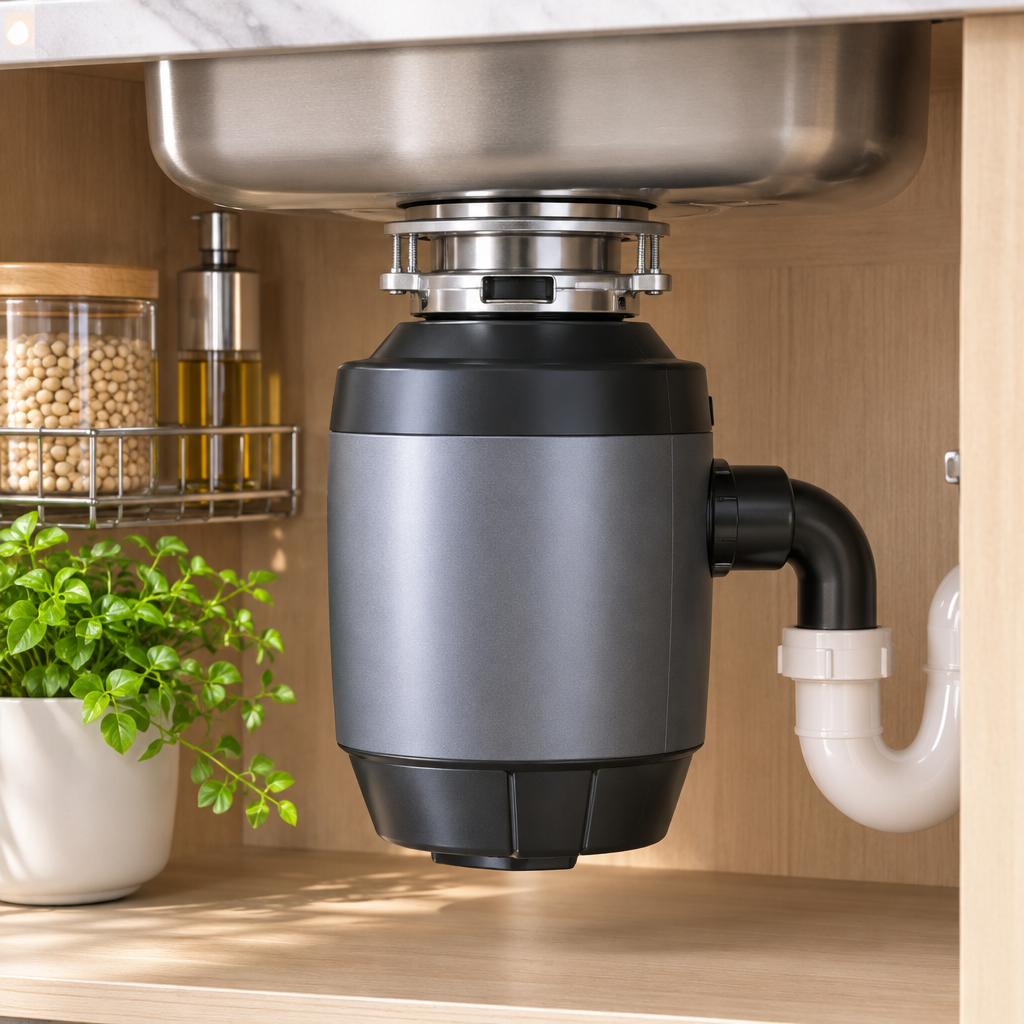
Modern kitchens rarely sit behind closed doors anymore. Walls that once separated meal preparation areas from dining rooms and living lounges have largely disappeared from contemporary residential plans. When someone operates a traditional, uninsulated food waste grinder, the resulting mechanical clatter quickly carries across shared living spaces. Choosing a silent kitchen garbage disposal, a phrase often used to describe low-noise and sound-reduced models, reflects a common homeowner priority to minimize acoustic disruption while maintaining efficient cleanup.
Beyond open-plan houses, compact apartments and hotel guest kitchenettes face similar acoustic constraints. In smaller living footprints, food prep zones sit immediately adjacent to resting or study areas. Sudden spikes in mechanical noise can disrupt phone calls, working routines, or quiet family evenings, particularly where hard tile and stone surfaces reflect sound waves across rooms.
Why Traditional Disposals Turn Sinks into Soundboards
Many users assume that grinding blades produce the bulk of the harsh noise heard during disposal operation. In reality, a standard stainless steel sink basin often behaves like a mechanical soundboard. When an uninsulated motor mounts directly to the drain flange, rotational vibrations transfer into the thin metal bowl, radiating low-frequency mechanical rumble into the kitchen.
Airborne sound waves also escape upward through the open sink drain as waste impacts the grinding ring. Without dense rubber baffles or vibration-damping layers, this acoustic energy projects straight into the room. Addressing under-sink sound requires tackling both structural vibration transmitted through mounting hardware and airborne acoustic waves escaping through the drain opening.
The Physics of Kitchen Acoustics: How Low-Noise Disposers Function
Airborne Sound vs. Structure-Borne Vibration
Managing acoustic levels under a kitchen counter requires separating two primary noise pathways. Airborne sound travels upward from the grinding chamber as food scraps strike the internal grinding mechanism. Structure-borne sound moves physically through the mounting hardware into the sink deck, cabinetry, and attached drain pipes, which can turn cabinet cavities into echo chambers.
To diminish upward sound leakage, sound-reduced disposal systems typically employ a flexible rubber splash shield fitted inside the sink collar. The rubber flaps flex to admit tap water and food remnants while presenting a physical barrier against airborne sound waves. In parallel, surrounding outer sealing chambers help isolate internal mechanical whine before it reaches under-sink cabinet spaces.
Dynamic Balancing Discs and Centrifugal Stability
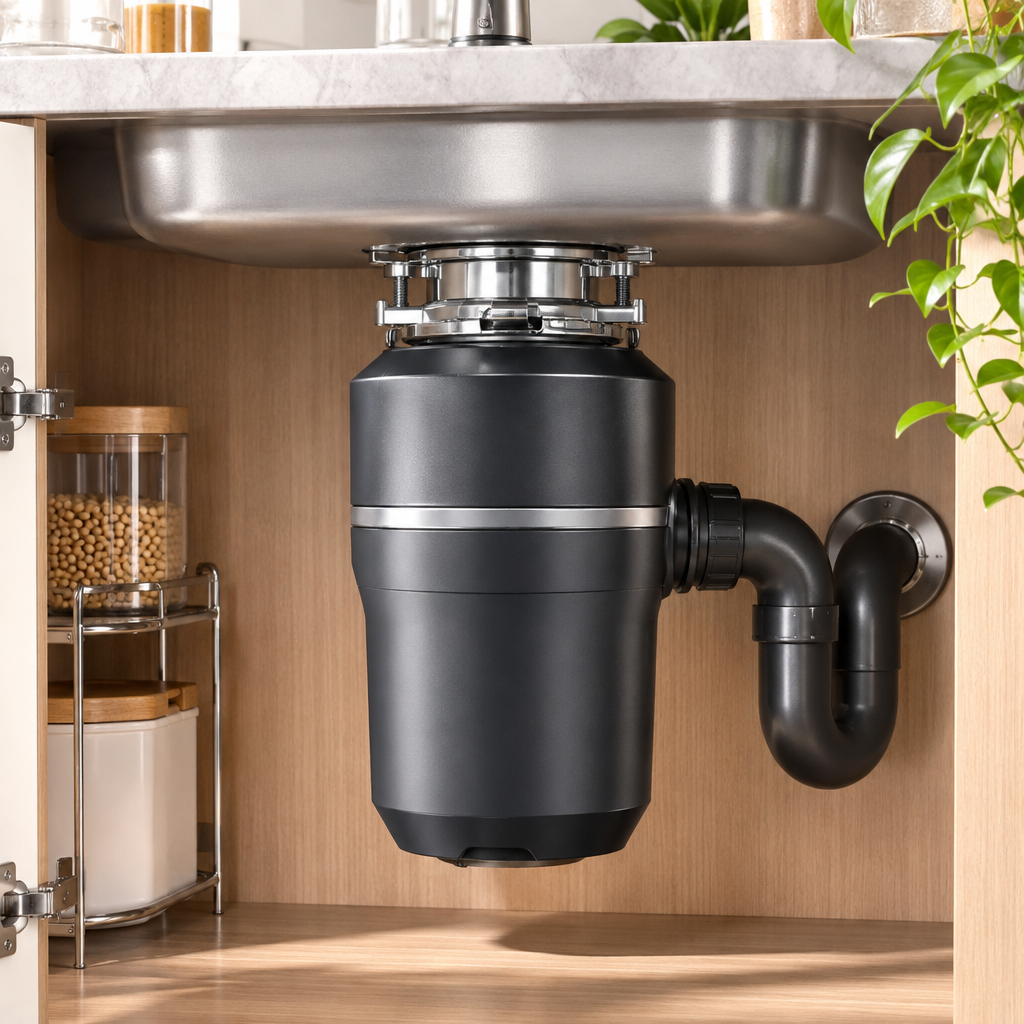
Cabinet vibration does not depend strictly on the overall weight of the motor. A critical operational factor is how evenly mechanical mass balances around the central drive shaft during rotation. If incoming food scraps cluster unevenly against one side of a spinning plate, unbalanced centrifugal forces can cause noticeable housing vibration against the sink flange.
To counter this phenomenon, the manufacturer notes that the Silent Design Household Garbage Disposer incorporates non-jitter balancing technology and a stable dynamic balance grinding disc. According to company technical data, eliminating unbalanced centrifugal force helps stabilize operating torque and supports the breakdown of stubborn food waste, such as bones, while helping curb operational jitter.
Multi-Layer Insulation and Sound-Damping Chambers
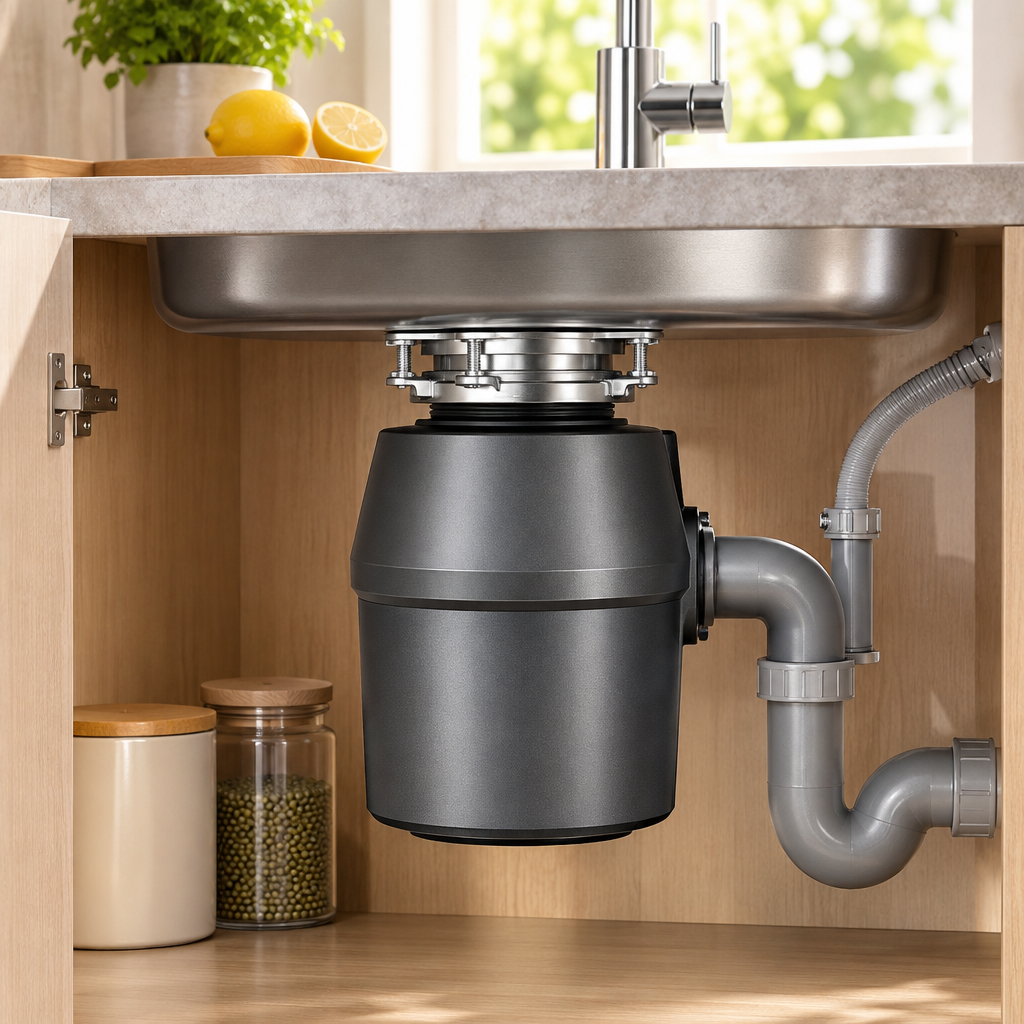
To dampen mechanical noise before it escapes through cabinetry, sound-conscious disposers combine multiple dampening components around the central motor and chamber. While basic appliances may expose a bare outer housing without acoustic treatment, low-noise designs typically implement layered dampening methods across several protective interfaces:
- Thickened sealing chamber: Uses dense housing walls around the grinding core to reduce direct acoustic radiation beneath the counter.
- Soundproof cotton lining: Absorbs motor noise and high-frequency friction sounds within the outer casing enclosure.
- Dynamic balance grinding disc: Stabilizes rotational forces as food scraps strike the rotating impellers.
- Sound-insulating splash shield: Provides a flexible rubber barrier across the sink drain opening to curb escaping airborne noise.
Core Anatomy of a Modern Low-Noise Food Waste Disposer
PMDC Motors vs. Traditional Induction Drives
Motor design directly influences unit dimensions, weight, and operating speed. InSinkErator and other legacy manufacturers often utilize heavy alternating-current induction motors, whereas permanent magnet direct-current (PMDC) motors deliver high operational speeds within a lighter physical envelope. The manufacturer identifies the FCD-320 as using a PMDC motor and lists a 3,500 RPM no-load speed alongside a 2,200 RPM load speed.
Actual starting torque, operating noise, and grinding throughput depend on electrical supply conditions, feed volume, and the physical characteristics of the waste load. These parameters represent the manufacturer's published no-load and load rotational speeds rather than electrical power consumption figures. Electrical specification and circuit planning should be confirmed by checking the rated voltage, current, frequency, plug configuration, and installation guidelines for the specific unit being installed.
Grinding Chambers and Bacteriostatic Surfaces
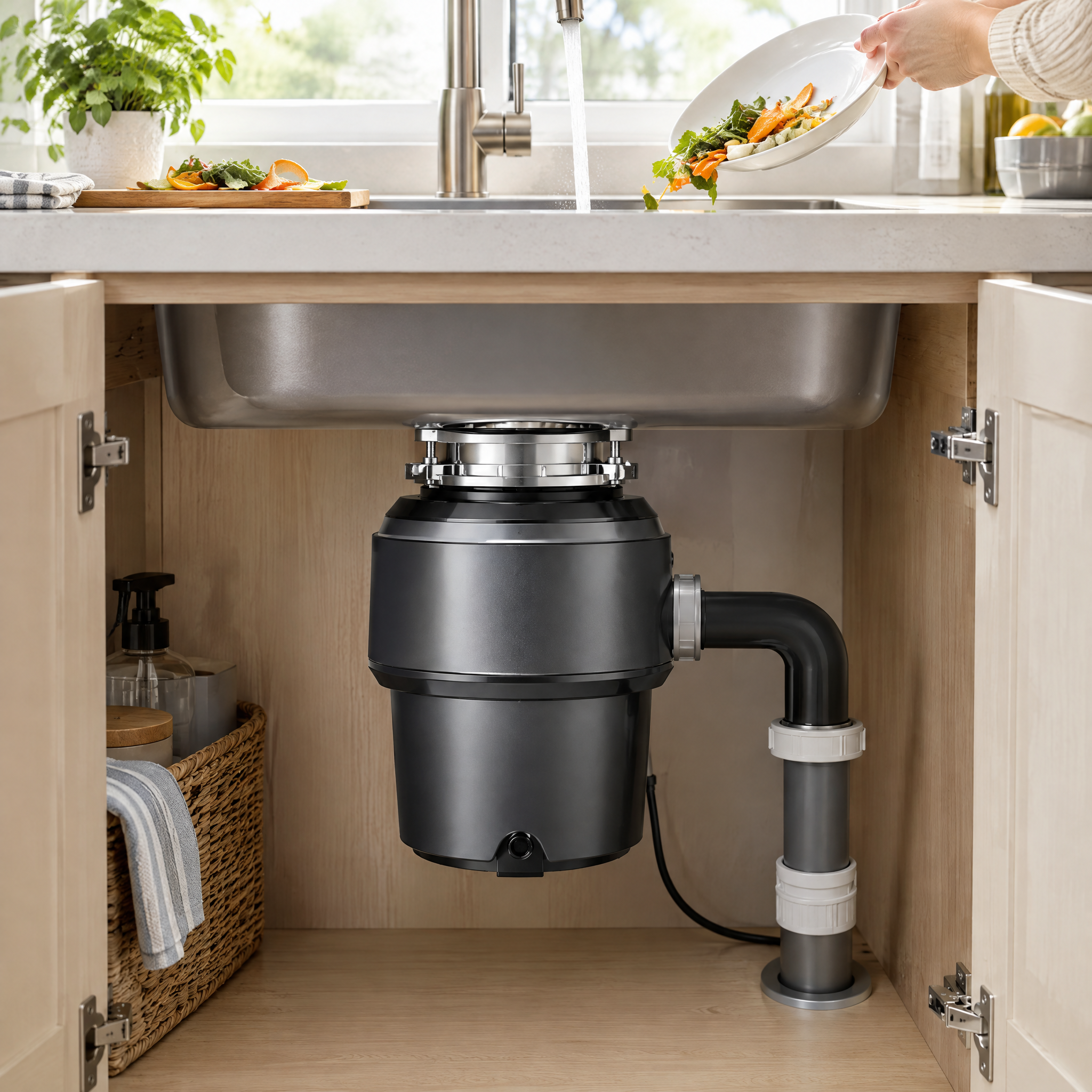
Inside the 1,100 mL chamber, a single-stage grinding system handles residential kitchen food scraps using rotating metal teeth and centrifugal force. Compact external dimensions of 150 by 150 by 370 mm help maintain under-sink clearance for plumbing traps, water filters, or pull-out trash bins, accommodating constrained cabinet layouts where space is at a premium.
The manufacturer states that the specialized chamber material supports 99.9% long-lasting cleanliness through bacteriostatic properties. This rating should not be treated as a complete guarantee against odors or bacterial growth throughout the broader plumbing system, as routine rinsing and sensible waste management remain necessary for long-term kitchen hygiene.
Safe Pneumatic Activation Through an Integrated Air Switch
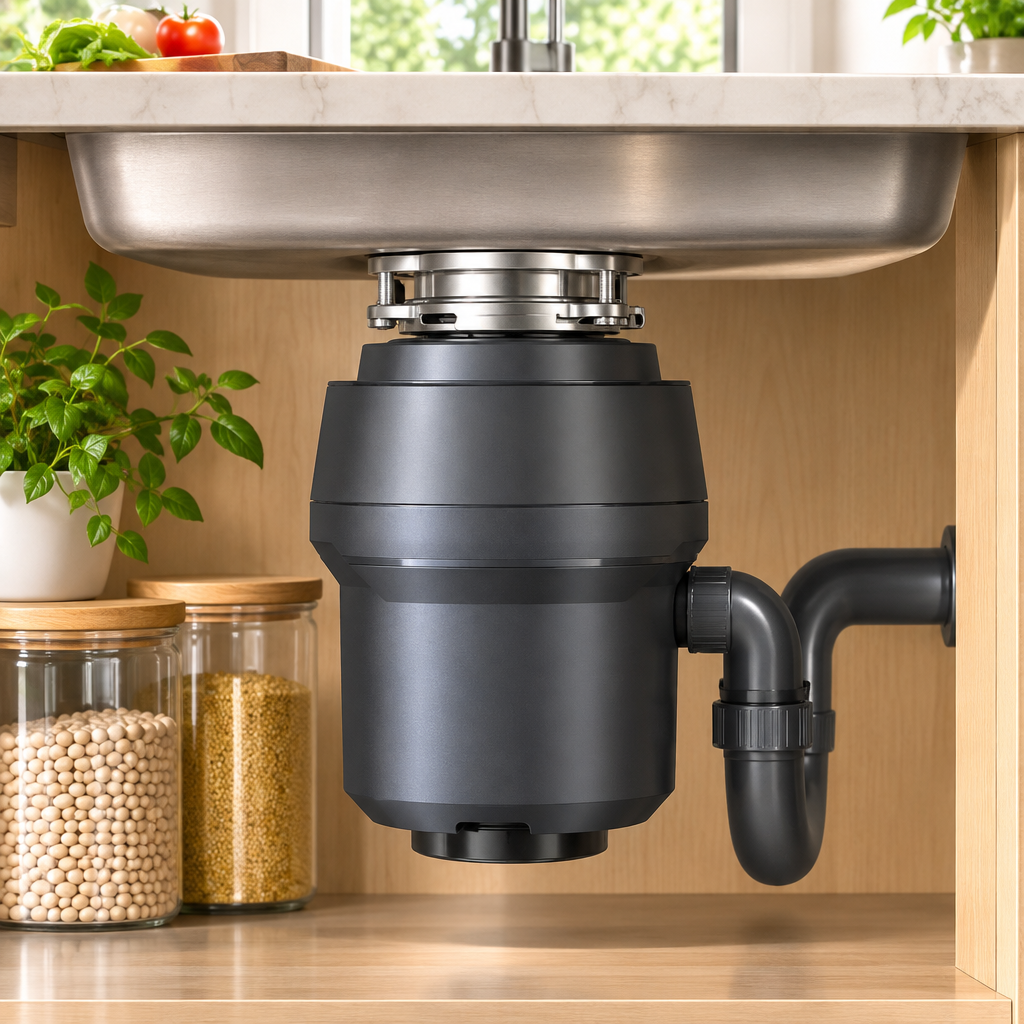
Traditional wall-switch setups require routing electrical wiring across wall studs or along tiled backsplashes near wet sink areas. An integrated air switch places the user-operated countertop control on a pneumatic tube, reducing the need to route a high-voltage electrical wall switch directly to the sink deck. Pressing the button sends an air impulse down the tube to trip the electrical switch inside the disposal base.
While this pneumatic interface simplifies daily operation and accommodates standard sink knockout holes, it does not remove electrical power from the cabinet interior. The disposer's main electrical plug or hardwired power supply must still be installed according to local electrical codes by a qualified installer. Checking cabinet clearance and grounding requirements ensures safe electrical connections near sink plumbing lines.
Engineering Showcase: Inside the FCD-320 Silent Food Waste Disposer
Technical Specifications and Compact Profiles
Evaluating a sound-reduced waste disposer requires looking at verified manufacturer specifications rather than vague advertising claims. The table below lists the published technical parameters for the FCD-320 model, providing useful planning details for contractors, kitchen designers, and global procurement specialists.
| Specification Parameter | FCD-320 Published Value |
|---|---|
| Model Number | FCD-320 |
| Grinding System | 1-Stage Grind |
| Motor Type | PMDC Motor |
| Power Rating | 1/2 HP (370W) |
| Grinding Capacity | 1,100 mL |
| Operating Frequency | 50/60 Hz |
| Manufacturer-Rated Noise Level | 63 dB |
| No-Load Rotational Speed | 3,500 RPM |
| Load Rotational Speed | 2,200 RPM |
| Control Switch | Integrated Air Switch |
| Product Dimensions | 150 × 150 × 370 mm |
| Packaging Dimensions | 229 × 229 × 440 mm |
| Net Weight (N.W.) | 4 kg |
| Gross Weight (G.W.) | 4.6 kg |
The listed net weight is 4 kg, so the sink structure, mounting assembly, cabinet clearance, voltage, plug, and local electrical requirements should all be checked before installation. Its 50/60 Hz motor design accommodates common residential and commercial electrical frequencies across international markets, simplifying technical evaluations for regional property developments and global distribution planning.
Mechanical Balance When Shredding Tough Scraps
Unbalanced grinding forces can lead to motor stalling or loud metallic clatter when dense food scraps enter the machine. The manufacturer says its non-jitter balancing technology increases torque and can process tough food waste like bones by eliminating unbalanced centrifugal forces across the grinding disc.
Independent performance testing protocols vary, so users should follow the model's manual regarding acceptable bone sizes, food types, and feed rates. Introducing scraps gradually with a steady stream of cold tap water ensures smoother mechanical operation, although gradual feeding does not completely eliminate the risk of motor stalling or temporary mechanical jams.
Universal Sink Integration and Dishwasher Connectivity
The product includes a quick-locking flange and an integrated dishwasher interface port. Installers should confirm sink-opening dimensions, mounting compatibility, dishwasher-hose routing, P-trap clearance, and electrical requirements before ordering. The dishwasher port allows appliance discharge water to pass through the grinding chamber, assisting in flushing leftover food sediment away from the unit.
When retrofitting an existing plumbing run, verifying pipe drop and alignment ensures wastewater drains freely away from the disposer outlet. Clear access to the quick-locking flange allows the unit to be mounted or serviced without completely dismantling surrounding cabinet fixtures, provided surrounding water supply lines and drain pipes maintain sufficient clearance.
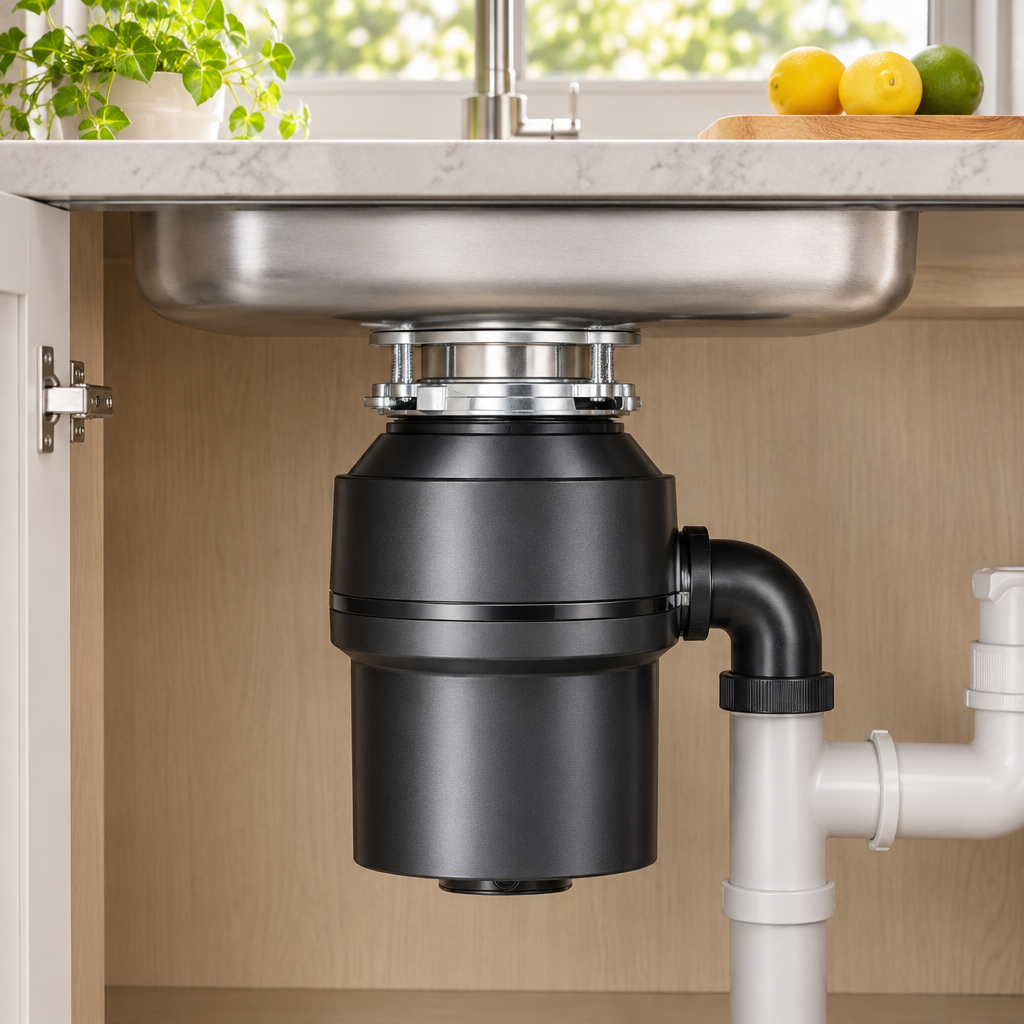
Acoustic Context: Understanding What 63 dB Means Under a Countertop
Decibel Ratings in Everyday Kitchen Environments
Acoustic numbers on a technical specification sheet require context to interpret accurately. The manufacturer lists 63 dB as the rated noise level for the FCD-320; perceived loudness will vary depending on measurement conditions, distance, installation quality, cabinet construction, water flow volume, and the type of food load being ground.
Under normal conditions, a standard kitchen cabinet acts as a partial acoustic enclosure when the doors are shut. Running water contributes to the overall sound heard at the sink; the listed rating alone does not establish how the FCD-320 compares with another model in the same kitchen without standardized test procedures conducted under identical conditions.
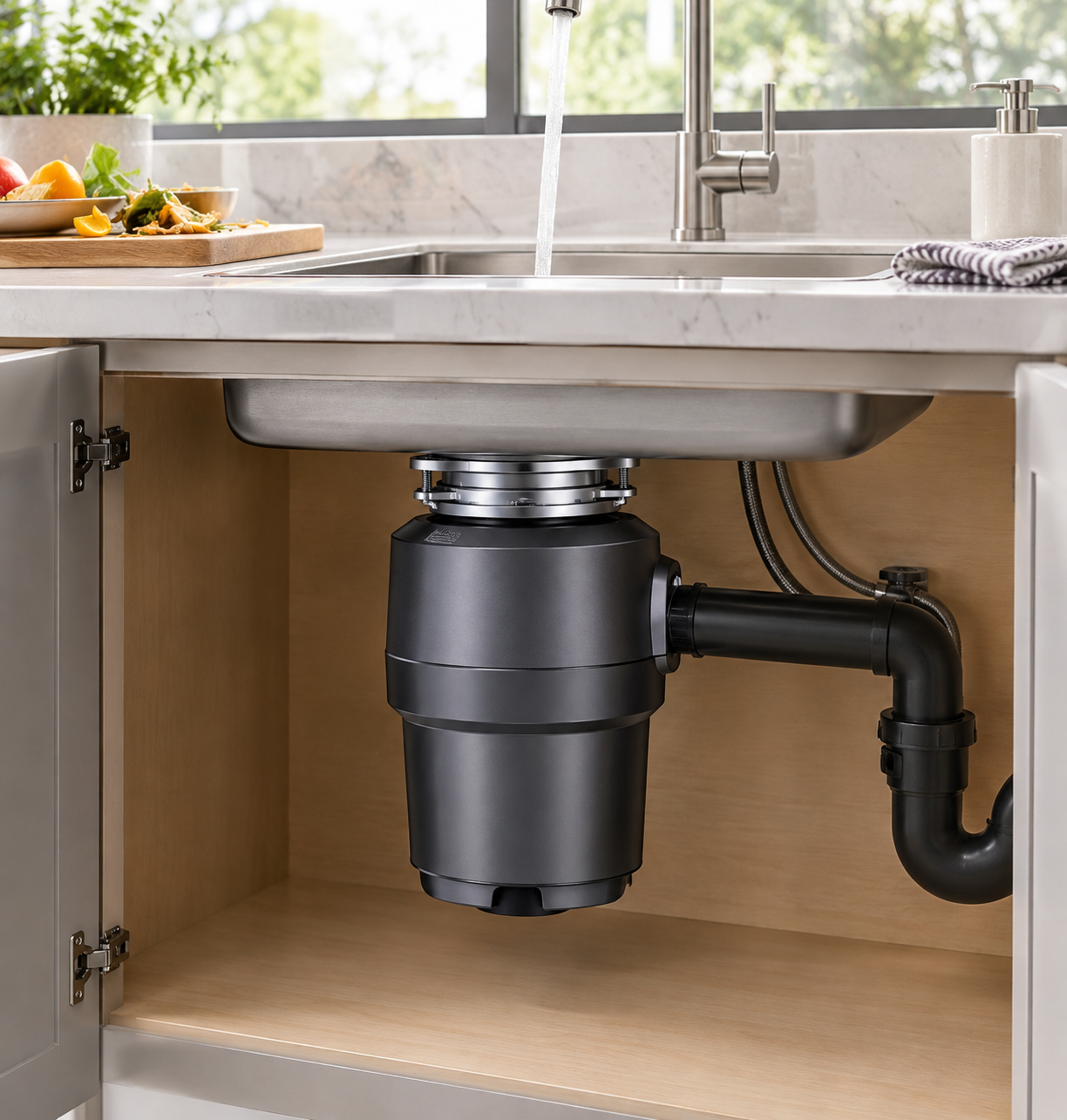
Comparing Quiet-Engineered Units with Standard Uninsulated Models
Understanding how sound-reduced engineering compares with simpler designs helps clarify where acoustic advantages originate. Some entry-level designs may omit sound-damping insulation or specialized balancing components, leading to different operational profiles across varied kitchen layouts. The table below outlines design differences between generalized entry-level designs and the FCD-320 configuration.
| Design Feature | Illustrative Entry-Level Design | FCD-320 Manufacturer Specification |
|---|---|---|
| Housing Construction | Single-wall shell without internal padding | Thickened sealing chamber with soundproof cotton |
| Drain Baffle Design | Basic splash flap | Flexible sound-insulating rubber splash shield |
| Rotational Assembly | Standard grinding disc | Dynamic balance grinding disc with non-jitter technology |
| Countertop Activation | Wall toggle or optional remote kit | Integrated pneumatic air switch |
| Chamber Interior | Standard uncoated chamber surface | Bacteriostatic chamber material (99.9% cleanliness rated) |
| Auxiliary Plumbing | Variable by brand and model | Standard integrated dishwasher interface port |
Installation and Operation Best Practices for Noise Control
Mounting the Quick-Locking Flange Without Cabinet Resonance
Even an appliance with sound-damping features can produce annoying cabinet buzz if installed with loose mounting or strained plumbing. Installers should follow the supplied installation manual and use only the specified gasket or sealant to secure a watertight fit at the sink collar. The following installation steps help maintain proper mechanical alignment:
- Thoroughly clean the sink drain opening and install the approved mounting gasket or sealant specified in the product manual.
- Fasten the quick-locking flange evenly so the disposal unit hangs plumb without tilting or placing uneven stress on the sink bowl.
- Remove the factory knock-out plug inside the dishwasher interface port only if attaching a dishwasher discharge hose.
- Connect slip-joint drain fittings without forcing rigid pipes tightly against cabinet panels, allowing proper alignment with the P-trap.
- Route the flexible air switch tubing smoothly to avoid sharp bends or crimping between cabinet drawers and the disposer body.
Daily Operating Habits That Protect Seals and Suppress Noise
Proper daily operation plays a significant role in minimizing mechanical noise and protecting internal seals. Run cold water while operating the disposer and never pour grease, oil, or fat into it. Hot water melts fats, which can coat drainage pipes further down the line and contribute to stubborn clogs.
Feed food waste gradually and continue running water for several seconds, or the period specified in the installation manual, after grinding stops to flush the drain line completely. As an illustrative scenario, a busy prep pantry that adopts steady cold-water habits avoids unnecessary motor strain and prevents scraps from sitting stagnant inside the chamber.
Manufacturing Capabilities and Custom OEM/ODM Solutions
Two Decades of Specialized Disposer Production
Reliable food waste management solutions depend on structured manufacturing processes and extensive engineering experience. Foshan ZAL Intelligent Home Appliance Co., Ltd. specializes in the research and manufacturing of kitchen food waste disposers, with over 20 years of experience in product research, development, and large-scale production. We provide professional OEM and ODM services to global international brands, importers, and distributors.
Our product range includes over 30 different models, backed by an annual production capacity exceeding 200,000 units. For us, meeting the requirements of global partners involves offering low minimum order quantities, flexible customization options, and broad support for international certifications across multiple voltage and plug configurations, earning the trust of over 30 international brands.
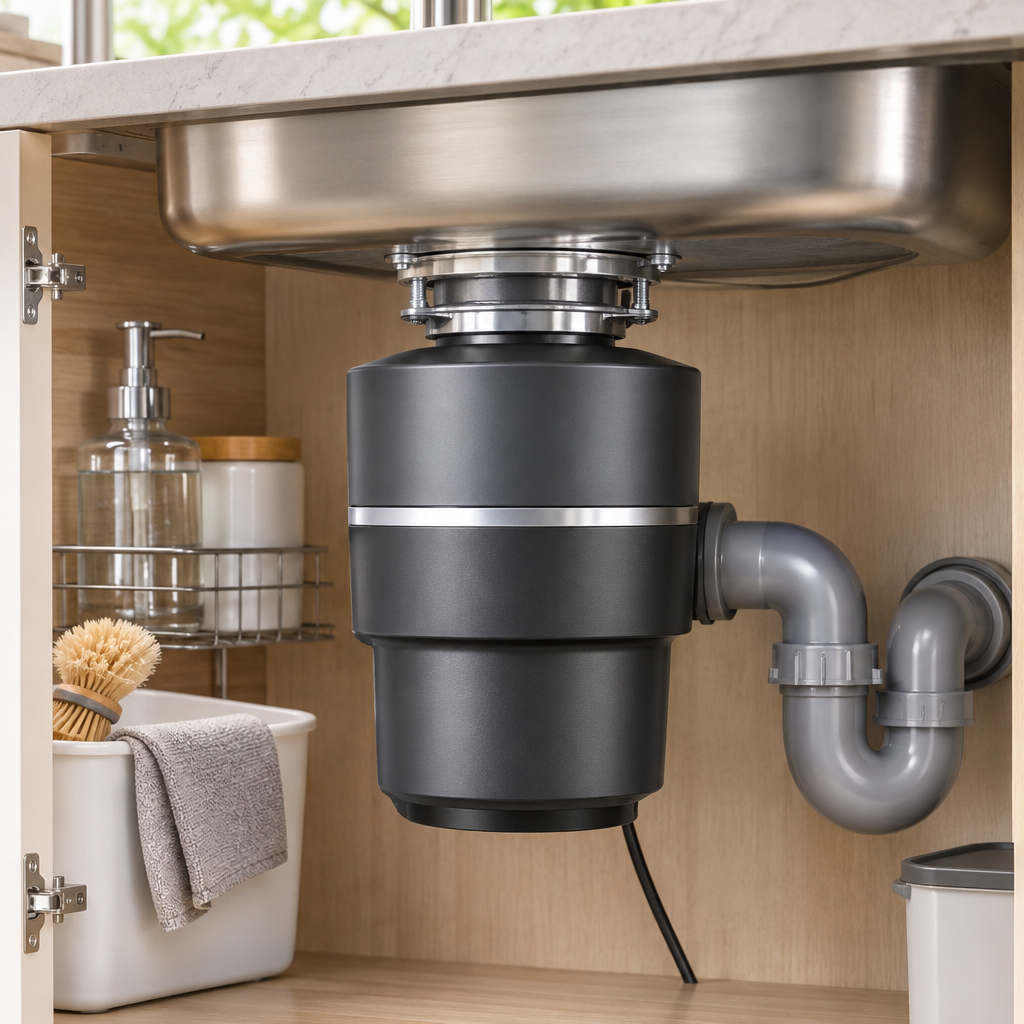
Quality Verification and Aesthetic Customization
The company presents laboratory and production facilities for product testing and inspection, providing dedicated spaces for technical evaluation before products enter commercial distribution channels. Procurement teams should request documentation of the specific mechanical, electrical, and acoustic checks performed for their selected model to verify compliance with local project standards.
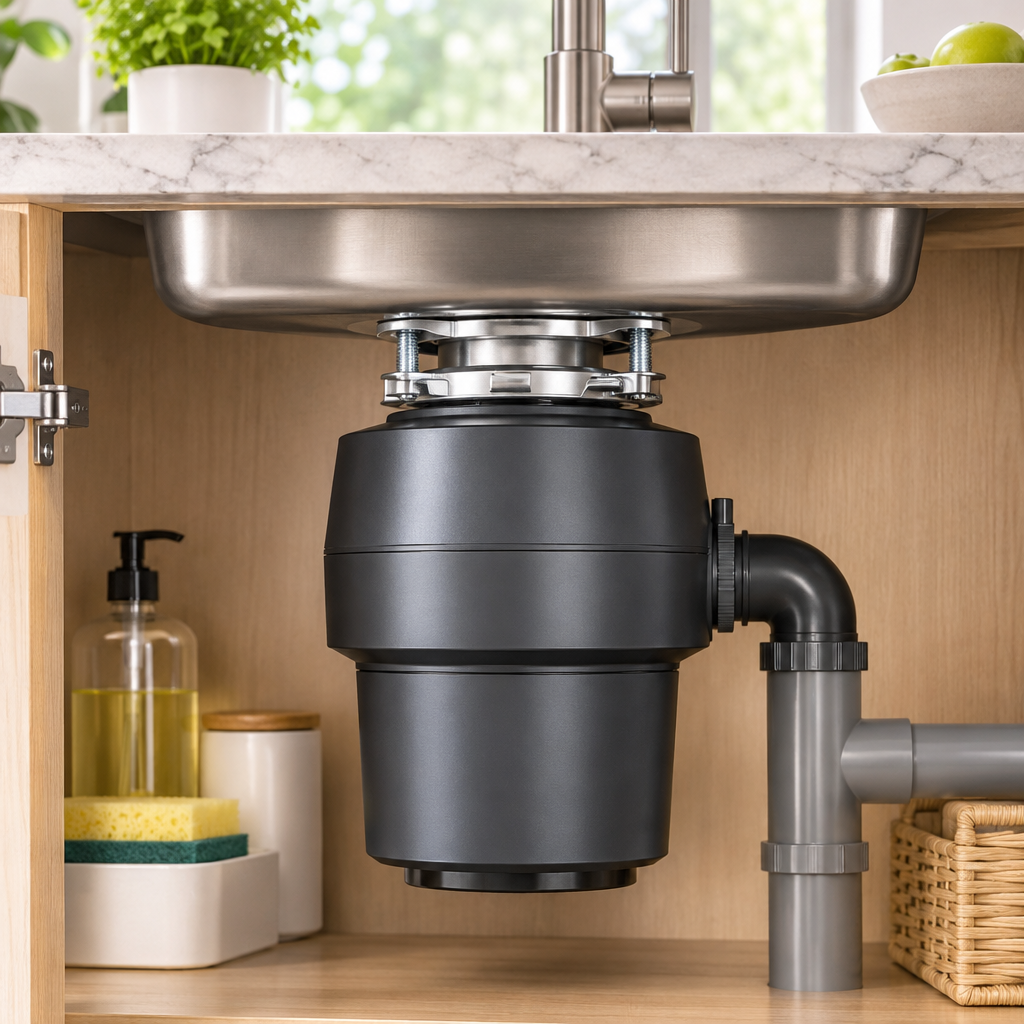
Commercial clients and brand partners often require visual customization to complement modern kitchen interior palettes. Beyond standard matte black housing finishes, OEM programs offer custom exterior shells, such as blue-cased units fitted with metallic mounting flanges. Standardized package dimensions of 229 by 229 by 440 mm streamline warehouse storage and ocean freight logistics.
Frequently Asked Questions
How loud is a silent kitchen garbage disposal during normal operation?
The term silent kitchen garbage disposal is commonly used across the home appliance industry to describe sound-reduced and low-noise models rather than a device with zero acoustic output. For the FCD-320, the manufacturer lists a rated noise level of 63 dB. In home environments, perceived sound levels depend on cabinet enclosure thickness, countertop materials, running tap water, and the density of the food waste being ground.
Can a 1/2 HP compact disposal handle tough food waste like bones?
The manufacturer states that its non-jitter balancing technology increases torque and enables the FCD-320 to process tough food waste, including bones. Users should review the product manual for guidelines regarding bone size and feeding volume. If the model's manual permits a particular type and size of bone, feed it gradually under cold running water; gradual feeding does not eliminate the risk of a jam.
Is a low-noise food waste disposer safe to use with a domestic septic system?
Homeowners with septic systems should exercise caution before installing any food waste disposer. Environmental authorities, including the U.S. EPA, highlight that disposers increase the volume of solids and organic load entering the septic tank, which may require more frequent tank pumping to prevent drainfield damage. Consult a licensed wastewater professional and inspect local regulations before installing a disposer on a private septic system.
Why does the motor speed drop from 3,500 RPM to 2,200 RPM under load?
This speed variation is standard operational behavior for a permanent magnet DC (PMDC) motor when encountering mechanical resistance. The FCD-320 operates at 3,500 RPM under no-load conditions and settles to approximately 2,200 RPM when actively grinding food waste. This rotational transition occurs naturally as internal mechanical resistance increases during waste shredding, reflecting load response rather than an electrical fault.
How should a bacteriostatic grinding chamber be maintained without damaging components?
Although the chamber material is rated by the manufacturer to support 99.9% cleanliness, routine cleaning helps prevent debris accumulation around the rubber splash shield. Avoid pouring caustic drain openers, harsh chemical solvents, or boiling water directly into the disposer, as these can degrade rubber seals. Instead, run cold tap water through the chamber and occasionally grind small citrus peels or ice cubes to dislodge loose particles.
Choosing Quiet Reliability for Everyday Kitchen Living
Balancing Acoustic Comfort with Practical Waste Management
Integrating a sound-reduced food waste disposer changes the rhythm of modern kitchen cleanup. By combining a dynamic balance grinding disc, sound-dampening insulation cotton, and an accessible countertop air switch, sound-reduced engineering mitigates the jarring clatter associated with older kitchen grinders. These features allow homeowners and hospitality staff to clear plate scraps without creating acoustic friction across open living spaces.
Selecting a dependable silent kitchen garbage disposal requires balancing realistic acoustic expectations with verified technical specifications. Inspecting motor type, quick-locking mounting flange specifications, chamber volume, and dishwasher connectivity helps ensure seamless integration into existing plumbing setups. With correct installation, appropriate food loading, and routine care, the listed features of the FCD-320 can reliably serve residential and hospitality kitchens.
Related News
SUBSCRIBE
INQUIRY