
Quiet Garbage Disposals: What Actually Makes a Unit Run Silent
If your kitchen sounds like a construction site every time you run the disposer, you're not imagining it. Quiet garbage disposals exist for exactly this reason, and the difference between a loud unit and a quiet one usually comes down to a handful of design choices rather than luck.
Most homeowners discover the noise problem after installation, not before. A showroom disposer running on display rarely tells you how it will sound against your actual pipes, cabinet material, and sink basin. That mismatch is why noise level deserves more attention during selection than it typically gets.
Why Garbage Disposals Get Loud in the First Place
Noise in a disposer comes from three overlapping sources: the motor spinning at high RPM, the grinding components striking food waste, and vibration transferring into the sink and cabinetry. Cheaper units often skip insulation around the grinding chamber entirely, letting that noise travel straight into your kitchen.
Sink material plays a role too. Stainless steel sinks resonate more than composite or cast iron ones, which is why the same disposer can sound louder in one kitchen than another. No manufacturer can fully control that variable, but a well-engineered unit can at least reduce the noise it generates before it ever reaches the sink.
Motor speed is another factor worth understanding. A disposer running at a lower no-load RPM, closer to 3,800 instead of pushing past 4,500, tends to produce less high-pitched whine. It's a small distinction, but it adds up over years of daily use.
What a Patented Silent Design Actually Changes
Terminology around "quiet" disposers gets thrown around loosely, so it helps to know what's being measured. Decibel ratings matter more than marketing language. One model worth examining here is the FCD-511A, built with a patented silent design and rated at 63dB during operation, according to the product specifications.
That rating places it closer to the sound of a running dishwasher than a blender, which is the practical benchmark most people care about. The reduction comes from how the unit's internal grinding chamber and motor housing are engineered to limit vibration transfer, per the product's technical documentation.
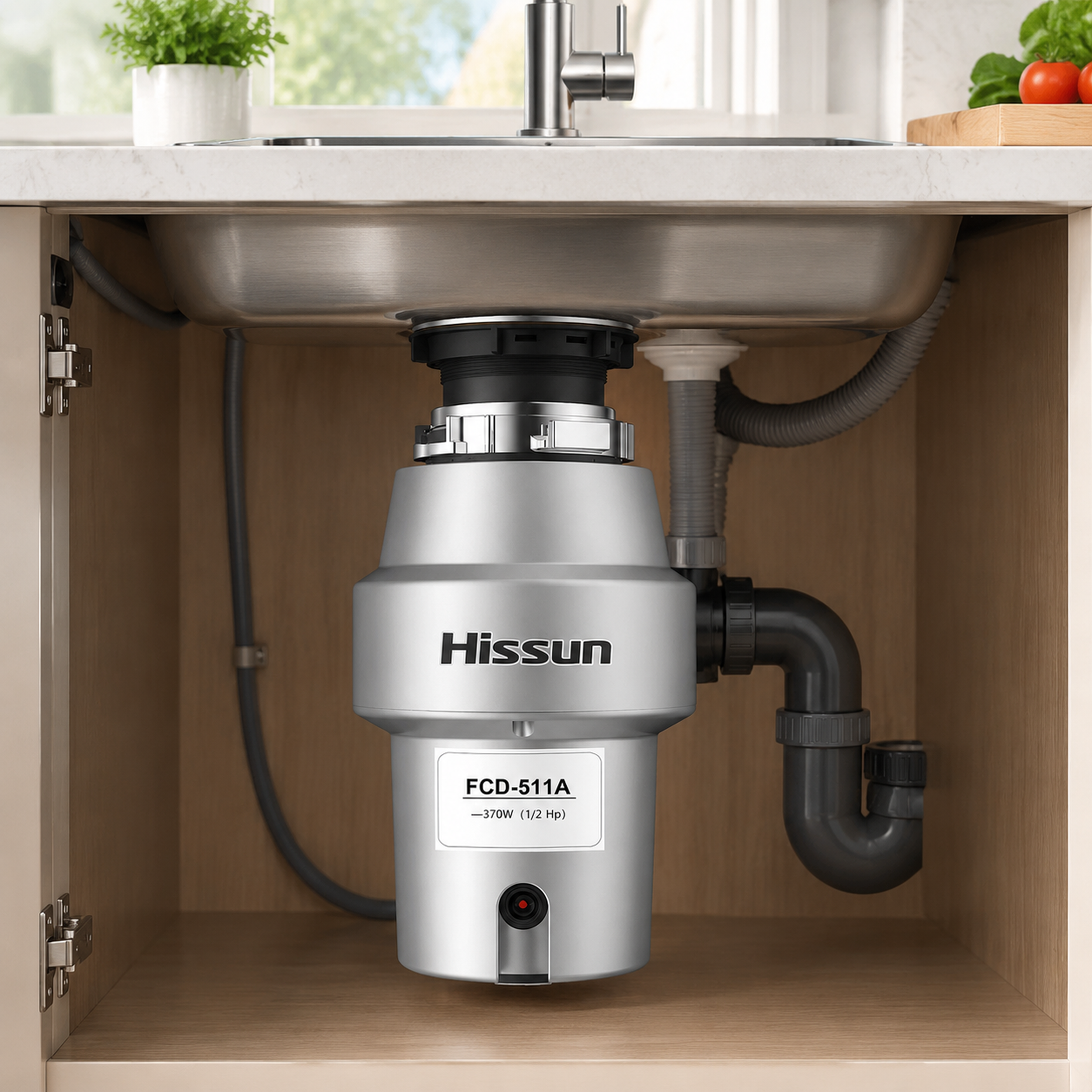
It's worth noting that silent design and grinding power aren't opposing goals. The FCD-511A pairs its noise-reduction engineering with a 1/2HP, 370W motor and a 3-level grinding system, suggesting that quieter operation doesn't have to mean weaker performance.
How the 3-Level Grinding System Works
Food waste disposers generally handle material in one of two ways: a single flat grinding plate, or a staged process that breaks waste down progressively. The 3-level system falls into the second category, using what the product documentation describes as a hammer smash mechanism, a grinding plate, and a cutting ring working in sequence.
Each stage targets a different part of the breakdown process:
- Hammer smash mechanism: Initial impact breaks larger scraps into smaller fragments before they reach the grinding plate.
- Grinding plate: Continues reducing particle size through rotational force against the chamber wall.
- Cutting ring: Refines remaining material into fine particles suited for drainage, per the product documentation.
This staged approach matters for noise too, not just grinding efficiency. Distributing the workload across three mechanisms means no single component has to work as hard, which indirectly supports quieter, more consistent operation over the unit's lifespan.
Comparing Core Specifications
Buying a disposer based on noise claims alone is risky without context. Here's how the FCD-511A's documented specifications line up, giving you a reference point when comparing other continuous-feed models.
| Specification | Detail |
|---|---|
| Motor Power | 1/2HP, 370W |
| Voltage | 120V / 60Hz |
| Noise Level | 63dB |
| No Load RPM | 3,800 |
| Load RPM | 2,500 |
| Grinding Capacity | 1,100ml |
| Flange Material | Stainless Steel + POM |
| Drain Pipe Size | 1-1/2 inch |
| Net Weight | 3.7kg |
The drop between no-load RPM and load RPM, from 3,800 down to 2,500, is a normal result of the motor working against resistance. It's a useful number to check when comparing units, since a motor that struggles too much under load tends to generate more strain noise over time.
Why Stainless Steel Construction Matters for Long-Term Quiet
Noise reduction isn't a one-time feature. It depends on the grinding chamber holding its shape and surface finish over years of grinding bones, fibrous vegetables, and coffee grounds. A stainless steel chamber resists the pitting and corrosion that eventually make older disposers rattle and grind unevenly.
This is a slower-moving problem than most people expect. A disposer that sounds reasonably quiet in its first year can get noticeably louder by year three if the internal components start degrading. Choosing stainless steel over cheaper alloy blends is less about day-one performance and more about whether the unit still sounds the same several years in.
The FCD-511A's grinding chamber is built with stainless steel, and the flange combines stainless steel with POM, a durable engineering plastic. That pairing is common in mid-tier residential units because it balances corrosion resistance with manageable manufacturing cost.
Installation Factors That Affect Perceived Noise
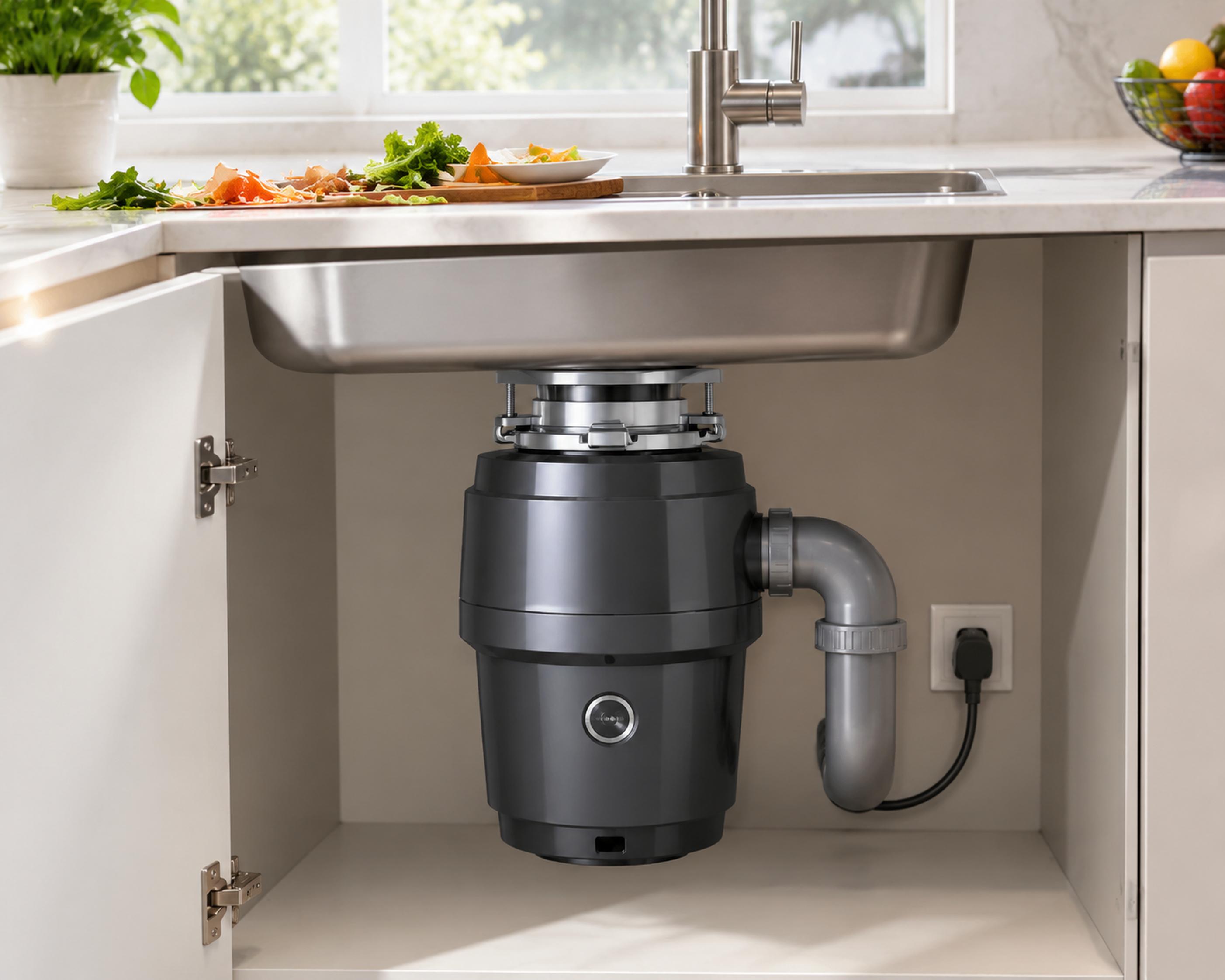
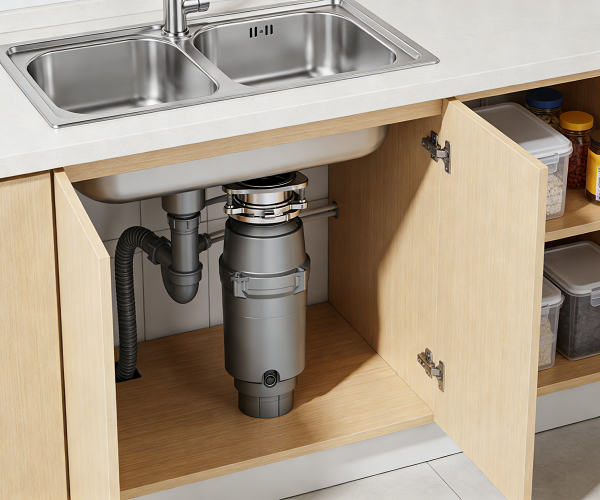
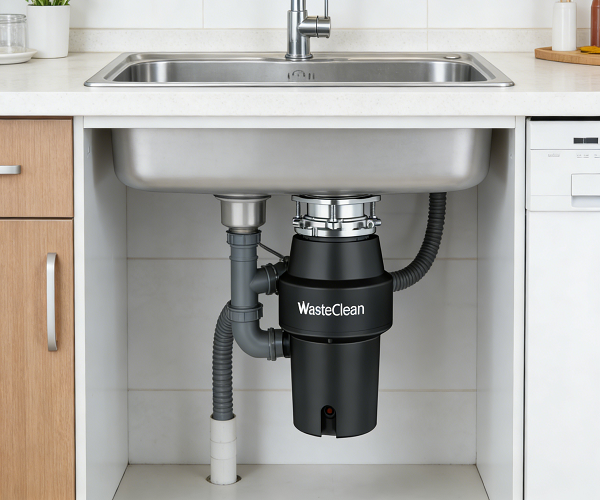
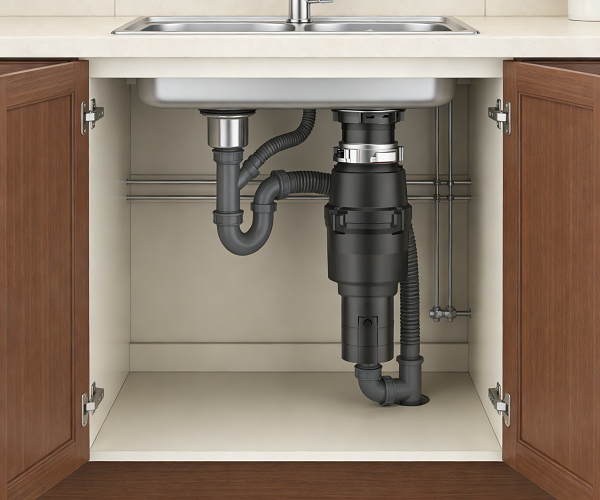
Even the quietest disposer can sound disappointing if it's installed poorly. Loose mounting hardware, missing rubber gaskets, or an improperly seated flange all create extra vibration that has nothing to do with the unit's internal engineering.
Here's what tends to make the biggest difference during installation:
- Flange seating: An EZ Mount flange system should sit flush and tight against the sink opening, with no gap that allows rattling.
- Gasket placement: The rubber gasket between the flange and mounting bracket absorbs vibration before it reaches the sink basin.
- Drain pipe alignment: A misaligned 1-1/2 inch drain connection can create tension that transmits motor vibration into the plumbing.
- Dishwasher port seal: If connecting a dishwasher through the 7/8 inch port, a loose seal here can introduce a secondary buzzing noise unrelated to the disposer itself.
Overload and over-temperature protection also play a quieter role than people realize. These systems shut the motor down before it strains hard enough to produce the grinding whine associated with an overheating unit, which protects both the motor and your peace of mind.
FAQ: Common Questions About Quiet Disposer Performance
Does a lower decibel rating always mean a weaker motor?
Not necessarily. Noise reduction typically comes from chamber insulation and vibration dampening, not reduced motor output. The FCD-511A, for example, pairs its 63dB rating with a 1/2HP motor rather than a smaller one.
Will my sink material affect how quiet the disposer sounds?
Yes. Stainless steel sinks tend to resonate more than composite sinks, so the same disposer can sound different depending on where it's installed.
Is a 3-level grinding system harder on the motor than a single-stage one?
According to the product documentation, the staged design distributes grinding work across three mechanisms, which is intended to reduce strain on any single component rather than increase it.
Do I need professional installation to keep the unit quiet?
Not necessarily, but loose mounting hardware or a poorly seated flange is one of the most common reasons a disposer sounds louder than expected after a DIY install.
Making the Right Choice for a Quieter Kitchen
Choosing between disposer models usually comes down to matching your household's cooking habits with the unit's grinding capacity and noise profile. A household that processes a lot of fibrous waste, like celery or corn husks, benefits more from a multi-stage grinding system than from noise rating alone.
For buyers sourcing at scale, whether for residential retrofits or hotel kitchen upgrades, consistency across units matters as much as the specification sheet. We manufacture the FCD-511A and similar continuous-feed models with stainless steel grinding chambers and documented noise ratings, giving distributors a verifiable baseline rather than a vague marketing claim.
Retrofitting an existing sink drain is one of the more common scenarios where this unit gets installed, largely because the EZ Mount flange system is designed to fit standard sink drain diameters without major plumbing changes. That compatibility matters just as much as the grinding mechanism itself when a replacement needs to happen quickly.
At the end of the day, quiet garbage disposals aren't defined by a single feature. They're the result of motor engineering, chamber insulation, staged grinding, and correct installation all working together, and understanding each piece makes it easier to separate genuine quiet-design engineering from units that are quiet in name only.
Related News
SUBSCRIBE
INQUIRY