
Noise Reduction Garbage Disposal: Engineering, Selection, and Installation Guide for a Quieter Kitchen
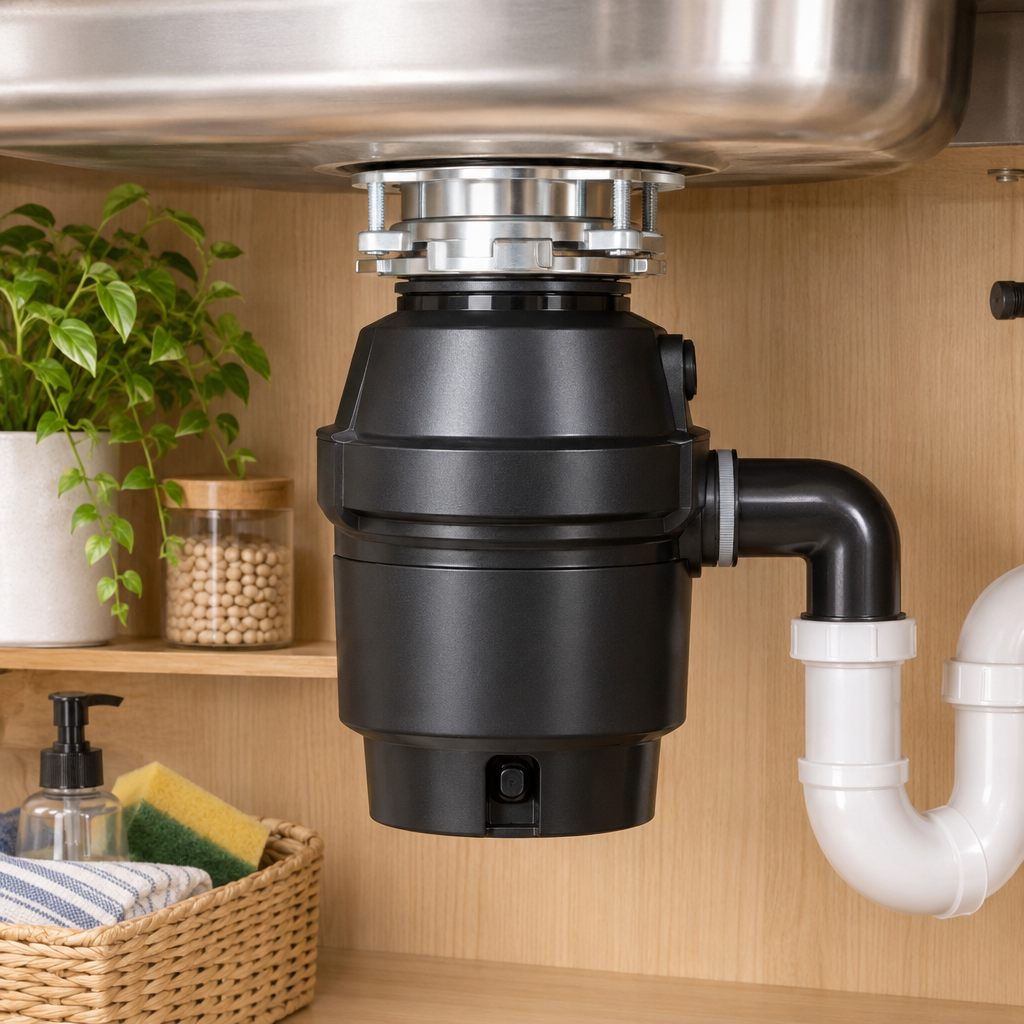
Modern open-concept floor plans have transformed the domestic kitchen into the acoustic heart of the home, where daily meal preparation directly borders adjacent living and dining rooms. In these open spaces, a noisy food waste grinder can rattle the sink deck, produce sharp motor whine, and disrupt regular family conversations. Choosing an effective noise reduction garbage disposal helps maintain acoustic comfort throughout adjoining spaces while handling everyday organic waste cleanly. Achieving satisfactory sound reduction requires an understanding of how airborne sound waves and mechanical vibrations travel through sink materials, mounting collars, and drainage pipes.
Selecting an appropriate model involves evaluating motor performance, internal shredding structures, and proper mounting assemblies that help limit structural hum. When engineered and installed correctly, a quality quiet food waste disposer manages common organic leftovers without subjecting the entire household to excessive mechanical clatter. This technical guide examines the operational dynamics behind continuous-feed waste disposers, reviews verified product specifications, outlines disciplined installation practices, and provides systematic troubleshooting steps to help homeowners keep their kitchens quieter and their plumbing lines clear.
1. Understanding Acoustic Dynamics in Kitchen Food Waste Disposers
A kitchen sink can act much like a sounding board when a mechanical motor is fastened directly against its underside without adequate isolation. The sound produced during normal operation stems from distinct physical pathways, requiring separate engineering approaches to limit how much acoustic energy escapes into the room. Homeowners often notice that identical appliances sound dramatically different depending on whether they hang from a lightweight stamped bowl or a dense composite basin.
Airborne Noise vs. Structural Resonance in Modern Sinks
Airborne sound originates primarily inside the grinding chamber, where motor rotation, shearing food fragments, and turbulent water streams produce mid-to-high frequency waves. These acoustic waves travel upward through the open sink drain collar directly into the surrounding kitchen space. If the drain opening lacks a flexible barrier to impede this upward transmission, the homeowner experiences raw mechanical clatter while the unit operates.
Structural resonance presents a different challenge across residential sink installations. When an electric motor turns under load, slight rotational variations can transfer mechanical energy into the sink basin. Thinner stainless steel basins, such as standard 20-gauge stamped models, vibrate more readily under structural input, radiating low-frequency hums through cabinet sidewalls and adjacent countertops.
Grinding Mechanism Physics: Shredder Rings vs. Cutting Blades
A persistent misconception among homeowners is that household disposers employ sharp, spinning knives to slice food remnants into pieces. In residential plumbing engineering, continuous-feed disposers rely instead on centrifugal force generated by a balanced turntable. This rotating plate spins at high velocity, throwing organic matter against a stationary outer shredder ring.
Swiveling metal lugs mounted to the rotating plate push food scraps across stationary shredder teeth until the material breaks down into a watery slurry. Impact sound occurs when firm scrap particles strike the chamber walls before engaging the grinding lugs. Controlling this impact sound requires durable internal materials and stable housing components that help limit vibration during heavy grinding cycles.
2. Key Engineering Factors Behind a Quiet Garbage Disposal
Limiting operational sound requires multi-tiered acoustic design rather than relying on a single dampening feature. Manufacturers address operational noise by enclosing the motor housing, shielding the sink collar, and decoupling metal-to-metal contact points across the mounting hardware to prevent mechanical vibration from turning the kitchen sink into a sounding board.
Sound Insulation Shells and Acoustic Splash Guards
The exterior housing functions as an important barrier against airborne mechanical noise. Uninsulated entry-level disposers often expose bare metal or lightweight plastic motor housings directly to the cabinet cavity, allowing operational whine to reverberate freely within the enclosed cabinet space beneath the counter.
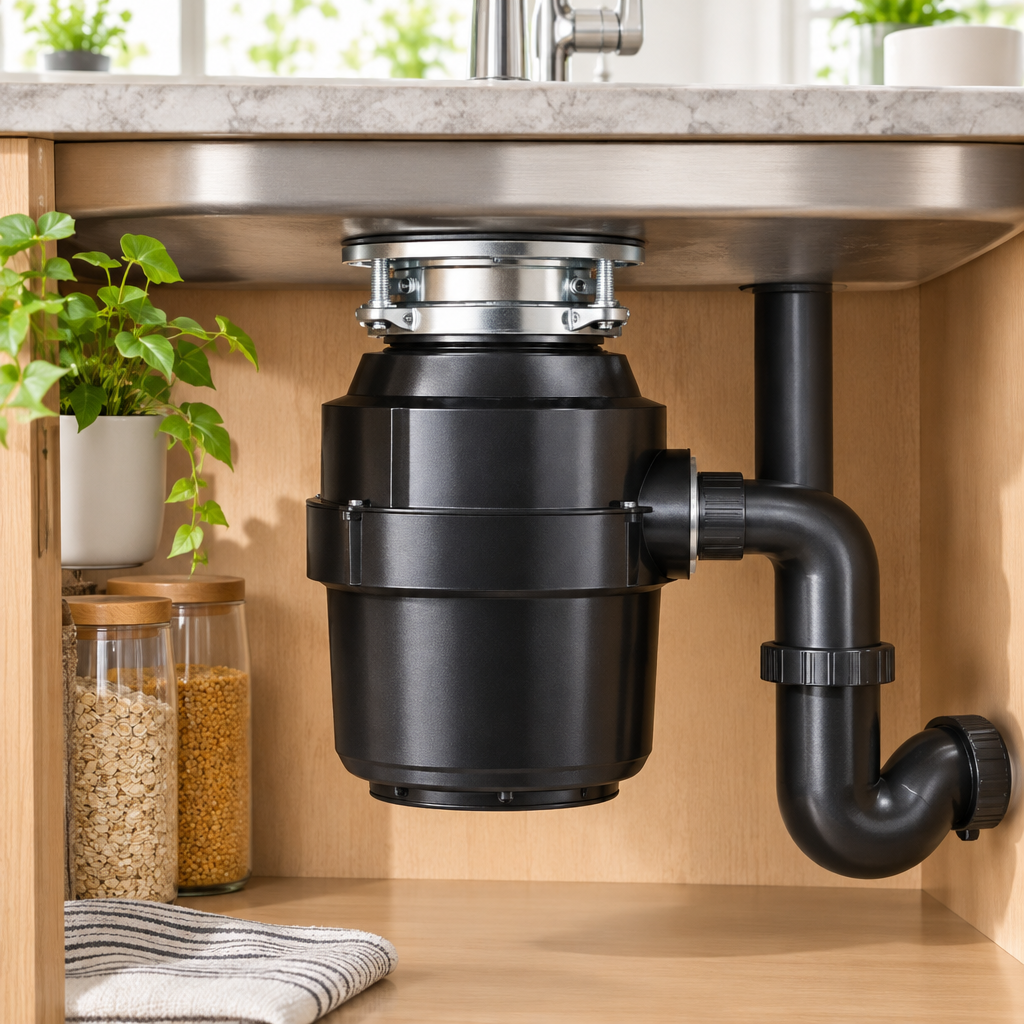
A well-engineered noise reduction garbage disposal typically encloses the internal grinding hopper inside dense composite materials, such as a specialized outer shell designed to contain mechanical sound. At the sink opening, a flexible rubber splash guard acts as an acoustic baffle. This baffle allows food scraps and water to enter the chamber while helping to reduce the amount of sound escaping upward into the room.
Mounting Flange Isolation and Anti-Vibration Rings
Rigid metal-to-metal contact between a disposer body and a metal sink basin provides a direct path for structural vibration. To interrupt this transmission route, low-noise designs incorporate elastomeric isolation gaskets between the mounting flange assembly and the disposer throat, damping rotational movement before it reaches the basin.
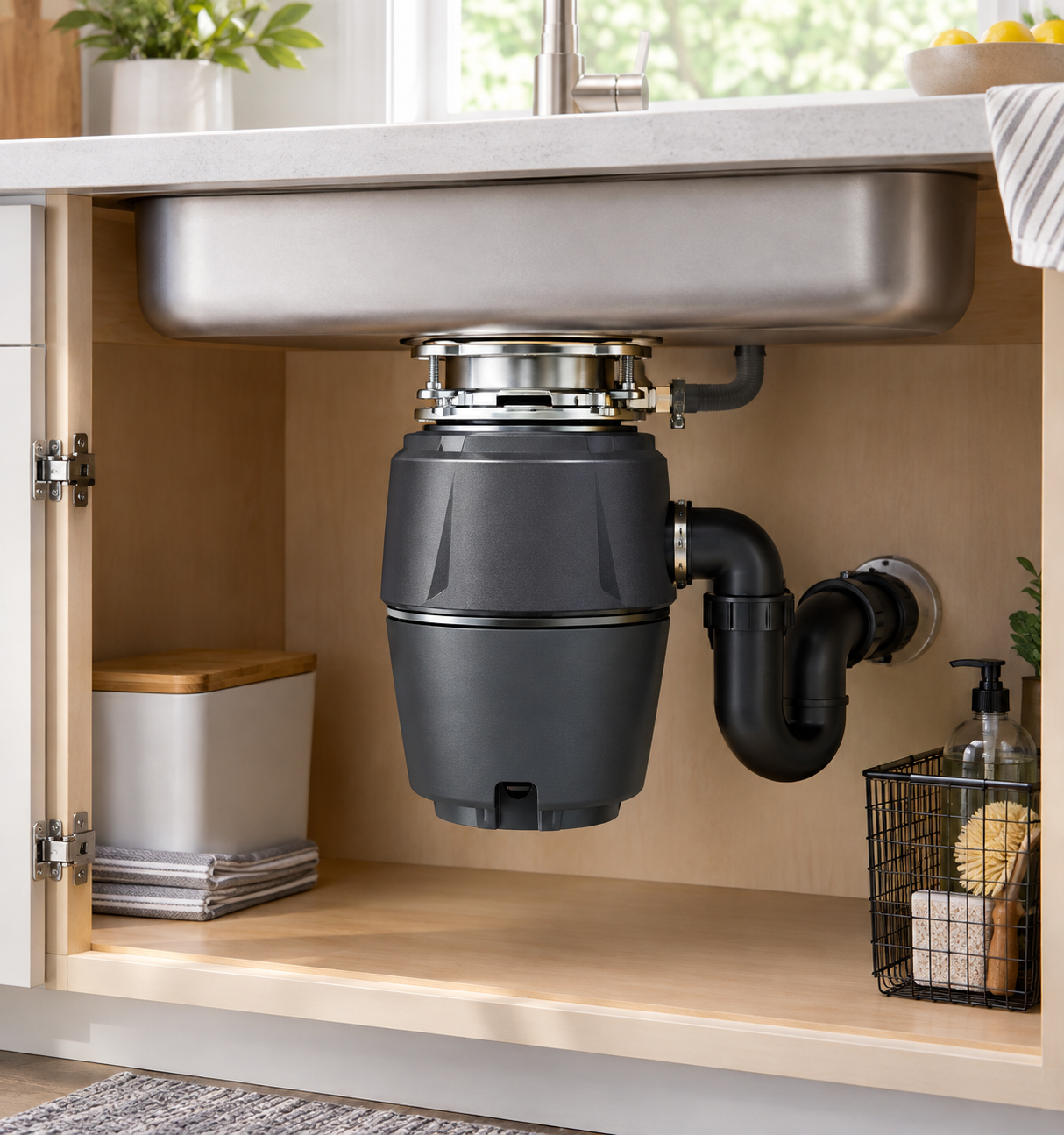
A standard 3-bolt stainless steel mounting assembly provides balanced clamping pressure around the circumference of the sink drain opening. When paired with an anti-vibration cushion ring, the mounting hardware helps isolate the rotational motion of the motor from the basin. This mechanical separation limits the degree to which operational oscillations transfer into the sink deck and surrounding countertop materials.
Motor Power Balance: RPM, Torque, and Grinding Speed
Motor horsepower, rotational speed, and overall motor design work together to shape both grinding performance and the sound heard in the kitchen. When a motor encounters dense food scraps, the load can cause rotational speed to drop, changing the pitch and tone of the sound emitted during operation.
| Motor Horsepower Rating | Target Applications & Scenarios | Grinding Load Considerations | Acoustic & Operational Factors |
|---|---|---|---|
| 1/3 HP to 1/2 HP | Light residential use and smaller households | Suitable for soft plate scraps and light vegetable trimmings | May experience larger speed drops under heavy loads; verify specifications per model |
| 3/4 HP (560W) | Standard to demanding family kitchens | Capable of processing dense vegetable skins and small scrap bones only where expressly permitted by the model's instructions | Balances rotational power and processing speed; verify sound ratings per model |
| 1.0 HP or greater | High-volume residential kitchens | Handles large batches of dense scraps | Intended for high-demand residential meal preparation; overall sound level depends on housing insulation and mount design |
Because actual operational speeds, permissible food categories, and acoustic outputs vary across specific products, buyers should consult manufacturer performance documentation rather than relying on horsepower ratings alone. A well-matched motor processes daily kitchen scraps steadily, helping to limit the duration of noticeable sound during cleanup.
3. Case Study: Technical Architecture of the Wasteclean FCD-713A
Reviewing published product parameters demonstrates how acoustic insulation and mechanical components come together in residential appliances. The Wasteclean FCD-713A model provides a documented reference point for 3/4 HP food waste disposers designed with sound reduction features, offering an opportunity to analyze how specific housing choices and internal structures interact in real household installations.
Structural Material Configuration and 1-Stage 3-Level Grinding
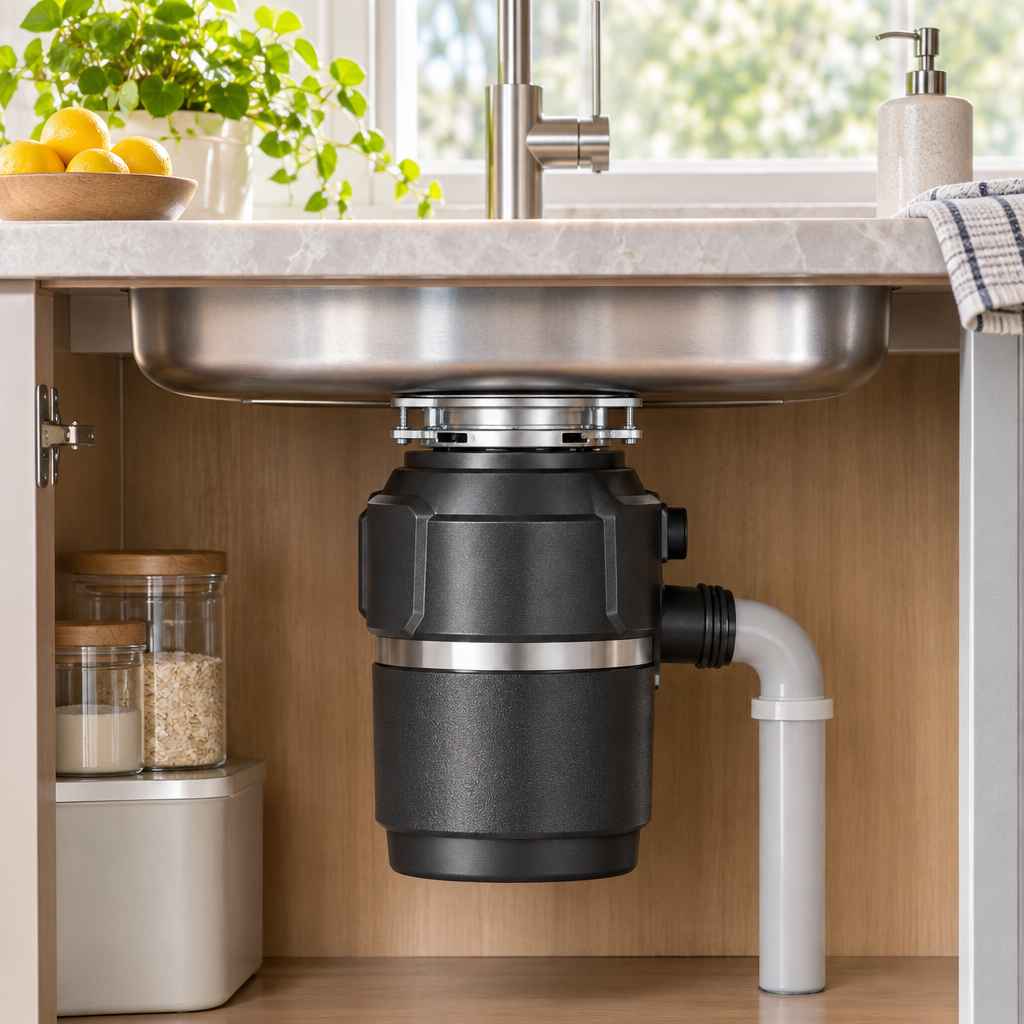
Built with specific structural plastics and metals, the Wasteclean FCD-713A incorporates durable materials across its mechanical assembly. The internal hopper core is constructed from PA66 reinforced with 35% glass fiber (PA66+GF35%), providing a rigid enclosure that withstands continuous mechanical stress during food processing.
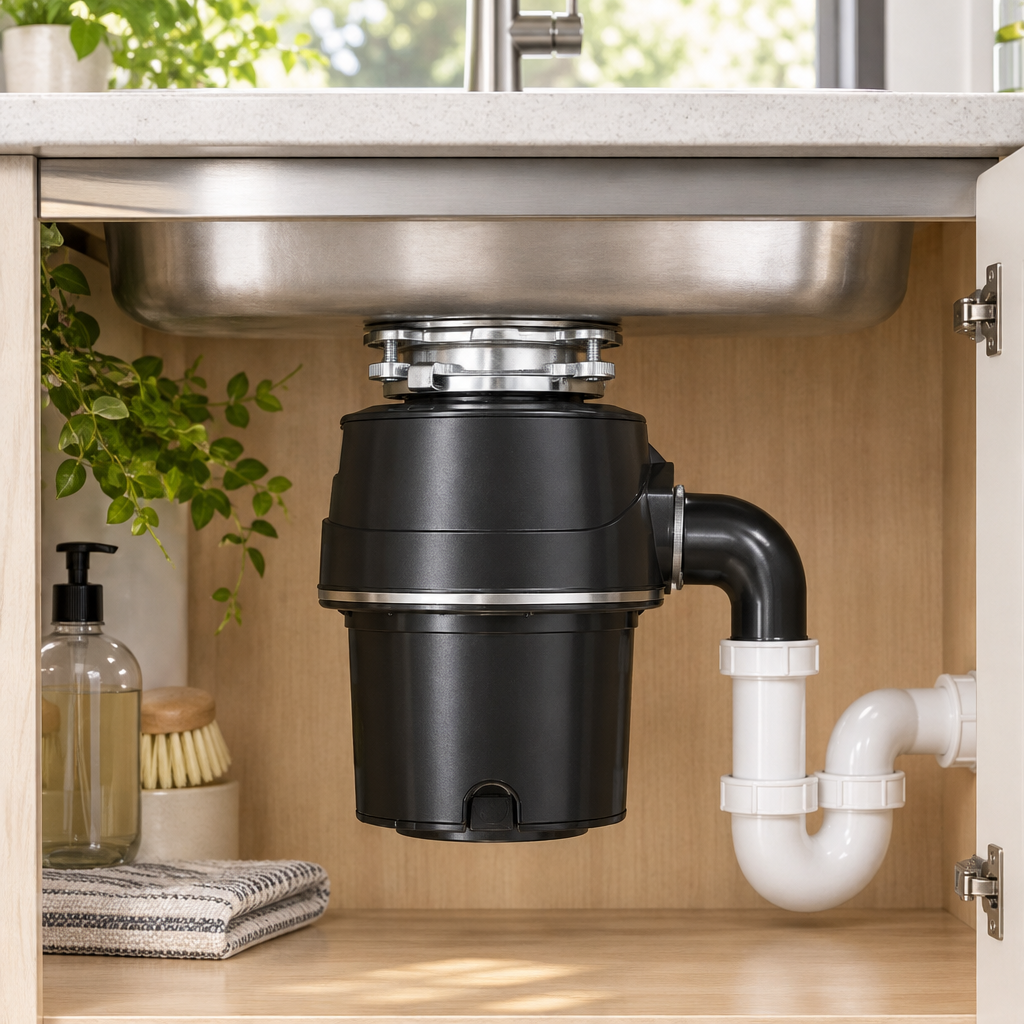
Surrounding this reinforced hopper is an ABS outer shell designed to enclose the internal motor and grinding chamber. Inside the unit, a 1-stage 3-level stainless steel grinding system breaks down food waste without relying on sharpened cutting blades. The stainless steel grinding components resist corrosion from organic food acids, maintaining structural integrity across repeated household grinding cycles.
Technical Specifications Overview
The operational capabilities, electrical requirements, and physical dimensions of the Wasteclean 0.75 HP model are summarized below based on manufacturer technical documentation:
- Model Designation: FCD-713A
- Motor Power Rating: 3/4 HP (560 Watts)
- Operating Voltage & Frequency: 120V / 60Hz
- Manufacturer Stated Noise Level: 61 dB (test conditions are not specified in the supplied documentation)
- Internal Grinding Capacity: 1,200 ml
- No-Load Rotational Speed: 4,000 RPM
- Loaded Operational Speed: 2,700 RPM
- Grinding System Architecture: 1-Stage 3-Level Stainless Steel
- Mounting Flange Material: Stainless Steel (SS) 3-Bolt System
- Hopper Structural Material: PA66 + GF35%
- Outer Shell Material: ABS Outer Shell
- Overall Dimensions: 182 mm × 182 mm × 352 mm
- Net Appliance Weight: 5.4 kg
- Dishwasher Connection Port: Manufacturer-listed 7/8-inch connection
Operational Safety and System Protection
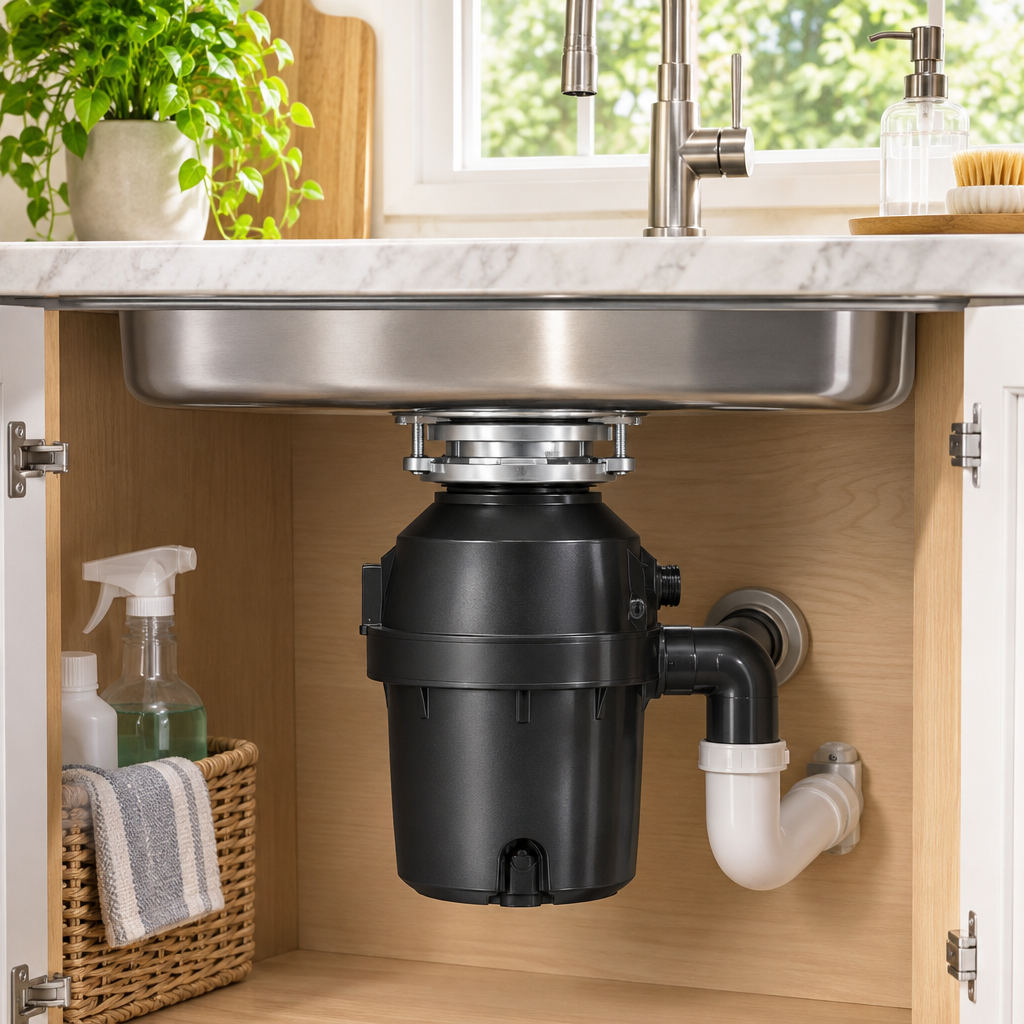
Continuous-feed operation requires protective safeguards against excessive mechanical resistance and high operating temperatures. If foreign debris or an oversized scrap load binds the grinding mechanism, motor temperatures can rise rapidly unless protected by automatic control systems. The FCD-713A includes built-in overload and over-temperature protection systems designed to cut power under abnormal operational stress, requiring inspection and resetting per the user manual.
As an enterprise, Foshan ZAL Intelligent Home Appliance Co., Ltd. specializes in the research and manufacturing of kitchen food waste disposers, with over 20 years of experience in product research, development, and large-scale production, supplying global OEM and ODM brand partners across international markets.
4. How to Choose the Right Low-Noise Food Waste Disposer
Selecting an appropriate sound-attenuated disposer requires verifying physical under-sink space, electrical infrastructure, and domestic plumbing connections before beginning installation. Homeowners must balance sound-dampening shell dimensions with available cabinet room to ensure regular maintenance remains straightforward and accessible, especially when competing with water filtration tanks and pull-out trash bins.
Under-Sink Clearance and Dimensional Verification
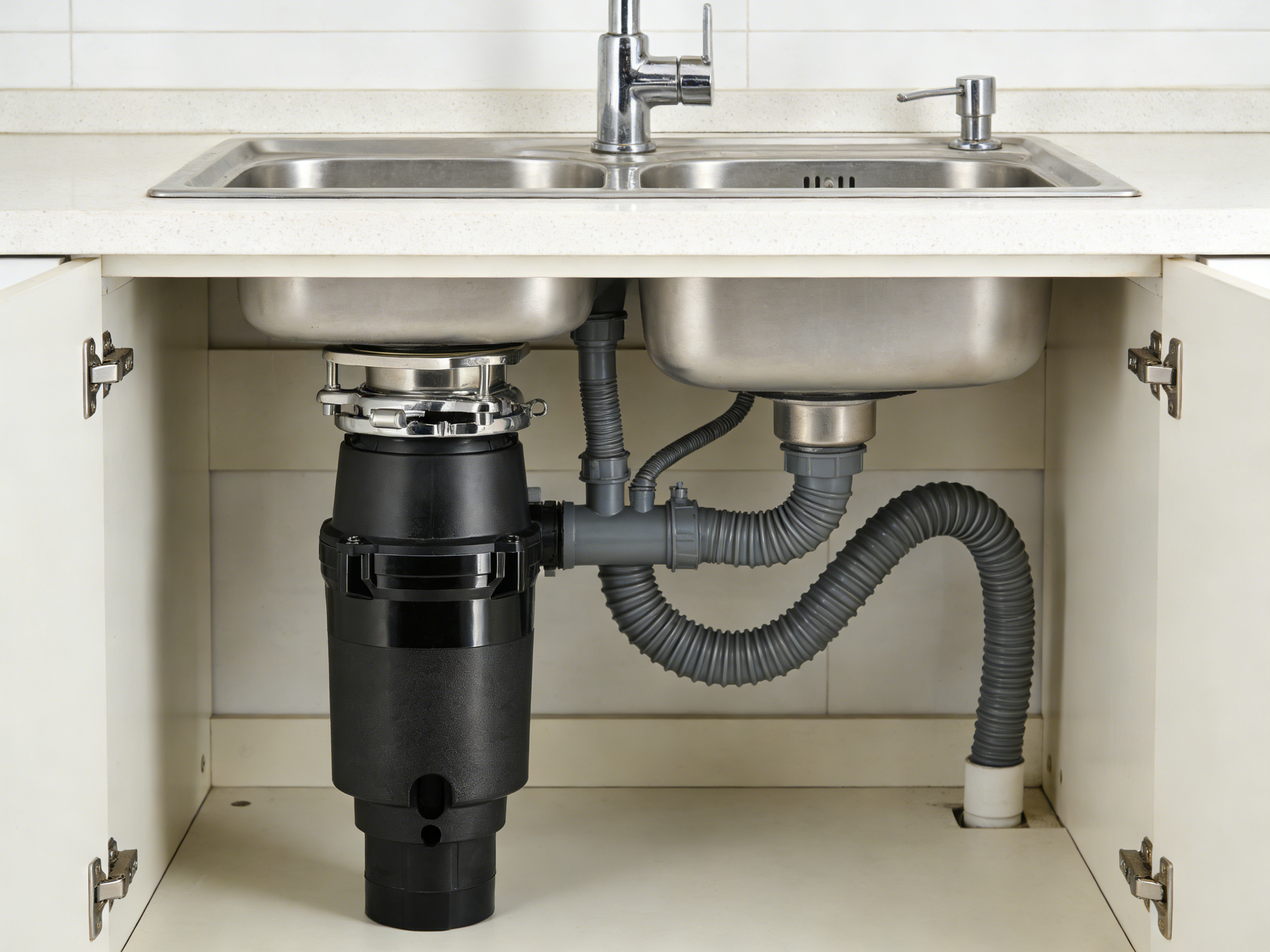
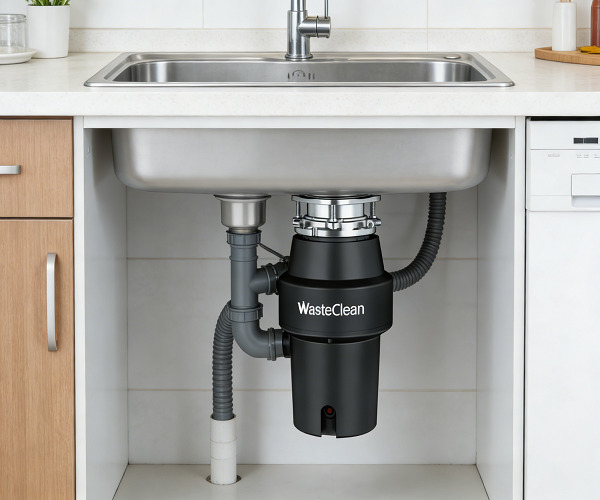
Sound-attenuated disposers often require more under-sink space than basic uninsulated models because their external shells add bulk around the core housing. The Wasteclean unit features overall dimensions of 182 mm × 182 mm × 352 mm, requiring adequate vertical and horizontal clearance beneath deep kitchen basins.
Homeowners should always review the manufacturer dimensional drawing to verify drain outlet heights, trap slope, and maintenance clearance before purchasing. Maintaining a proper downward pitch along the discharge pipe prevents standing water from backing up into the disposer chamber, which could compromise drainage efficiency and create odors.
Plumbing Integration and Dishwasher Connections
In many residential kitchen layouts, the automatic dishwasher drain line routes directly through the disposer housing. This common plumbing arrangement allows dishwasher wastewater to discharge through the sink trap system without requiring an additional dedicated branch line beneath the basin.
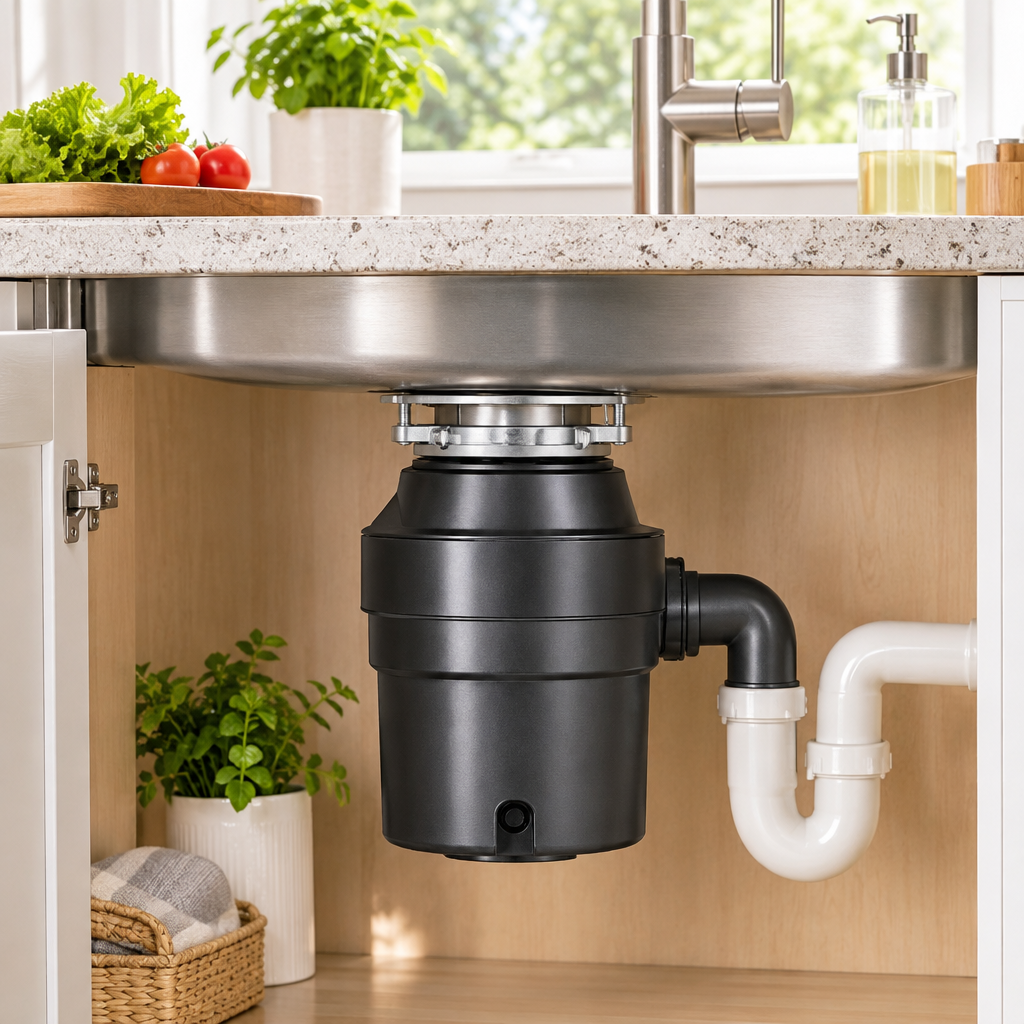
The FCD-713A includes a manufacturer-listed 7/8-inch dishwasher connection port located on the upper section of the housing. If the installation includes an automatic dishwasher, verify whether the port contains a removable knockout plug; if present, remove it following manufacturer instructions and retrieve the loose piece from inside the chamber before securing the hose with an approved clamp. Installers should confirm connection dimensions against their specific dishwasher hose and maintain required high loops or air gaps in accordance with appliance manuals and local codes.
Wastewater Regulations and Domestic Drainage Dynamics
Understanding local wastewater guidelines ensures that food waste disposers are used responsibly within municipal or private drainage systems. Guidelines published by environmental agencies, including the U.S. Environmental Protection Agency (EPA), note that food disposers break down organic scraps into a fine slurry carried by tap water through residential drain systems.
For properties that rely on private on-site septic systems, adding ground food waste increases the rate of solid accumulation in the primary septic tank. While continuous-feed disposers can be operated with properly sized septic systems where local rules permit, EPA technical guidance recommends professional tank inspections every one to three years and regular pumping every three to five years, with more frequent servicing recommended when heavy disposer use increases sludge volume.
5. Step-by-Step Installation for Minimum Operating Noise
Careful mechanical assembly is essential to achieve quiet performance from any food waste disposer. Even an insulated unit can produce noticeable vibration if mounting hardware is seated unevenly or if discharge pipes press tightly against surrounding cabinetry.
Pre-Installation and Sink Collar Preparation
Always disconnect electrical power at the main service panel before starting any plumbing work beneath the sink. Place a shallow pan beneath the existing drain assembly, loosen the slip nuts on the trap, and remove the old strainer or disposer body.
- Clean the sink drain opening thoroughly, removing all remnants of dried putty, old gaskets, and mineral deposits until the contact area is clean and dry.
- Apply a uniform bead of fresh plumber's putty around the underside of the stainless steel sink flange, or place the manufacturer-supplied rubber sealing gasket evenly around the opening.
- Press the sink flange straight down into the sink opening, ensuring centered alignment without shifting the sealant layer underneath.
Securing the 3-Bolt Mounting Flange
Working underneath the sink basin, slip the fiber gasket, metal backup ring, and 3-bolt mounting ring over the downward neck of the sink flange. Push the snap ring upward into its retaining groove until it locks completely in place.
Tighten the three stainless steel mounting bolts evenly against the metal backup ring. Advance each bolt a few turns at a time in a triangular pattern to distribute clamping pressure symmetrically around the sink collar. Uneven bolt tension can tilt the flange assembly, creating localized stress points that can allow motor vibration to transfer into the sink basin.
Aligning Discharge Plumbing and Decoupling Line Vibration
Lift the disposer body, align its top mounting lugs with the mounting ring ramps, and rotate the unit until it hangs supported by the collar assembly. Use a suitable tool in the lug bracket to rotate the collar until all locking ramps engage securely past the retaining stops.
Direct the discharge elbow toward the existing P-trap without twisting or forcing the plumbing pipes. Ensure the discharge pipe does not rest against cabinet walls, floors, or water supply lines, as direct contact can transmit hum into the home structure. If pipe realignment is required, have a qualified professional adjust the plumbing layout using code-approved fittings.
Wet Testing and Operational Inspection
Before restoring electrical supply to the unit, verify that all mechanical joints and plumbing fittings are securely fastened. Turn on the cold water faucet fully and inspect the sink flange seal, dishwasher inlet port, and drain connections for static water leaks.
Restore electrical power at the service panel and turn on the disposer while cold water runs steadily through the chamber. Listen carefully to the operating sound to ensure the unit runs smoothly. Check for abnormal rattles or leaks around the flange, and verify that the appliance operates without shaking adjacent plumbing lines.
6. Best Operating Practices for Quiet and Jam-Free Performance
Consistent operating habits play an important role in extending disposer service life and preventing clogs. Operating the unit properly ensures that food scraps pass through the plumbing system cleanly without producing excessive noise or mechanical strain.
The Cold-Water Protocol and Slurry Movement
Always turn on a steady stream of cold tap water before starting the disposer motor, and keep the water running throughout the grinding cycle. Running cold water helps keep the grinding chamber clear and carries shredded food particles smoothly through the internal passages into the sink trap.
Cooking fats, grease, and excessive oils should never be poured into a food waste disposer or down the kitchen drain. Instead, collect used cooking oils in separate containers for household disposal. Cold tap water helps rinse lingering food residue into the drainage line, but disposing of concentrated fats directly into the sink risks grease accumulation inside household pipes.
After grinding sounds subside, turn off the disposer switch first while continuing to let cold tap water run for an additional 10 to 15 seconds as a general practice. This short post-grind rinse helps flush remaining particulate matter from the P-trap, helping reduce the risk of settling debris lingering in the drain bend.
Food Scrap Sorting Guide
A 3/4 HP (560W) disposer processes a wide variety of meal remnants, but certain household materials should be kept out of the chamber to protect the mechanism.
- Acceptable Food Materials: Soft vegetable trimmings, fruit peels, citrus rinds, cooked meal scraps, and small scrap bone fragments only where expressly permitted by the model's instructions.
- Stringy and Fibrous Scraps: Large quantities of corn husks, artichoke leaves, celery stalks, and onion skins should be avoided. Long fibers can wrap around rotating turntable components and increase mechanical drag.
- Dense Starchy Loads: Large amounts of leftover pasta, cooked rice, and potato peels should be fed gradually in small batches, as heavy starch loads can create thick mixtures in the drain line.
- Foreign Non-Food Objects: Metal cutlery, plastic wrappers, twist ties, bottle caps, and glass fragments must never enter the chamber. Foreign objects cause immediate clatter and can damage internal grinding teeth.
- Model-Specific Restrictions: Always verify allowable scrap materials against the product manual, as permissible items vary by manufacturer and internal grinding design.
7. Troubleshooting Abnormal Disposal Noise and Vibration
When a sound-attenuated disposer begins making unfamiliar or harsh noises, systematic inspection helps identify whether the cause is an obstruction, a loose fitting, or a mechanical issue. Addressing these acoustic changes promptly protects internal components from unnecessary wear and prevents localized plumbing strain.
                        [ Abnormal Appliance Noise Detected ]
                                          │
             ┌────────────────────────────┴──────────────────────────┐
             ▼                                                       ▼
   [ Metallic Clatter or Scraping ]                          [ Muffled Electrical Hum ]
             │                                                       │
  1. Cut electrical power at breaker                      1. Cut electrical power at breaker
  2. Inspect chamber with flashlight                      2. Check manual for approved clearing tool
  3. Extract foreign debris with pliers                   3. Clear jam via designated method
  4. Verify free plate movement                           4. Allow cooling and reset per manual
Clattering or High-Pitch Metallic Screeches
A sudden, harsh clattering sound typically indicates that a foreign object has fallen through the splash guard into the chamber. Small items such as coins, metal bottle caps, or hard fruit stones can become trapped between the rotating impellers and the shredder ring, creating sharp noise.
Never put hands or fingers inside the grinding chamber. Disconnect power at the main electrical breaker immediately. Use a bright flashlight to inspect the chamber interior, locate the trapped object, and retrieve it using long pliers. After removing the object, check that the rotating turntable can turn smoothly before restoring power.
Heavy Cabinet Resonance and Shuddering
If the disposer shudders noticeably or causes cabinet doors to rattle during use, the issue often stems from mounting or alignment problems, though internal wear can also cause imbalance. Inspect the installation carefully:
- Mounting Bolt Tension: Check the 3-bolt flange assembly beneath the sink basin. If the mounting bolts have loosened slightly over time, retighten them evenly to re-establish secure gasket seating.
- Mounting Ring Engagement: Confirm that all mounting lugs on the disposer throat remain properly engaged in the collar ramps and are locked securely in position.
- Plumbing Clearance: Make sure rigid PVC drain pipes are not resting firmly against cabinet panels or baseboards. If pipe vibration persists, have a plumbing professional realign the drainage layout.
- Internal Component Check: If mounting and plumbing lines are secure but heavy vibration continues, the unit may have an internal imbalance or component wear requiring professional service.
Electrical Humming Without Turntable Movement
A low electrical hum combined with a stationary turntable suggests that the motor may be stalled by a mechanical jam. In this condition, current enters the motor windings, but an obstruction prevents rotation, which will prompt the internal overload protector to trip if power remains on.
Turn off the wall control switch and disconnect power at the circuit breaker immediately. Consult the manufacturer instruction manual for the specific clearing method recommended for your model. If the unit includes an accessible drive socket, use the designated tool to rock the shaft back and forth until the jam releases. Allow the unit to cool according to manufacturer guidelines, reset the overload protection system per the user instructions, and test operation with running cold water. If humming persists or the protector trips repeatedly, discontinue use and contact an authorized repair technician.
Frequently Asked Questions (FAQs)
Is 61 dB quiet for a continuous-feed garbage disposal?
For the FCD-713A model, the manufacturer lists an operating sound level of 61 dB, though specific test conditions, measurement distances, and loading parameters are not detailed in the supplied documentation. Because acoustical test protocols vary widely across manufacturers, this stated figure cannot definitively predict perceived loudness in an installed domestic kitchen. While normal indoor conversation typically registers around 60 dB, actual sound levels in a home depend heavily on sink basin thickness, countertop materials, and room acoustics rather than laboratory ratings alone.
Does higher motor horsepower result in louder kitchen noise?
Not necessarily. Motor horsepower describes rated mechanical output power, not the acoustic output heard in the room. A higher-powered motor may assist in processing denser organic scraps, but sound levels depend on overall motor design, rotational speed, and acoustic insulation rather than horsepower alone. The presence of effective housing insulation, composite outer shells, and vibration-dampening mounting components plays a much larger role in dictating perceived kitchen noise than nominal motor size.
Can a noise reduction garbage disposal connect to an automatic dishwasher?
Yes. Many modern sound-attenuated disposers, including the FCD-713A, feature a dedicated dishwasher connection port on the housing. When connecting a dishwasher, installers should confirm whether an internal knockout plug needs to be removed according to manufacturer instructions. The drain hose should be installed with an appropriate high loop or air gap as required by appliance guidelines and local plumbing codes.
What causes a quiet disposer to suddenly develop a loud grinding sound?
The most common cause of sudden loud grinding is a small foreign object lodged inside the grinding chamber. Items such as metal cutlery, poultry bones, or fruit pits can catch between the moving lugs and the stationary shredder ring. If the chamber is clear, the noise may indicate a loose mounting flange assembly or internal component wear that requires inspection.
Can food waste disposers be safely used with home septic systems?
Food waste disposers can be used in homes with septic systems if permitted by local plumbing regulations and if the septic tank is sized to handle added organic solids. Because grinding food scraps increases the volume of sludge settling in the tank, the EPA recommends regular inspections every one to three years and pumping every three to five years, with more frequent maintenance based on household waste volume.
Summary: Selecting the Ideal Low-Noise Disposal for Modern Living
Investing in a quality noise reduction garbage disposal helps keep post-meal cleanup convenient and quiet in modern homes. Effective sound reduction relies on deliberate structural design rather than simple cosmetic covers. Multi-layer housing designs, flexible splash guards acting as sound baffles, and elastomeric isolation components work together to control airborne sound and limit the transmission of mechanical vibration to the sink basin when properly installed.
With its 3/4 HP (560W) motor, manufacturer-stated 61 dB sound profile, and built-in overload and over-temperature protection, the Wasteclean FCD-713A illustrates how dependable grinding performance and sound attenuation can be integrated into a compact appliance. By verifying under-sink dimensions, completing a balanced flange installation, and maintaining thoughtful scrap sorting habits, homeowners can select a dependable noise reduction garbage disposal that helps reduce everyday kitchen noise while supporting reliable food scrap management.
Related News
SUBSCRIBE
INQUIRY