
Navigating the Mechanics and Value of a Food Waste Disposal Unit
Managing organic refuse remains a persistent challenge in modern residential architecture. Wet scraps decompose rapidly indoors, creating immediate unpleasant odors and attracting seasonal pests. A high-performance food waste disposal unit acts as an immediate, mechanical intervention for this daily friction. By liquefying organic matter at the sink, it fundamentally alters how households handle meal preparation debris.
What Are the Biological Realities of Kitchen Refuse?
Vegetable peelings and meat scraps contain exceptionally high moisture levels. Once exposed to room temperatures, this organic matter begins breaking down almost immediately. Most traditional kitchen bins simply warehouse this decaying material. This trapped moisture accelerates unseen bacterial growth within a matter of hours.
Airflow restriction inside closed under-sink cabinets only intensifies the biological breakdown process. Transferring dripping scraps across the floor to a standalone bin creates unnecessary physical labor. It also introduces microscopic sanitation risks to clean food preparation surfaces.
How Does the Hardware Actually Process Scraps?
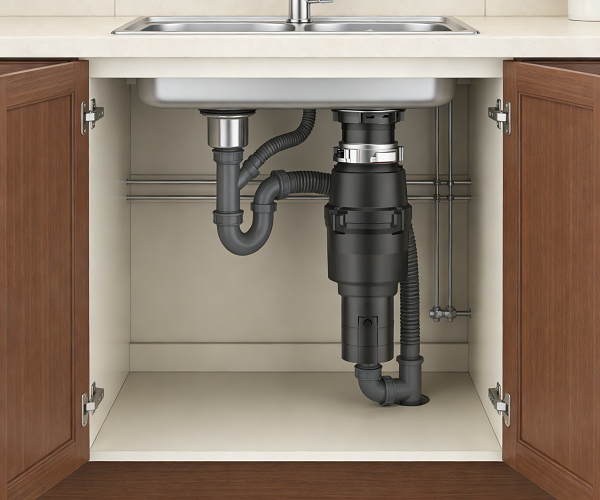
A widespread consumer misconception assumes these machines operate like standard blenders. There are no sharp blades waiting at the bottom of the dark drain. Instead, the core mechanism relies entirely on raw centrifugal force. An impeller plate spins rapidly, driving heavy food particles against a stationary metal grind ring.
This sustained physical friction pulverizes the material until it becomes a fine liquid slurry. Continuous cold water flow then flushes these microscopic particles safely through standard municipal plumbing lines. The efficiency of this mechanical process depends heavily on the internal motor technology driving the system.
| Motor Type | Operating Mechanism | Ideal Application Scenario |
|---|---|---|
| Permanent Magnet (DC) | Achieves maximum RPM instantly upon activation | Households generating frequent, varied daily food scraps |
| Induction (AC) | Gradual acceleration to peak operational speed | Heavy-duty continuous use, light commercial kitchen setups |
How Can Users Prevent Accidental Plumbing Blockages?
Many homeowners experience frustrating clogs due to simple operational misunderstandings at the sink. Pouring hot liquid grease down the drain causes fats to solidify deep within the hidden pipes. Cold water should always run during the entire mechanical grinding cycle. Cold temperatures keep suspended fats in a solid state, allowing the machine to chop them effectively.
Users often turn off the tap the exact second the grinding noise stops. Running water for an additional ten seconds clears lingering debris from the curved P-trap. Fibrous materials like raw celery require gradual feeding to prevent the spinning impeller from tangling.
Are Septic Systems Safe from Sludge Overload?
Property owners frequently hesitate when connecting mechanical grinders to off-grid residential plumbing systems. A standard appliance does inevitably increase the solid biological load entering a residential septic tank. However, modern multi-stage grinding technologies reduce organic particles to less than two millimeters.
The plumbing compatibility advice provided in this article relies on general residential infrastructure standards and is for reference only. For specific site assessments, please consult a licensed plumber or septic specialist first.
What Determines the Cost and Longevity of a System?
Retail prices fluctuate based on strict internal engineering tolerances rather than exterior casing aesthetics. Buyers must carefully evaluate the hidden internal components before finalizing a hardware selection. High-torque motors command a premium because they drastically reduce the likelihood of mechanical jams. Stainless steel grinding chambers naturally resist acidic corrosion far better than cheaper galvanized alternatives.
Several hidden technical variables dictate the final retail price and daily user experience:
-
The number of distinct grinding stages, determining how finely tough fibrous materials are shredded.
-
The density of integrated acoustic foam insulation, which dictates the decibel level during active operation.
-
The inclusion of automatic anti-jamming functions, preventing catastrophic motor failure during sudden heavy overloads.
Finding the Right Manufacturing Partner for Custom Sourcing
Producing reliable hardware demands rigorous material testing and localized supply chain stability. For us, over two decades of dedicated research and large-scale manufacturing yield consistent component quality. We handle specialized OEM and ODM services for international distributors, ensuring high-capacity production without sacrificing precision.
With an annual factory output exceeding 200,000 machines, we navigate diverse global market regulations effortlessly. Our active catalog spans over 30 specific architectural models. We accommodate low minimum order quantities, adapt to multiple voltage standards, and secure necessary international electrical certifications.
Supplying core household appliances to leading global home appliance brands validates our strict operational reliability. Establishing long-term procurement partnerships requires highly transparent communication and flexible, fast customization capabilities.
Matching Household Realities with Technical Specifications
Selecting the right hardware requires analyzing daily cooking habits and weekly meal frequencies. A large family preparing heavy root vegetables daily needs significantly higher horsepower than a single apartment dwelling student. The physical footprint of the chosen machine must also clearly bypass existing under-sink water filtration layouts.
Installing a continuous-feed food waste disposal unit permanently shifts the daily burden of kitchen waste management. It moves the modern household away from manual plastic bagging toward automated, hygienic liquid processing. Evaluating specific motor types, durable chamber materials, and secure mounting systems ensures long-term operational fluency at the sink.
Related News
SUBSCRIBE
INQUIRY