
Modern Kitchen Engineering: The Technical and Practical Guide to the BLDC Garbage Disposal
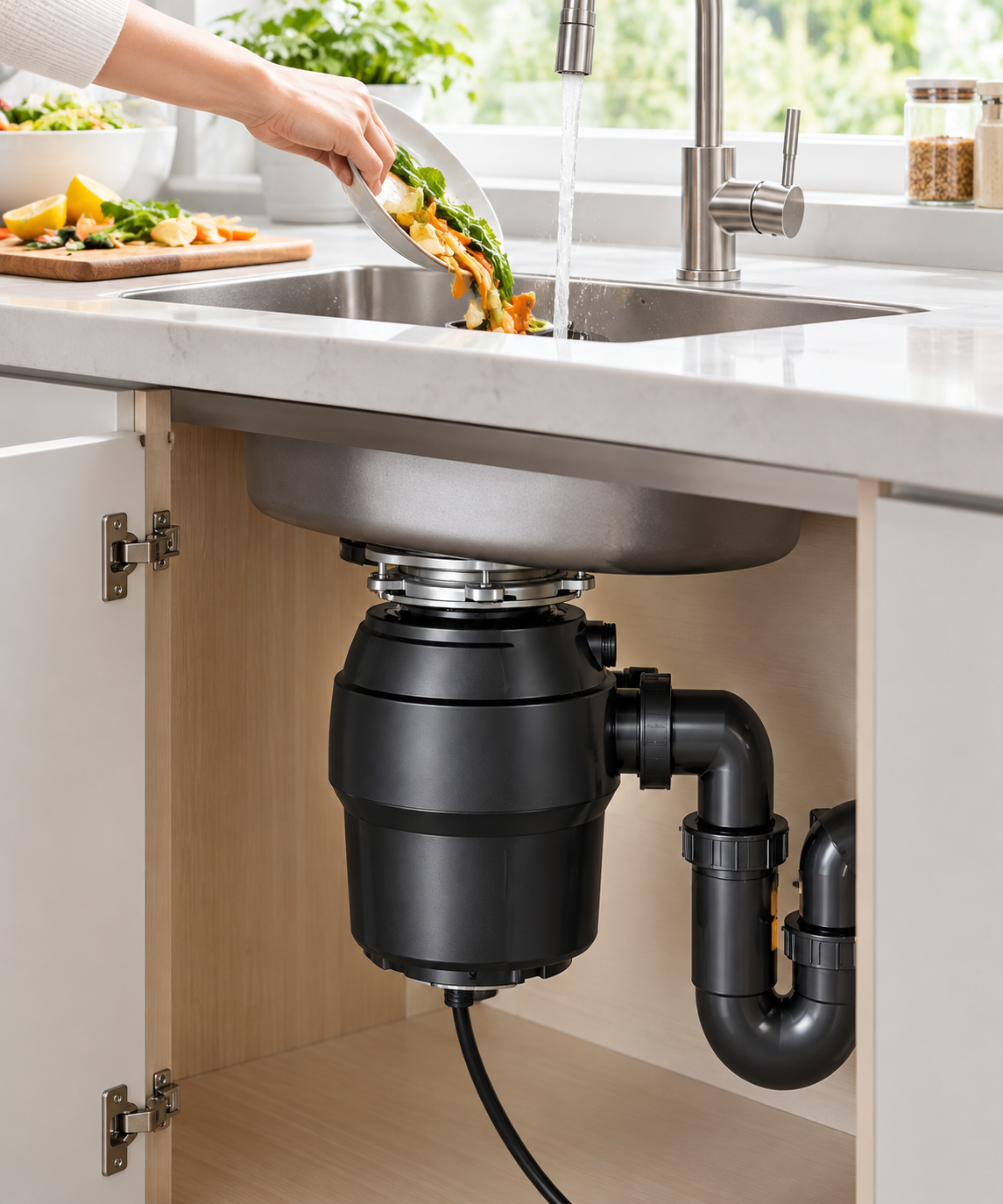
Under-sink food waste management has historically relied on alternating current induction motors or brushed direct current motors. For decades, those mechanical layouts influenced the kitchen environment through operational vibration, audible hum, and occasional motor stalls when fibrous food scraps or small bones entered the grind ring. In modern kitchen planning, the BLDC garbage disposal offers an alternative approach to food scrap reduction. By replacing mechanical brushes with an electronically commutated motor managed by an integrated circuit, a brushless DC food waste disposer provides high power density, adaptable speed control, and automatic reversing cycles that can help reduce common kitchen jams.
Evaluating under-sink equipment requires a balanced understanding of motor behavior, plumbing interfaces, and electrical safety standards. Whether you are a homeowner reviewing upgrades for a busy sink workstation or an equipment buyer evaluating OEM platforms, understanding how brushless direct current technology functions within the grinding chamber is critical. This guide reviews the operating principles behind brushless motors, examines manufacturer technical benchmarks, outlines safe plumbing and operational practices, and presents structured criteria for choosing between different waste disposal configurations.
1. Demystifying BLDC Technology in Kitchen Waste Management
What Sets a Brushless DC Motor Apart from Legacy Motors?
Traditional kitchen disposers typically rely on single-phase AC induction motors or brushed permanent magnet DC motors. AC induction units use stator windings and induced magnetic fields to produce rotation. While mechanically durable, their cast housings often add considerable weight under the sink basin. Brushed DC motors reduce overall chassis mass, but they rely on physical carbon brushes that press against a spinning copper commutator. Over continuous duty cycles in moist kitchen cabinet environments, those brushes encounter mechanical wear and generate friction heat, representing a routine point of service wear.
A brushless DC motor changes this electromechanical layout by using an inverted design. Permanent magnets mount directly to the rotating rotor, while stationary electromagnetic windings stay fixed within the surrounding casing. Solid-state electronic switching circuits monitor the rotor position and sequence electrical current through the stator coils in timed order. This contact-free switching eliminates mechanical brush friction, removes a common wear component, and lowers electromagnetic arcing during startup.
Torque Delivery and Rotational Speed Dynamics
A familiar problem in kitchen food scrap processing is motor stalling under sudden physical resistance. In a single-phase AC induction motor, operating speed stays closely coupled to the power line frequency, pole layout, and rotor slip. As tough food debris presses against the stationary shredder wall, the motor responds by increasing rotor slip; if the mechanical load exceeds the motor breakdown torque, the rotor stalls, which eventually activates a resettable thermal overload protector. Brushed DC motors draw more current under load to produce torque, but their rotational speed drops as the cutting ring encounters continuous physical resistance.
Brushless direct current motors offer different operational flexibility through integrated electronic driver control. Rather than relying solely on fixed mechanical response curves, a brushless motor controller can manage power delivery across dynamic operating phases. For the PCD-1200TS platform, the manufacturer lists a no-load velocity of 1500 RPM alongside a loaded grinding velocity of 3000 RPM. Users should note that these figures represent manufacturer-supplied specification ratings, and specific test parameters or internal control modes should be confirmed directly with the manufacturer rather than assuming an automatic dynamic acceleration curve under load.
Energy Efficiency and Acoustic Footprint
Because brushless DC designs eliminate the sliding contact friction of carbon brushes and avoid rotor resistive slip losses, their electrical-to-mechanical conversion efficiency is generally favorable across steady loads. Reducing internal electrical losses lowers the surface operating temperature of the motor core, which helps protect adjacent bearing grease packs and dynamic shaft seals from excessive heat exposure over long operating schedules.
Acoustic emission in food waste disposers is a combined result of motor commutation, housing resonance, mounting isolation, and physical grinding impacts inside the sink basin. A brushless DC motor eliminates the physical rubbing sound of mechanical brushes, though electrical switching and mechanical resonance still influence the overall acoustic profile. When combined with balanced dynamic shredder components and an insulated housing, a brushless disposer can operate with lower audible disturbance. For the PCD-1200TS model, the manufacturer lists an operating noise level of 45 dB, although specific test conditions were not provided and actual acoustics depend on sink material and installation quality.
2. Core Functional Mechanisms of Advanced BLDC Waste Disposers
Two-Stage Grinding Dynamics and Waste Reduction
Effective kitchen waste processing depends on progressive particle reduction so that food fragments pass smoothly through domestic drainage systems. In a two-stage grind design, coarse scraps are initially driven outward by high-speed rotating impellers, fracturing brittle matter against the inner shredding surface. The partially reduced debris then moves into secondary cutting elements, which further break down vegetable fibers and soft scraps into smaller particles that running tap water can carry through household plumbing.
Incoming Kitchen Food Scraps
            │
            ▼
┌──────────────────────────────────────────┐
│ Stage 1: Primary Centrifugal Reduction   │
│ (Rotating impellers fracture scraps)     │
└───────────────────┬──────────────────────┘
            │
            ▼
┌──────────────────────────────────────────┐
│ Stage 2: Secondary Milling Zone          │
│ (Secondary cutters refine fragment size) │
└───────────────────┬──────────────────────┘
            │
            ▼
Discharge Slurry Flushed Through Drain Line
The diagram above illustrates the general concept of multi-stage particle reduction rather than the proprietary internal structure of any single model. For the PCD-1200TS platform, the manufacturer specifies a two-stage grind system paired with a 1300 mL chamber capacity. This internal volume gives prep scrap sufficient room to move through the cutting elements without immediately packing the chamber. The exact mechanical profile and tooth arrangement should be verified in the product user manual, as specific tooling layouts vary between appliance models.
Intelligent Anti-Jam Electronics and Auto-Reverse Grinding
Mechanical blockages occur when hard scraps wedge between the spinning turntable impellers and the stationary cutting perimeter. In conventional single-direction disposers, clearing a wedged obstruction often requires manually turning the drive shaft from underneath using a hex wrench. Advanced BLDC disposers use electronic controls to address this problem before an obstruction triggers an unrecoverable stall.
Some electronic drive systems are programmed to reverse rotational direction when sudden mechanical resistance threatens to stop the turntable. Changing direction directs the impellers against the trapped food fragment from the reverse side, freeing the blockage and allowing normal grinding to resume. If hard, ungrindable foreign debris jams the mechanism completely, users must turn off the appliance, disconnect main electrical power, and extract the foreign object using long-handled tongs or pliers rather than placing hands inside the hopper.
Smart Operation, Timed Cycles, and Automatic Shutdown
Modern kitchen sink workstations benefit from electronic control routines that prevent unnecessary motor operation and reduce component wear. Leaving a continuous-feed disposer running after all food scraps have cleared the chamber can waste electrical energy and run internal seals dry. Modern BLDC platforms incorporate smart grinding controls that adapt motor operation to current processing demands.
According to the manufacturer's technical specifications, the PCD-1200TS features intelligent grinding speed control and an automatic shutdown function to stop the motor once food processing finishes. While automatic shutdown prevents the motor from running empty, users must still monitor the process to turn off tap water manually once the flush cycle concludes. Operating controls offer useful flexibility. An under-sink pneumatic air switch uses an air pulse to trigger the lower control box safely without running line voltage to the sink deck. For installations where cutting holes in solid stone countertops is undesirable, a customized remote control provides an adaptable switching alternative, with specific wiring or wireless details depending on chosen accessory options.
3. Product Spotlight: Engineering Profile of the PCD-1200TS
Technical Specifications and Dimensional Layout
To see how brushless motor architecture translates into practical kitchen hardware, consider the PCD-1200TS household food waste disposer. Designed around a compact BLDC motor footprint, this model provides high-output food processing while maintaining an under-sink profile suitable for contemporary residential cabinetry. Understanding the physical and electrical envelope of this platform is essential when planning sink plumbing rough-ins. The table below details the manufacturer-supplied specifications for the PCD-1200TS disposer platform:
| Engineering Parameter | PCD-1200TS Manufacturer Specification |
|---|---|
| Motor Architecture | Brushless Direct Current Motor (BLDC) |
| Listed Power | 1200 W |
| Supply Frequency | 50 Hz |
| Manufacturer-Listed Noise Level | 45 dB (test conditions not specified) |
| No-Load Velocity | 1500 RPM |
| Loaded Grinding Velocity | 3000 RPM |
| Grinding System | 2-Stage Grind |
| Chamber Capacity | 1300 mL |
| Chassis Dimensions | 165 mm × 165 mm × 300 mm |
| Net Weight / Gross Weight | 5.5 kg / 7.0 kg |
| Switching Controls | Pneumatic Air Switch / Customized Remote Control |
Architectural Integration: Under-Sink Spatial Requirements
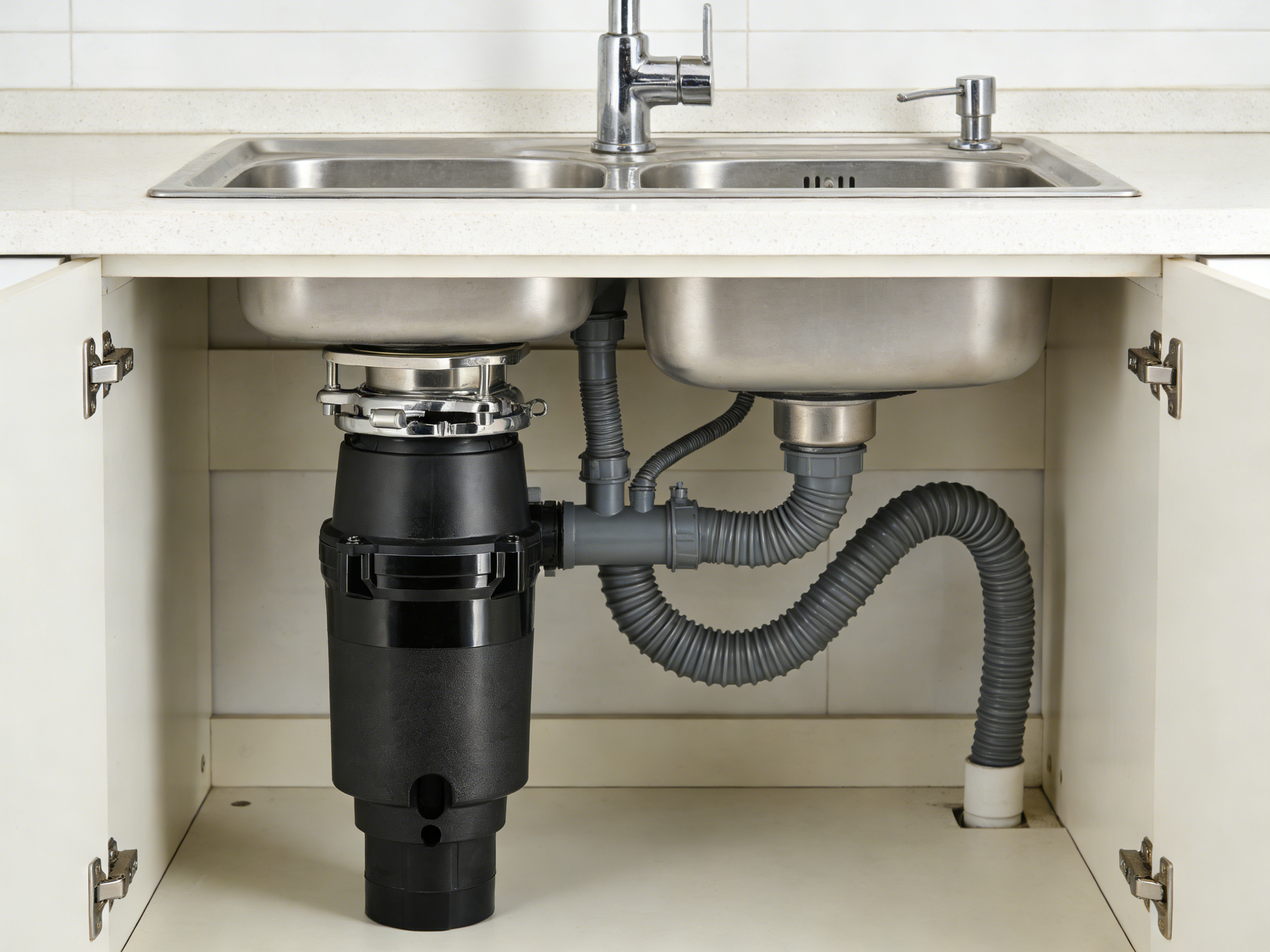
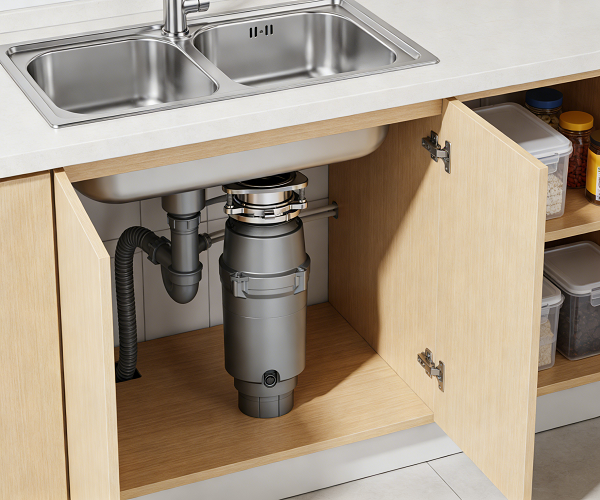
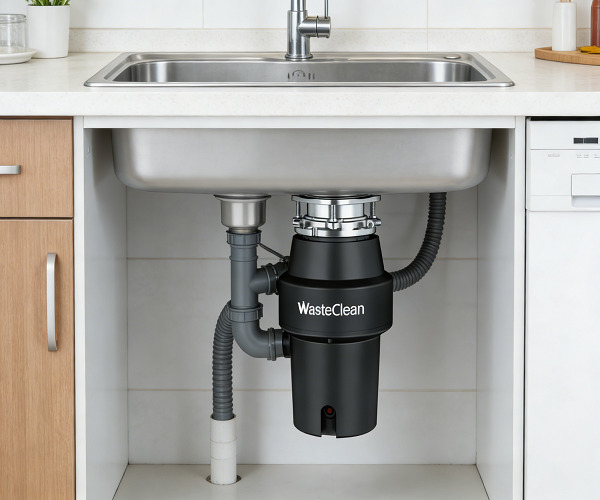
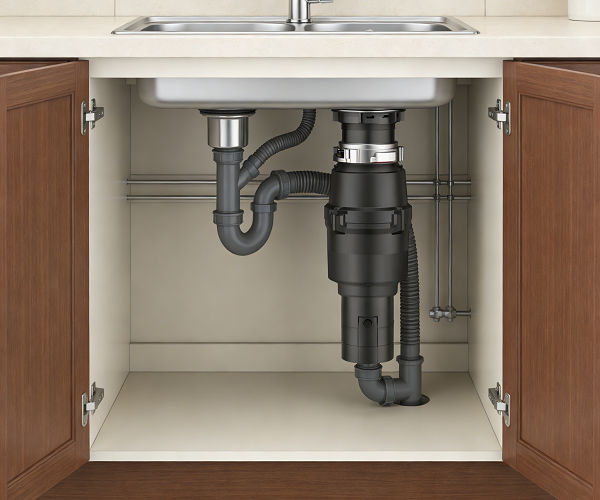
Kitchen cabinetry increasingly accommodates complex utility setups, such as water purification units, pull-out recycling bins, and instant water heating tanks. Traditional high-mass induction disposers can take up significant cabinet volume and place continuous cantilever stress on the bottom of thin stainless steel or composite undermount sinks. Compact appliance dimensions allow designers to optimize under-sink storage without sacrificing access to critical shutoff valves and drainage cleanouts.
With a compact footprint of 165 mm by 165 mm and an overall height of 300 mm, the PCD-1200TS leaves valuable room for adjacent plumbing and storage. Its 5.5 kg net weight simplifies physical installation and reduces structural stress on the sink flange. Installers must still verify that the disposer discharge outlet sits safely above the rough-in wall drain, ensuring that the P-trap retains its required water seal while allowing connected horizontal waste lines to maintain a proper downward slope.
Rigorous Quality Standards and OEM/ODM Manufacturing Scope
Reliable performance from high-torque kitchen appliances depends directly on the manufacturer's production standards and component testing. Foshan ZAL Intelligent Home Appliance Co., Ltd. specializes in the research and manufacturing of kitchen food waste disposers, bringing over 20 years of experience in product research, development, and large-scale manufacturing. The company maintains an annual production capacity exceeding 200,000 units across more than 30 distinct models, providing professional OEM and ODM services for global international brands, importers, and regional distributors.
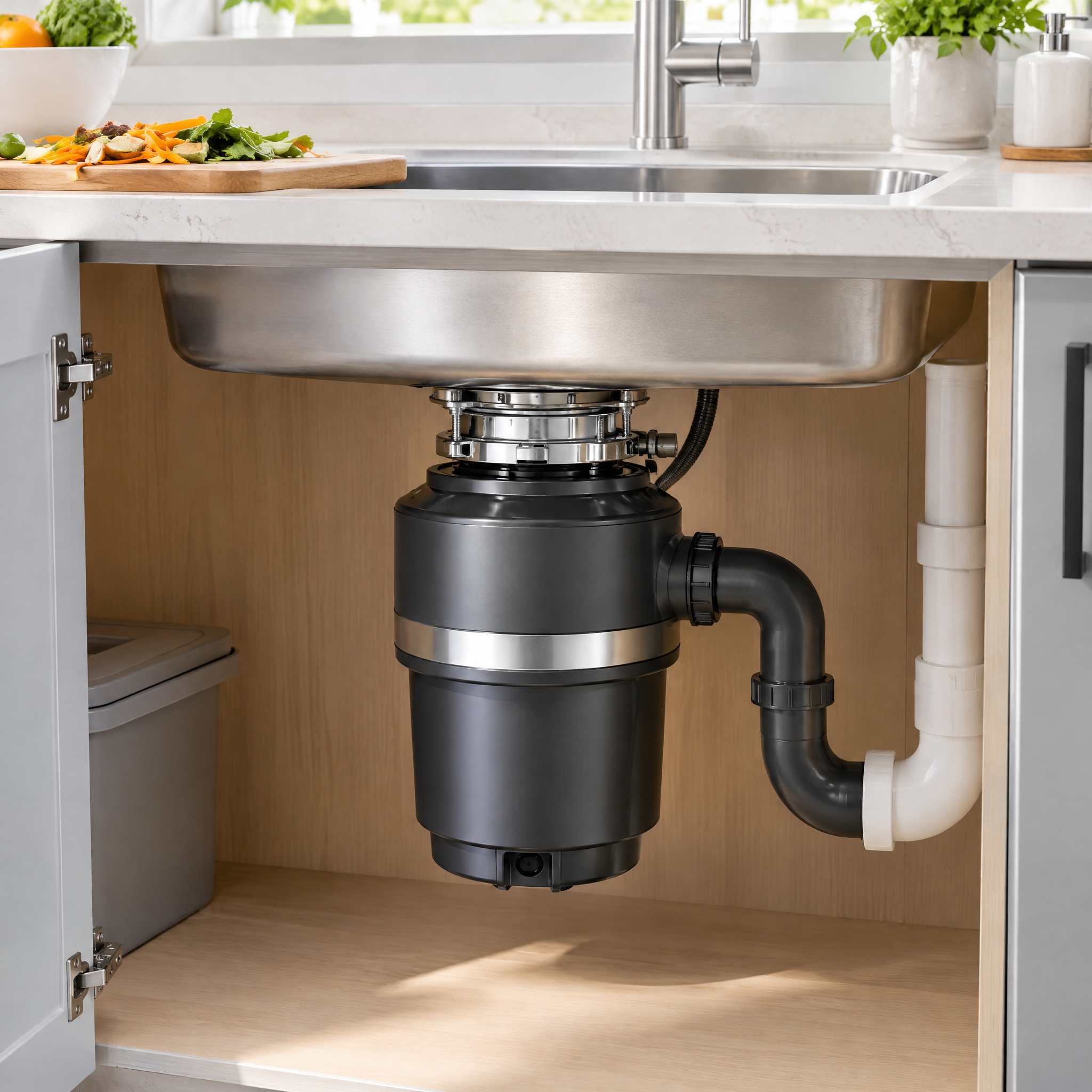
For international commercial partners, the manufacturer provides extensive customization options to adapt products to diverse consumer markets. This OEM and ODM support includes flexible order quantities, custom branding applied to the fuselage and sink flange, specialized packaging design, and configurations suited to multiple voltage and plug standards. Backed by a global distribution network, these production capabilities help private label brands deliver reliable under-sink appliances tailored to regional market preferences.
4. Kitchen Planning and Safe Operational Guidelines
Best Practices for Everyday Waste Processing
Operating a high-power BLDC garbage disposal correctly protects internal components and keeps household drainage pipes flowing smoothly. Centrifugal force pushes food scraps against the grinding ring, but a steady flow of cold water is always required to carry the ground slurry through the sink trap and into the main drain.
- Run Cold Tap Water First: Turn on a moderate, steady flow of cold water before activating the disposer motor. Cold water helps flush food particles through the drain and prevents small grease residues from melting and coating the chamber walls.
- Start the Motor: Turn on the disposer using either the deck-mounted pneumatic air switch or the customized remote control, allowing the brushless motor to reach operating speed before adding scraps.
- Feed Food Scraps Gradually: Drop food waste steadily through the splash baffle rather than packing the chamber completely full. Steady feeding prevents chamber overfilling and helps the motor maintain stable rotational speed.
- Monitor the Grinding Noise: Let the motor run until the audible sound of crunching debris transitions into a soft, consistent water splash, indicating that the grinding chamber has emptied.
- Flush the Drain Line: Turn off the motor, but leave the cold tap water running for an extra 10 to 15 seconds. This post-grind rinse flushes fine waste particles completely through the under-sink P-trap and into horizontal waste lines.
Plumbing Considerations and Septic System Realities
Homeowners should remember that a food waste disposer is an aid for organic prep scraps, not a substitute for standard trash disposal. Dropping non-food items or unmanageable kitchen waste down the sink can cause blockages or damage the cutting components. Review the operational boundaries summarized in the table below to protect household plumbing and municipal connections:
| Waste Category | Suitable for Disposer Processing | Unsuitable Items and Scraps |
|---|---|---|
| Organic Food Scraps | Fruit rinds, vegetable cuttings, soft leftovers, and small citrus peels. | Thick beef knuckle bones, corn husks, artichoke crowns, and large fibrous bunches. |
| Liquids and Fats | Cold rinse water, vegetable wash liquids, and light prep juices. | Cooking oils, melted animal fats, butter, and greasy gravies. |
| Specialty Scraps & Shells | None without checking manual guidelines. | Clam, oyster, and seafood shells (must be verified against the specific model user manual). |
| Non-Food Materials | None. Non-food matter must never enter the disposal chamber. | Metal utensils, plastic packaging, paper twist ties, glass shards, and rubber bands. |
Homeowners with private on-site septic systems should use under-sink disposers thoughtfully. United States Environmental Protection Agency guidance notes that food waste disposers introduce additional suspended solids into wastewater. These food solids contribute to sludge accumulating at the bottom and scum floating at the surface of a septic tank. This added organic volume typically means the septic tank requires more frequent pumping than in households without a disposer. Septic owners should use their disposal conservatively, avoid adding high-fiber foods, and check tank sludge levels on a regular schedule.
Routine Care, Hygiene, and Preventive Maintenance
Food waste disposers stay clean through normal daily use if supplied with plenty of cold rinse water. Over time, however, food residue and oil can collect under the flexible rubber splash baffle, causing kitchen odors. Before inspecting or cleaning the splash baffle, always disconnect the electrical power completely. Never put your fingers or hands inside the grinding chamber to clear debris or wipe down internal surfaces.
If the appliance user manual permits, you can freshen the grinding chamber by dropping ice cubes into the chamber along with small lemon or lime wedges. Turn on the cold water and run the motor until the ice clears. The hard ice scours the grinding ring mechanically, while natural citrus oils help deodorize the chamber interior. Never pour caustic chemical drain openers or lye solutions inside a food waste disposer, as harsh chemicals can corrode internal metal surfaces and degrade dynamic watertight seals.
5. Decision Framework: Choosing the Right Waste Disposal System
BLDC vs. Induction vs. Brushed DC Motors
Choosing a suitable kitchen disposer involves evaluating motor capabilities, under-sink space constraints, noise preferences, and maintenance needs. Because individual appliance performance varies across manufacturers, comparing fundamental motor topologies provides a helpful framework for selecting the appropriate unit for a residential or commercial project. The table below outlines how brushless DC technology compares with traditional motor types across fundamental engineering attributes:
| Design Attribute | BLDC Motor Disposers | Conventional AC Induction Disposers | Brushed DC Motor Disposers |
|---|---|---|---|
| Commutation Method | Solid-state electronic switching | Magnetic induction field (no brushes) | Mechanical carbon brushes & commutator |
| Torque Response | Electronically managed driver circuits | Rises with slip until breakdown torque | Rises with current; speed drops under load |
| Chassis Weight | Model-dependent (e.g., PCD-1200TS lists 5.5 kg) | Model-dependent (often heavier for equivalent frame) | Model-dependent (moderate to light overall weight) |
| Cabinet Footprint | Model-dependent (e.g., PCD-1200TS lists 165 mm) | Model-dependent (often wider for equivalent frame) | Model-dependent (moderate cylindrical profile) |
| Anti-Jam Routine | Model-dependent (auto-reversing on select units) | Model-dependent (auto-reversing on select units) | Model-dependent (thermal trip and manual reset) |
| Acoustic Characteristics | No brush noise (PCD-1200TS lists 45 dB benchmark) | Characteristic 50/60 Hz electrical hum | High-frequency brush contact noise |
| Typical Wear Points | Shaft seals, bearings, and cutting elements | Shaft seals, bearings, and starting switches | Shaft seals, bearings, brushes, and commutator |
Evaluating Power Ratings and Motor Performance
Shoppers often rely on nominal horsepower ratings to judge cutting performance, but horsepower figures and electrical wattage values must be compared across identical measurement baselines. In electric motor specifications, horsepower typically describes mechanical shaft output power, whereas wattage ratings can represent either continuous electrical input, rated power, or peak power capacity depending on manufacturer testing standards.
A listed rating like the 1200 W specification for the PCD-1200TS highlights substantial drive capacity, but practical shredding effectiveness depends on the entire mechanical system. Cutting efficiency relies on balanced turntable dynamics, impeller geometry, chamber relief ports, and stationary grind ring sharpness. Buyers should evaluate verified test data, build materials, and chamber volume alongside electrical ratings rather than relying solely on wattage figures.
Checklist for Homeowners and Commercial OEM Buyers
Careful planning ensures seamless integration under the kitchen sink while avoiding unexpected installation hurdles. Before ordering a replacement disposer for a residential sink or finalizing a commercial OEM manufacturing order, review these practical installation and specification details:
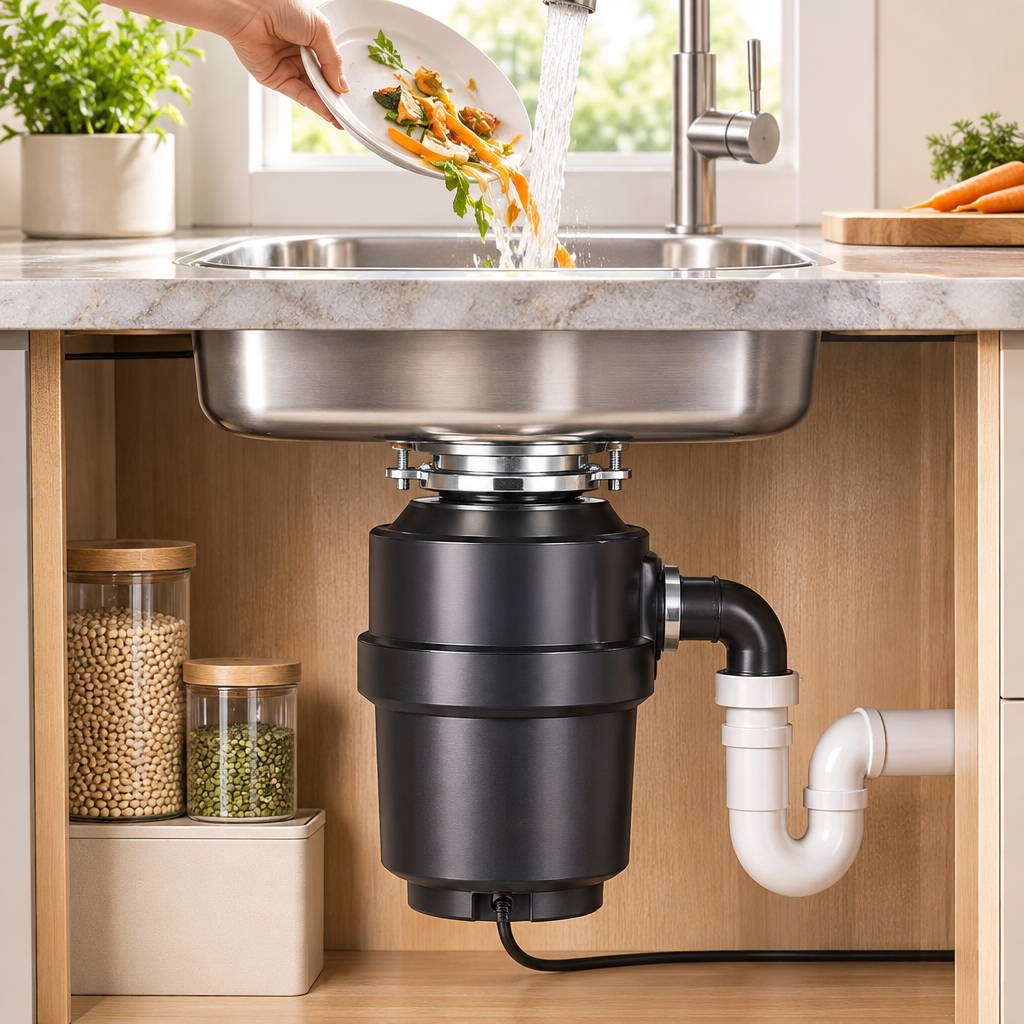
- Sink Opening and Basin Compatibility: Check that the sink drain opening matches standard mounting collars (commonly 3.5 inches / 90 mm). Ensure that the sink basin material—whether thin stainless steel, fireclay, or composite granite—can support the hanging weight and operating vibration of the disposer.
- Drainage Elevation and P-Trap Clearance: Measure the vertical distance between the sink bottom and the wall rough-in pipe. The disposer discharge outlet must sit high enough above the wall drain to allow the P-trap to retain its water seal while maintaining an appropriate downward slope on all horizontal drain pipes.
- Power Supply and Voltage Requirements: Check the electrical supply under the sink cabinet. For export products or international OEM sourcing, verify that the unit's voltage, operating frequency (such as 50 Hz on the PCD-1200TS), and plug type match regional utility standards.
- Switching Preferences: Decide whether a deck-mounted pneumatic air switch or a customized remote control best suits the kitchen layout, particularly on island sinks where drilling through stone countertops is undesirable.
- OEM Branding and Certification Needs: Commercial buyers should confirm that the manufacturer can provide custom laser marking, tailored packaging, and regulatory documentation—such as applicable CE, CB, ETL, or EMC compliance reports—for the target sales market.
6. Frequently Asked Questions (FAQs)
What does a BLDC garbage disposal do when it encounters an obstinate food blockage?
If a tough food scrap wedges between the rotating turntable impellers and the stationary grind ring, certain electronic motor controllers detect the sudden resistance and execute a directional reversal. This rotational switch strikes the trapped fragment from the opposite direction, which can free the obstruction without requiring physical intervention under the sink. If an ungrindable foreign object like a metal utensil accidentally falls into the chamber, you must turn off the appliance, disconnect the power supply completely, and remove the object using long-handled tongs or pliers. Never insert your fingers into the grinding chamber.
Can a 1200W BLDC food waste disposer be installed on standard residential sinks?
Installation feasibility depends on several sink and utility factors. Many contemporary residential sinks feature a standard 3.5-inch (approx. 90 mm) drain opening, which matches common three-bolt and quick-mount flange hardware. The PCD-1200TS platform weighs 5.5 kg, putting less physical weight on sink basins than heavier induction alternatives. However, you must still ensure that the under-sink outlet height allows proper drain pipe slope, that the sink material can handle dynamic torque, and that the electrical supply matches the unit's 50 Hz power specification.
Are BLDC food waste disposers completely safe for all private septic tanks?
While a two-stage grinding system reduces food scraps into a fine slurry, those organic solids still settle inside a private septic tank. United States Environmental Protection Agency guidance confirms that running an under-sink disposer increases the rate of sludge and scum accumulation in the tank, which requires more frequent pumping. Homeowners with septic systems should use their disposer in moderation, keep fibrous scraps and cooking grease out of the drain, and schedule regular septic inspections based on actual household use.
Why is cold water mandatory rather than hot water during waste processing?
Cold water must always be running while the disposer operates. Cold water carries ground food scraps smoothly through the household trap and into the sewer line. Crucially, hot water melts cooking fats, pan drippings, and butter into liquid grease, which coats pipe walls and solidifies downstream into stubborn blockages. Running cold tap water keeps trace greases solid so they wash away as tiny particles. Note that cooking oil, grease, or melted butter should never be poured into a food disposer or sink drain under any circumstances.
What is the service life advantage of eliminating motor brushes in kitchen disposers?
Traditional brushed motors rely on carbon brushes that press against a spinning commutator, causing friction, heat, and gradual wear over years of daily use. Brushless DC motors replace those physical contacts with solid-state electronic switching circuits and permanent magnets. By eliminating wearable brushes, a BLDC motor removes a primary mechanical wear component. While mechanical bearings, dynamic seals, and grinding teeth still experience long-term wear, the motor assembly itself operates with fewer maintenance requirements over its operational life.
7. The Evolution of Kitchen Sanitation and Smart Waste Handling
Modern kitchen sink design continues to shift toward quieter, more compact, and electronically integrated appliances. Installing a high-performance BLDC garbage disposal offers practical solutions to common under-sink problems, helping to reduce operational vibration, lower mechanical hum, and minimize annoying food jams. Through solid-state commutation, two-stage reduction, and automatic reversing routines, modern brushless disposers grind organic kitchen scraps efficiently while leaving ample room for under-sink storage and water treatment equipment. For homeowners seeking modern sink convenience and international OEM brands sourcing high-efficiency appliances, brushless DC technology provides a quiet, durable, and capable foundation for contemporary kitchen waste management.
Related News
SUBSCRIBE
INQUIRY