
How Smart Food Waste Disposers Are Transforming Modern Kitchens
Modern kitchens are becoming smarter, more efficient, and more focused on convenience. From connected appliances to space-saving kitchen equipment, homeowners increasingly expect everyday products to provide better performance with less effort. Among these innovations, smart food waste disposers are becoming an increasingly practical solution for managing food scraps directly at the kitchen sink.
Unlike basic garbage disposals that simply grind food waste, modern smart models can incorporate intelligent control functions, optimized motor systems, automatic reversing technology, and improved noise-reduction designs. These features can make everyday food waste disposal more convenient while helping create a cleaner and more organized kitchen environment.
What Are Smart Food Waste Disposers?
A smart food waste disposer is an advanced kitchen appliance designed to grind food scraps into smaller particles so they can be discharged through the kitchen drainage system. The basic principle is similar to a conventional food waste disposer, but smart models can add more sophisticated operating functions and control technologies.
For example, some advanced ZAL models feature smart grinding functions that can automatically adjust operating conditions and shut down when necessary. Certain models also support automatic forward and reverse rotation to help reduce the possibility of jamming. These functions are designed to make the disposer more responsive to different waste conditions.
This combination of grinding performance and intelligent control makes smart food waste disposers particularly suitable for modern households that value convenience and efficient kitchen management.
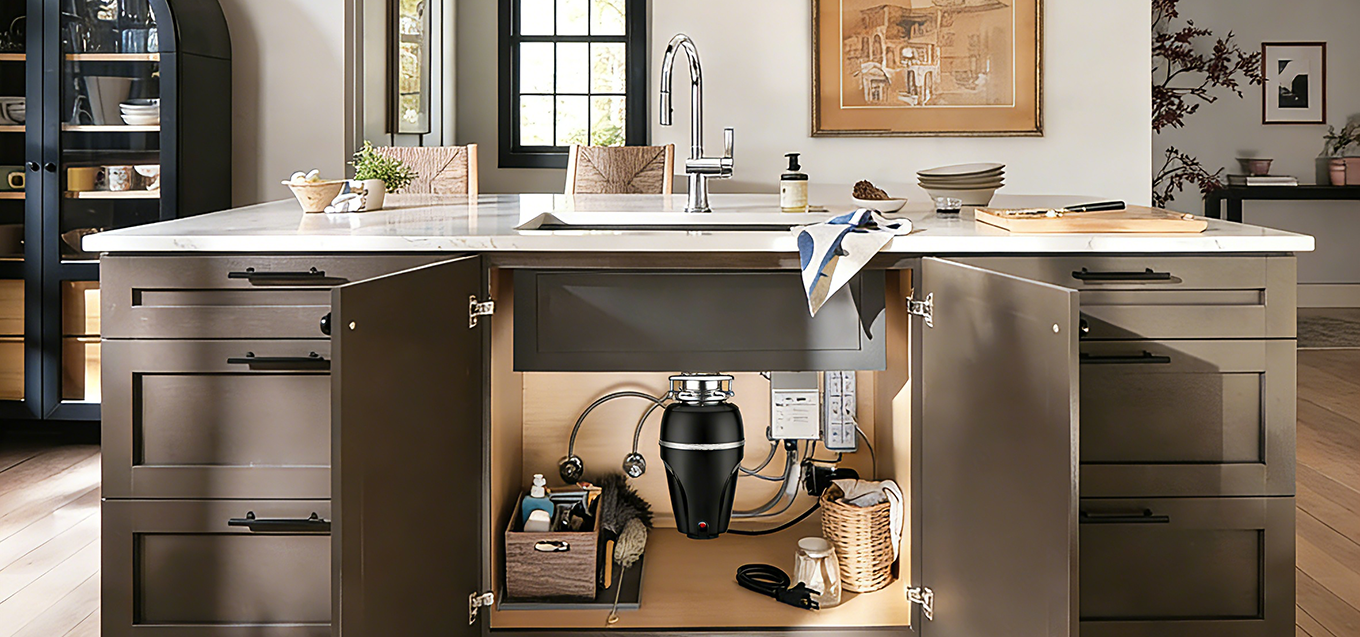
Intelligent Grinding for More Convenient Waste Disposal
One of the most important advantages of smart food waste disposers is their intelligent grinding technology.
Traditional disposers generally operate according to a relatively simple process: the motor rotates the grinding components, food scraps are broken down, and the waste is discharged through the drainage system. Smart systems can take this concept further by incorporating automatic operating controls.
For example, ZAL's BLDC smart disposer uses automatic forward and reverse rotation to help prevent jamming. Its smart grinder can also adjust its operating speed and shut itself down when appropriate.
These functions can reduce the need for users to manually intervene during everyday operation. Instead of constantly monitoring the appliance, homeowners can simply operate the disposer and allow its control system to manage key parts of the grinding process.
Powerful Motors Improve Kitchen Waste Processing
Motor performance is another important factor when choosing a smart food waste disposer.
Food scraps can vary considerably in texture and hardness. Soft vegetable scraps are relatively easy to process, while fibrous food, fruit peels, and certain harder scraps can place greater demands on the grinding system. A properly engineered motor and grinding mechanism therefore play an important role in achieving consistent performance.
ZAL's smart disposer range includes models with different motor configurations and power levels. For example, one of its smart products uses a 1200W BLDC motor designed to provide higher grinding power and faster waste processing.
For consumers, this means that choosing a disposer should not be based solely on appearance. Motor type, power, grinding system, capacity, and intended usage should all be considered together.
Automatic Reverse Rotation Helps Reduce Jamming
Kitchen food waste is not always uniform. Certain materials can become difficult to process when they accumulate around the grinding components. This is where automatic reverse rotation can provide an important advantage.
Smart food waste disposers with auto-reverse technology can alternate the direction of motor rotation when required. By changing the grinding direction, the system can help release material that may interfere with normal operation.
ZAL describes this function as part of the intelligent grinding technology, particularly for dealing with harder food waste. The reverse-rotation system is designed to improve grinding performance while reducing the likelihood of jamming.
This type of automation is especially useful in busy kitchens where users want reliable operation without repeatedly stopping the disposer to address minor blockages.
Quieter Operation for Modern Open-Plan Kitchens
Noise is another major consideration when selecting a kitchen waste disposer.
In traditional kitchen layouts, noise from appliances may be less noticeable. However, modern homes increasingly use open-plan kitchens that connect directly with dining and living areas. A loud appliance can therefore become a significant inconvenience.
Modern food waste disposers can address this issue through improved structural design, motor balancing, sound insulation, and optimized grinding chambers. ZAL's product range includes dedicated quiet series models as well as smart products incorporating noise-reduction design features.
For example, one ZAL PMDC disposer combines non-jitter balancing technology with a sound-insulated design to reduce vibration and operating noise.
The result is a more comfortable kitchen experience, particularly during meal preparation or when the kitchen is being used at the same time as nearby living spaces.
Better Kitchen Hygiene and Cleaner Waste Management
Food scraps left in a kitchen trash bin can create unpleasant odors and attract insects, especially in warm conditions. A food waste disposer provides an alternative approach by allowing suitable food scraps to be processed immediately at the sink.
Smart food waste disposers can make this process more convenient because users can deal with food waste immediately after preparing or eating a meal. Instead of collecting wet organic waste in a bin, users can process appropriate scraps directly through the disposer.
Some ZAL models also feature bacteriostatic grinding chambers designed to support long-lasting cleanliness. For example, selected products specify a bacteriostatic grinding chamber and a stated 99.9% cleanliness-related performance claim based on the manufacturer's test information.
Of course, users should always follow the manufacturer's instructions regarding which types of food waste are suitable for disposal.
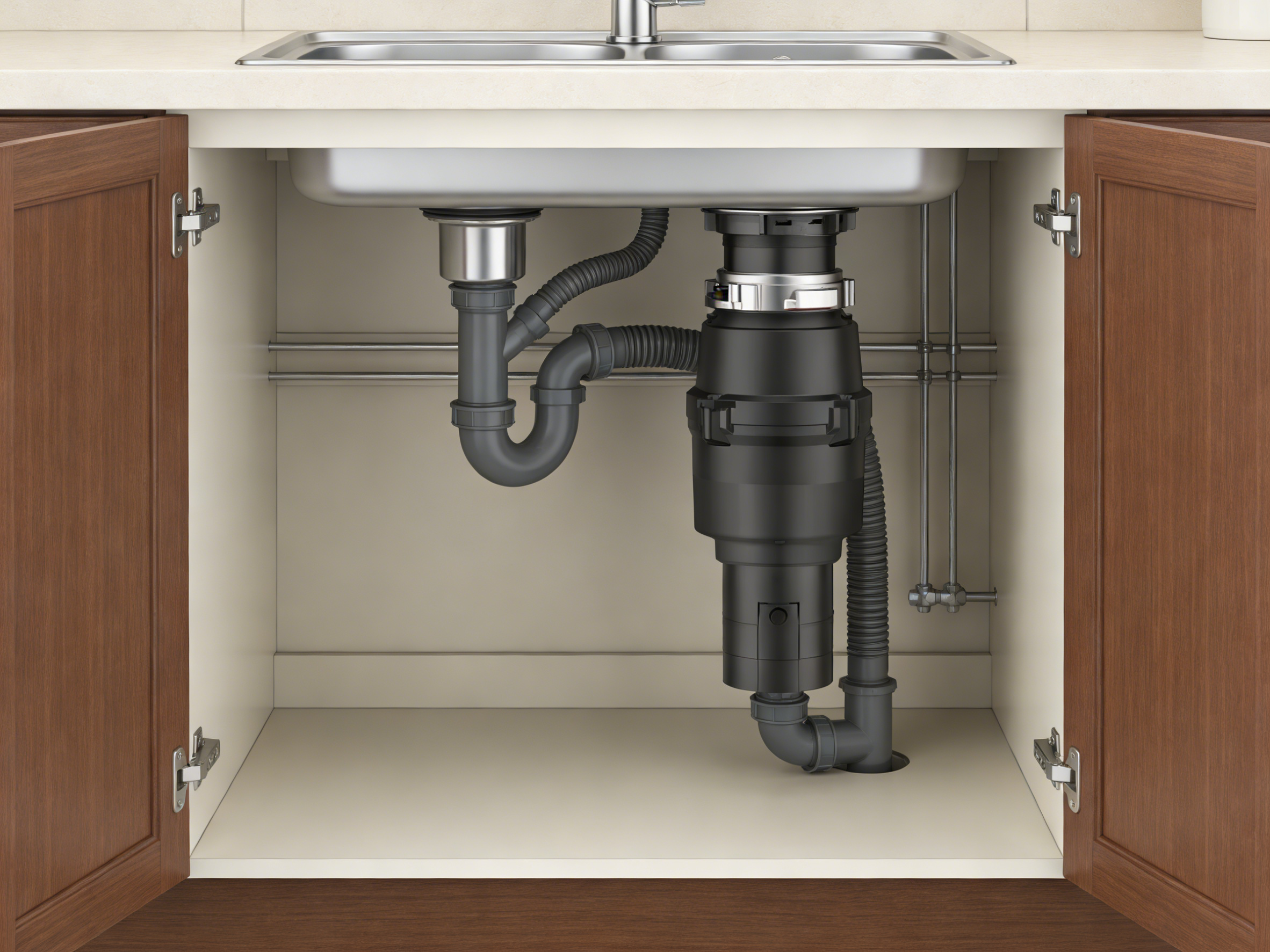
Choosing the Right Smart Food Waste Disposer
Not every kitchen requires the same type of disposer. Before purchasing, consumers should consider several important factors.
Motor power: Choose a motor appropriate for the household's expected food waste volume and type.
Grinding system: Multi-stage grinding can provide more comprehensive processing for certain applications.
Noise level: A quieter model can be particularly beneficial for open-plan kitchens.
Control method: Air switches, wireless controls, and other options offer different levels of convenience.
Capacity: The grinding chamber should be appropriate for the expected usage frequency.
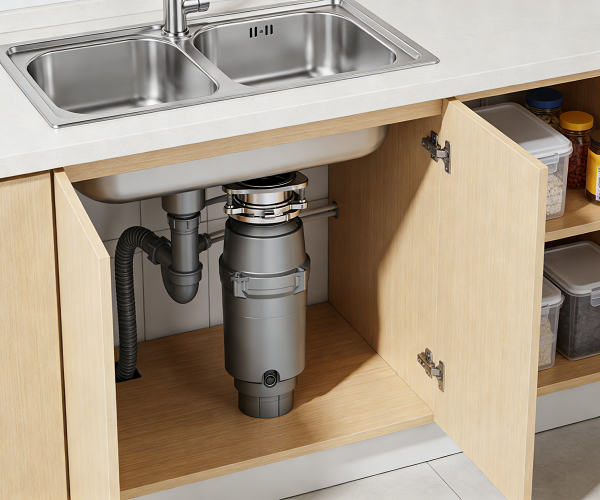
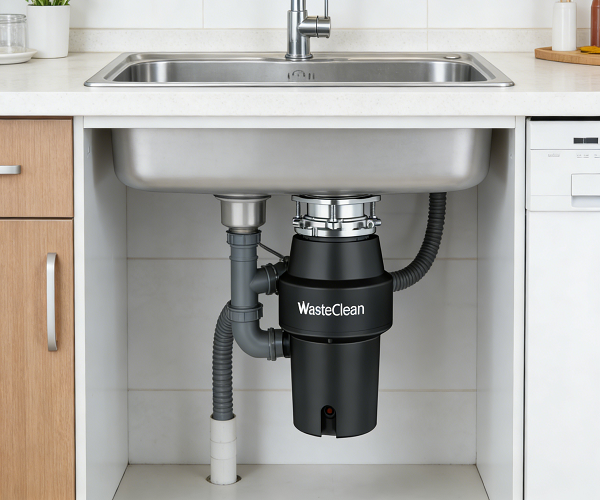
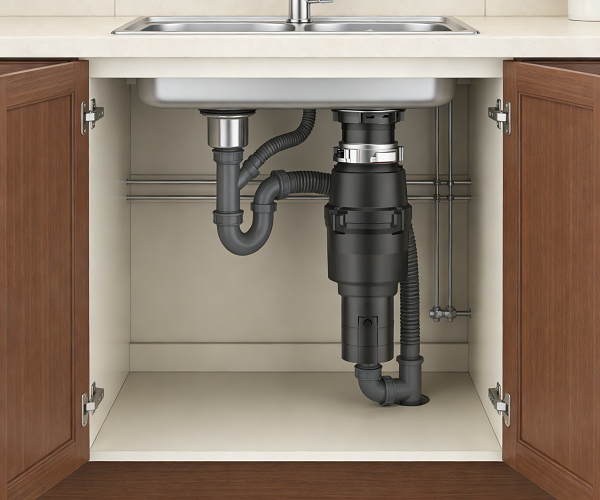
Installation requirements: Check dimensions, sink compatibility, electrical specifications, drainage connections, and available under-sink space.
For commercial buyers, importers, and private-label brands, customization can also be important. ZAL provides OEM and ODM services and can customize areas such as motor power, grinding systems, appearance, logos, and packaging.
Conclusion
Smart food waste disposers represent an important step toward more convenient kitchen waste management. Their combination of powerful motors, intelligent grinding, automatic reverse rotation, improved noise control, and convenient operation can make food waste disposal easier and more efficient.
With smart series, quiet series, power series, slim series, and OEM/ODM capabilities, ZAL provides food waste disposal solutions for different household and business requirements.
In short, smart food waste disposers are transforming modern kitchens by combining intelligent control with powerful grinding performance and user-focused design.
Related News
SUBSCRIBE
INQUIRY