
How Much Horsepower Do You Need for a Kitchen Food Waste Disposer?
Choosing the right kitchen food waste disposer is not simply about finding the most powerful motor. Horsepower (HP) is an important specification because it affects grinding performance, but the ideal power rating also depends on your household size, cooking habits, food waste volume, and the type of waste you typically process.
Kitchen food waste disposers are commonly available in different motor ratings, including 1/2 HP, 3/4 HP, and 1 HP. Some models are also designed with different grinding stages, motor technologies, noise-control systems, and drainage structures. Understanding how these factors work together can help you choose a disposer that delivers reliable performance without paying for power you may not need.
What Does Horsepower Mean in a Food Waste Disposer?
Horsepower indicates the motor's power output and provides a general indication of how much work the disposer can perform. In a kitchen garbage disposal, a higher HP motor generally provides greater torque and grinding capability, particularly when processing larger quantities or tougher types of food waste.
However, horsepower should not be considered independently. Grinding efficiency also depends on the motor type, grinding chamber, impeller design, rotational speed, and overall construction of the disposer.
For example, a well-engineered 3/4 HP food waste disposer can provide excellent everyday performance for many households. A 1 HP model offers additional power for heavier workloads, but that extra capacity may not be necessary for every kitchen.
Is 1/2 HP Enough for a Kitchen?
A 1/2 HP kitchen food waste disposer is generally suitable for light to moderate household use. It can be a practical choice for smaller households, apartments, or kitchens where food waste is primarily made up of soft scraps, vegetable leftovers, fruit peels, and other everyday waste.
The main advantages of a 1/2 HP disposer include:
- Lower power consumption
- Compact installation options
- Suitable grinding performance for everyday food waste
- Often lower operating noise
- Cost-effective operation
ZAL offers 1/2 HP models rated at approximately 370W, providing an option for customers who need practical food waste processing without a high-power motor.
If your kitchen generates relatively small amounts of food waste and you do not regularly process difficult materials, moving to a larger motor may provide little practical benefit.
When Should You Choose a 3/4 HP Disposer?
For many households, 3/4 HP represents a useful balance between power, efficiency, and everyday usability. It provides more grinding capacity than a basic 1/2 HP model while remaining suitable for typical residential kitchen applications.
A 3/4 HP food waste disposer can be a good choice for:
- Medium-sized households
- Families that cook frequently
- Kitchens generating moderate food waste
- Users who want stronger grinding performance
- Households processing a wider variety of food scraps
ZAL's 3/4 HP models are available with 560W motors and different grinding configurations. For example, one ZAL model uses a PMDC motor, a two-stage grinding system, a 1,200 ml grinding capacity, and a noise rating of 61 dB.
This illustrates why motor power should be evaluated together with grinding-system design. Two disposers with the same horsepower rating can provide different user experiences depending on their internal engineering.
Who Needs a 1 HP Food Waste Disposer?
A 1 HP kitchen food waste disposer is designed for users who want higher grinding power and greater capacity. It is particularly useful for larger households, frequent cooking, or kitchens that regularly generate substantial amounts of food waste.
A high-power disposer may be appropriate when you frequently process:
- Fibrous vegetable waste
- Tough food scraps
- Larger quantities of food waste
- Certain small food bones, depending on the manufacturer's specifications
- Harder leftovers that may challenge lower-powered models
ZAL's 1 HP products include 750W models with high-torque motors and multi-stage grinding systems. One model features a 1,500 ml grinding chamber, a 2-stage grinding system, and a 58 dB noise rating.
The additional motor power can provide greater torque and grinding efficiency, making 1 HP a suitable option for demanding household applications.
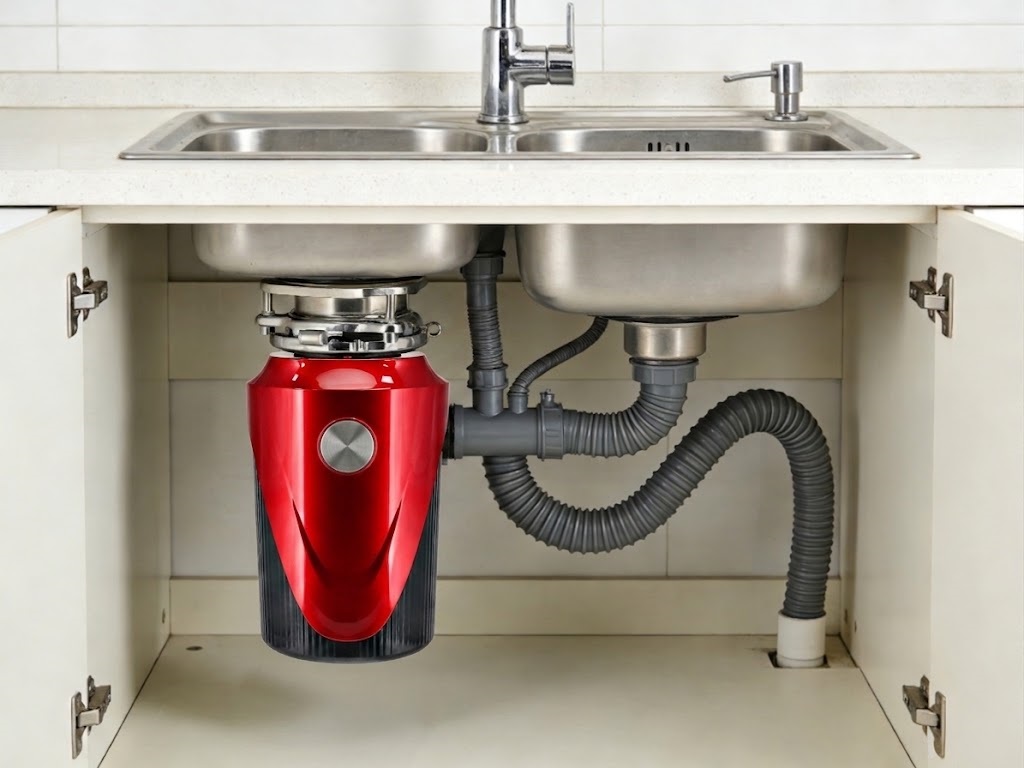
1/2 HP vs. 3/4 HP vs. 1 HP
The easiest way to understand the differences is to consider the typical workload rather than simply comparing horsepower numbers.
| Motor Power | Typical Application | Grinding Capability |
|---|---|---|
| 1/2 HP | Small households and light use | Everyday soft food waste |
| 3/4 HP | Medium households and regular cooking | Moderate to tougher food waste |
| 1 HP | Large households and heavy use | High-volume and more demanding food waste |
These are general guidelines rather than strict rules. The appropriate disposer depends on the complete product design and the user's specific requirements.
Does Higher Horsepower Mean Better Performance?
Not necessarily.
A higher horsepower rating can provide more motor power, but grinding performance is determined by the entire disposer system. Grinding stages, impeller construction, motor technology, chamber capacity, drainage design, and vibration control can all affect performance.
For example, ZAL's product range combines different motor ratings with different grinding systems and technologies. Its Power Series is designed around high-torque motors and optimized grinding chambers for households with frequent cooking and higher food waste volumes.
This is why buyers should avoid choosing a food waste disposer based solely on the HP number.
What Other Features Should You Consider?
Grinding System
The grinding system directly influences how efficiently food waste is processed. Multi-stage grinding can break waste into smaller particles and may help support efficient drainage.
Motor Type
Different motor technologies can provide different combinations of torque, speed, efficiency, and operating characteristics. When comparing products, consider the motor design alongside its rated power.
Noise Control
Motor power is not the only factor affecting sound. Housing construction, vibration control, insulation, and internal balancing can influence the noise level.
For example, ZAL offers quiet-oriented models as well as high-power units incorporating sound-reduction features. Its 1 HP FCD-920 model is specified at 58 dB.
Grinding Chamber Capacity
A larger grinding chamber can be beneficial for households that generate more food waste. Capacity should be considered together with motor power and grinding efficiency rather than treated as a standalone specification.
Installation Space
If cabinet space beneath the kitchen sink is limited, a compact disposer can be more practical than simply selecting the largest available model. ZAL's Slim Series, for example, includes different motor configurations while focusing on space-efficient installation.
How to Choose the Right Horsepower for Your Kitchen
Start by considering how your kitchen is used.
If you live alone or with one other person and mainly produce small amounts of soft food waste, a 1/2 HP disposer may be sufficient.
If you have a family and cook regularly, a 3/4 HP disposer offers a strong balance of grinding performance and everyday practicality.
If you have a larger household, entertain frequently, or regularly generate significant amounts of food waste, a 1 HP disposer can provide the additional grinding power and capacity you need.
It is also important to check the manufacturer's recommendations regarding the types of food waste that can be processed. Not every disposer is designed for the same materials, regardless of its horsepower rating.
Why the Right Horsepower Matters
Selecting the appropriate motor size helps you balance performance, operating requirements, installation considerations, and overall value. A disposer that is too small for your usage pattern may struggle with heavier workloads, while choosing a significantly more powerful unit than necessary may add cost without providing meaningful benefits.
The best kitchen food waste disposer is therefore not necessarily the one with the highest HP. It is the one whose motor power, grinding system, capacity, noise control, and construction match your actual kitchen requirements.
Conclusion
For most residential applications, 1/2 HP, 3/4 HP, and 1 HP cover a broad range of kitchen food waste disposal needs. A 1/2 HP model is suitable for lighter use, 3/4 HP provides a versatile middle ground, and 1 HP is better suited to demanding workloads and higher food waste volumes.
When comparing kitchen garbage disposals, look beyond horsepower. Consider the grinding system, motor technology, chamber capacity, noise level, installation dimensions, and intended application. By evaluating the complete product rather than a single specification, you can select a food waste disposer that provides the right combination of power, reliability, and everyday performance.
Related News
SUBSCRIBE
INQUIRY