
How Manufacturing Standards Shape Garbage Disposal Reliability
When a garbage disposal fails after six months, the root cause often traces back to decisions made during manufacturing rather than consumer misuse. The gap between functional units and durable appliances lies in how a garbage disposal manufacturer approaches motor selection, grinding chamber engineering, and assembly quality control. Understanding these production factors helps buyers distinguish between disposers built for longevity and those designed merely to meet minimum specifications.
Motor Architecture Determines Processing Capacity
The motor serves as the disposer's mechanical heart, yet not all motors operate under the same principles. Permanent magnet DC motors deliver consistent torque across varying loads, maintaining grind efficiency even when processing fibrous vegetables or small bones. Induction motors, while robust, typically require higher starting currents and may stall under sudden load changes.
A 0.75HP rating translates to approximately 560 watts, but power alone doesn't guarantee performance. Manufacturers must balance motor speed with grinding chamber volume—a 1200ml capacity paired with a 2500 RPM load speed creates optimal dwell time for waste breakdown without jamming. Units operating at 3800 RPM no-load speed demonstrate reserve capacity for tougher materials, though sustained high-speed operation generates more heat and acoustic energy.
Grinding Systems Separate Adequate from Effective
Single-stage grinders pulverize waste through brute force between rotating impellers and stationary shredder rings. Two-stage systems add a secondary cutting mechanism that captures particles missed in the initial pass, reducing the size of discharged material. This difference matters in plumbing systems with older pipes or longer drain runs where larger particles risk accumulation.
The grinding chamber itself requires bacteriostatic treatment to prevent microbial colonization in the moist, organic-rich environment. Without this, biofilm layers form within weeks, creating odors and potentially shortening component life as corrosive byproducts attack metal surfaces. According to the product specifications, manufacturers implementing antimicrobial chamber coatings can achieve a 99.9% reduction in bacterial presence compared to standard untreated stainless steel.
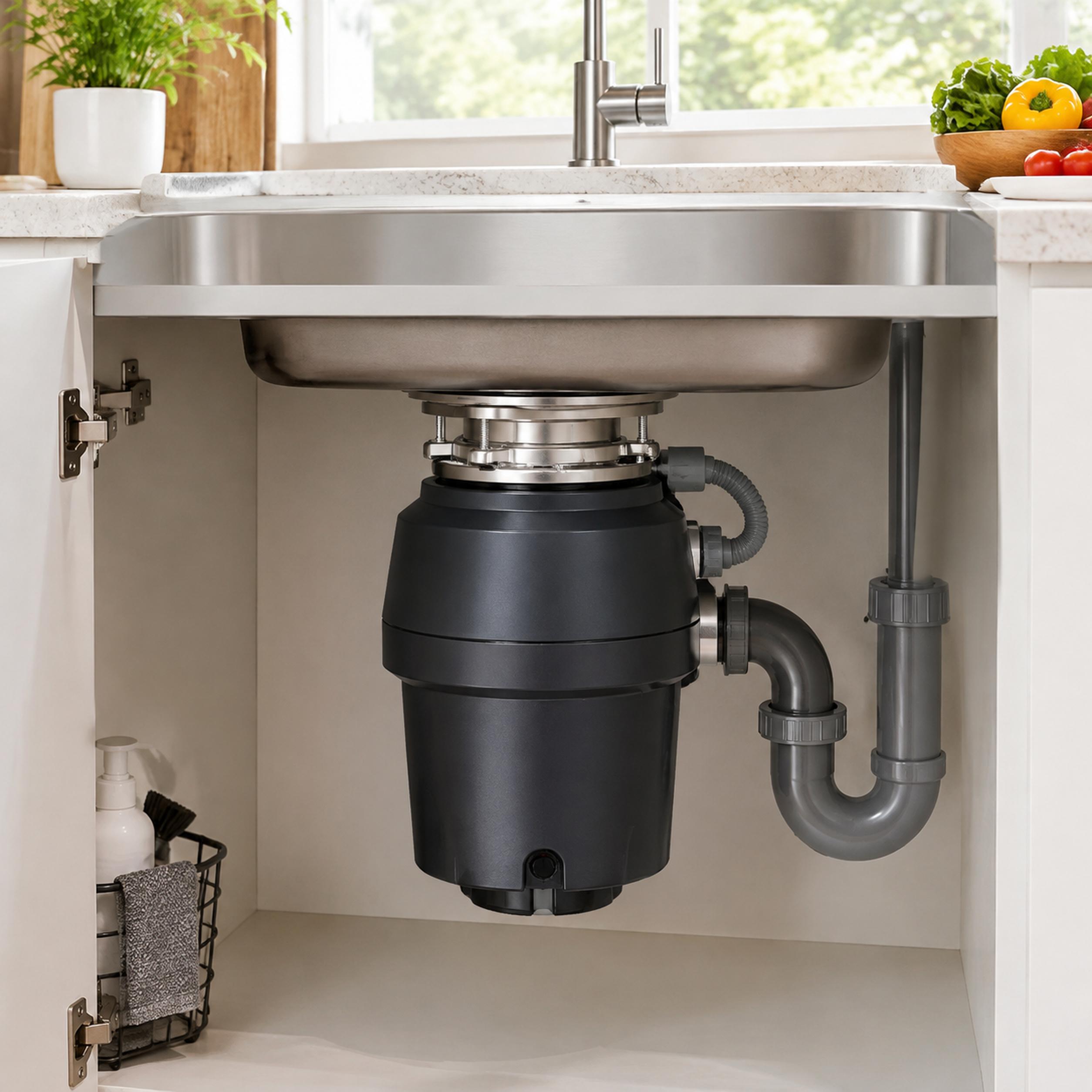
Acoustic Engineering Addresses Operational Noise
Noise originates from three sources: motor vibration, grinding impacts, and water turbulence. A properly balanced rotor assembly minimizes the first, while chamber geometry and material choices address the latter two. Thickened sealing chambers combined with soundproofing insulation can reduce operational noise to 63 decibels—comparable to normal conversation levels rather than the 75-80 decibel output of uninsulated units.
Dynamic balancing technology eliminates centrifugal force imbalances that cause the entire unit to vibrate during operation. When manufacturers skip this step, the disposer's mounting assembly loosens over time, creating progressively louder operation and eventually mechanical failure at connection points.
| Noise Source | Mitigation Strategy | Measured Reduction |
|---|---|---|
| Motor vibration | Dynamic balancing | 8-12 dB |
| Grinding impacts | Sound-damping chamber material | 5-8 dB |
| Water turbulence | Optimized outlet geometry | 3-5 dB |
Installation Interface Standards Affect Longevity
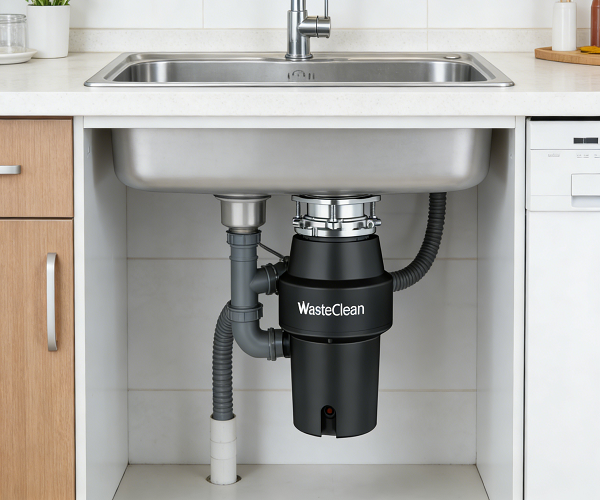
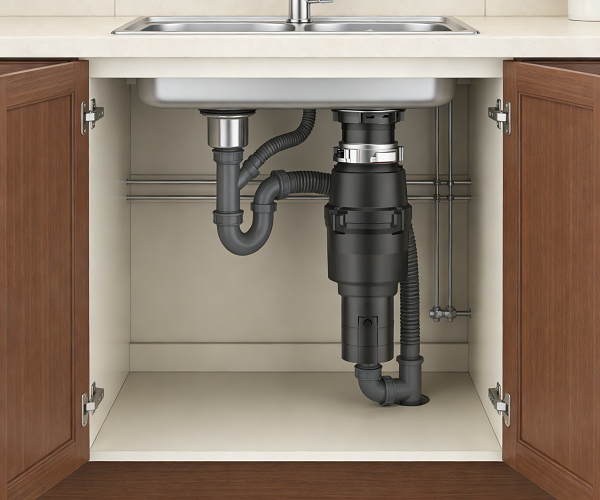
The mounting flange connecting disposer to sink drain represents a critical structural junction. Quick-mount systems using twist-lock mechanisms allow tool-free installation but must maintain compression seals under operational torque. Flange assemblies that fail to account for thermal expansion cycles develop leaks as gasket materials degrade.
Dishwasher connection ports require anti-backflow design to prevent contamination. Manufacturers incorporating one-way valve systems or elevated port positioning ensure proper drainage hierarchy, though these features add manufacturing complexity. Air switch systems provide electrical isolation, routing control through pneumatic lines rather than direct electrical connections near water sources.
Production Scale Enables Quality Control
Facilities producing over 200,000 units annually can justify investment in automated testing stations that verify torque output, noise levels, and seal integrity for each unit. Smaller operations often rely on batch sampling, which may miss defects that manifest only under specific load conditions or after extended runtime.
Component sourcing becomes strategic at volume. Large manufacturers negotiate direct relationships with motor suppliers, specifying custom winding configurations optimized for disposer duty cycles rather than accepting off-the-shelf motors designed for different applications. This customization extends to grinding discs, where alloy composition affects both cutting performance and corrosion resistance.
Material Selection Balances Cost and Durability
Grinding chambers constructed from stainless steel resist corrosion but increase unit weight and manufacturing cost. Composite materials incorporating glass-filled polymers offer corrosion immunity at lower weight, though they require different joining techniques during assembly. The choice cascades through the design—heavier chambers need reinforced mounting brackets, affecting overall installation requirements.
Rubber components in splash shields and gaskets must withstand continuous exposure to organic acids produced during waste breakdown. Food-grade EPDM rubber maintains flexibility across temperature ranges while resisting degradation, but costs more than standard synthetic rubber compounds. A garbage disposal manufacturer choosing inferior sealing materials saves pennies per unit while creating warranty exposure measured in dollars.
Certification Requirements Vary by Market
North American markets emphasize electrical safety through UL certification, focusing on ground fault protection and wire gauge adequacy. European standards additionally mandate energy efficiency thresholds and material recyclability documentation. Asian markets often require specific voltage configurations—100V, 220V, or 240V options—with corresponding plug standards that affect production line setup.
Multiple voltage support requires transformer-based power supplies or motor windings designed for dual voltage operation. The latter approach reduces component count but demands precise manufacturing tolerances in coil winding. Manufacturers serving global markets maintain separate production lines or implement flexible assembly stations that accommodate different electrical specifications without cross-contamination risk.
Customization Capacity Reflects Manufacturing Maturity
OEM relationships require manufacturers to adapt baseline designs to brand-specific requirements—different housing colors, custom motor power ratings, or proprietary control interfaces. This flexibility depends on modular design architecture where core components remain standardized while cosmetic and functional peripherals vary.
Low minimum order quantities enable smaller brands to enter the market without inventory risk, but only manufacturers with flexible production scheduling can profitably serve this segment. The ability to switch between product variants without extended downtime indicates sophisticated production planning and skilled workforce training.
Distribution Networks Determine Market Reach
Manufacturing capability means little without logistics infrastructure that delivers products intact and on schedule. Companies establishing partnerships with over 30 international brands have proven their ability to manage complex supply chains, navigate customs requirements, and provide local technical support. This operational track record often matters more than specifications alone when brands evaluate potential suppliers.
Regional warehousing reduces lead times for replacement parts, a critical factor for service-oriented brands. Manufacturers who treat after-sale support as an integrated part of their operation rather than an afterthought build reputations that attract premium brand partnerships.
Quality Consistency Requires Process Discipline
Two units with identical specifications may perform differently if manufacturing processes lack consistency. Torque settings during assembly affect seal compression and motor alignment. Inconsistent grinding disc installation creates imbalanced rotation. These variations don't appear in product datasheets but emerge during field use.
Mature manufacturers implement statistical process control, tracking dimensional tolerances and assembly torques across production shifts. When a garbage disposal manufacturer documents and analyzes these metrics, they can identify drift before defects reach customers. This discipline separates factories that make disposers from those that manufacture reliable kitchen appliances.
The difference between adequate and excellent garbage disposals exists in the manufacturing details buyers rarely see. Motor selection, grinding system design, acoustic engineering, and production quality control collectively determine whether a unit survives five years of daily use or requires replacement within months. For brands sourcing OEM products and consumers seeking durable solutions, understanding these manufacturing factors provides the framework for informed selection. We leverage decades of production experience across diverse market requirements, maintaining the process discipline that turns specifications into consistent performance.
Related News
SUBSCRIBE
INQUIRY