
How Kitchen Waste Disposers Handle Everyday Food Scraps Without the Mess
Anyone who has scraped bones, vegetable peels, and leftover sauce into a trash bag knows the problem. It smells, it attracts pests, and it fills up landfill space faster than it should. Kitchen waste disposers solve this by grinding food scraps into fine particles that flow safely through existing plumbing. Instead of bagging waste for curbside pickup, you flush it with a stream of water. The appeal is practical rather than glamorous: less odor, fewer trips to the bin, and a cleaner sink area overall.
But not every disposer handles the job equally well. Some stall on fibrous vegetable skins. Others clog on small bones or struggle under load, leaving a half-ground mess sitting in the chamber. Understanding what separates a reliable unit from a frustrating one starts with looking at motor type, grinding stages, and chamber hygiene, since these three factors determine most of the everyday experience.
Why Food Scraps Are Harder to Grind Than People Expect
Food waste isn't uniform. Potato peels are fibrous and stretchy. Chicken bones are brittle but dense. Coffee grounds are abrasive in bulk. A disposer that only grinds soft produce well will choke the moment something tougher goes down the drain, and that mismatch is the root of most clogging complaints.
This is why single-stage grinding, which was common in older or budget units, often falls short. One pass of blunt force isn't enough to break down mixed waste consistently. A two-stage grinding system addresses this by processing waste in sequence rather than all at once, which is closer to how a food processor handles different textures instead of applying one blunt chop.
What a 2-Stage Grinding System Actually Changes
In a two-stage design, waste first passes through an initial breakdown stage, then moves into a secondary stage for finer reduction before it exits with water flow. The FCD-722 model from our range uses this approach, described by the manufacturer as Multigrind technology, specifically built to process tougher waste like small bones alongside softer scraps such as vegetable peelings.
The practical benefit shows up in daily use. Instead of running the disposer twice or manually breaking up waste beforehand, the unit handles mixed loads in one cycle. For households that cook with bone-in meat or whole vegetables regularly, this reduces the chance of partial grinding and buildup inside the chamber.
Motor Type and Why It Matters More Than Horsepower Alone
Horsepower numbers get a lot of attention, but motor type shapes how that power is delivered. The FCD-722 runs on a 0.75HP, 560W PMDC (permanent magnet direct current) motor. PMDC motors are known for delivering strong torque at startup, which matters because food waste resistance is highest the moment grinding begins, not once the motor is already spinning.
This matters for a simple reason: a motor that loses torque under load tends to slow down or stall when it hits something dense, like a chicken bone fragment. A motor built to sustain torque keeps grinding at a more consistent speed. According to the manufacturer's specifications, this unit runs at 3800 RPM with no load and 2500 RPM under load, which illustrates the kind of drop that occurs once real waste enters the chamber.
Noise Levels and Why Quiet Operation Isn't Just a Comfort Feature
A loud disposer is more than an annoyance. In open-plan kitchens, noise travels into living and dining areas, which makes people hesitant to run the unit during meals or in the evening. Over time, that hesitation defeats the purpose of having the appliance at all.
The FCD-722 is rated at 61dB, achieved through what the manufacturer describes as non-jitter balancing technology paired with sound insulation. For context, that noise level sits closer to a quiet conversation than to a running blender, making it reasonable to operate without disrupting activity nearby. Balanced rotation also reduces vibration, which has a secondary benefit: less mechanical stress on mounting hardware over years of use.
Chamber Hygiene: The Problem Most Buyers Overlook
Grinding food waste means the chamber stays in near-constant contact with organic material, water, and residue. Left unaddressed, this becomes a breeding ground for odor-causing bacteria, even if the unit is rinsed regularly. This is often the gap between a disposer that smells fine for years and one that develops a persistent odor within months.
The FCD-722 addresses this with a bacteriostatic grinding chamber, which the manufacturer states maintains 99.9% cleanliness over time, combined with turbocharged drainage designed to flush residue and reduce the chance of clogs forming inside the chamber. Turbocharged drainage refers to a stronger, more directed water flow path through the chamber during operation, which helps carry ground waste out rather than letting it settle.
Installation Considerations: Fitting Into an Existing Kitchen
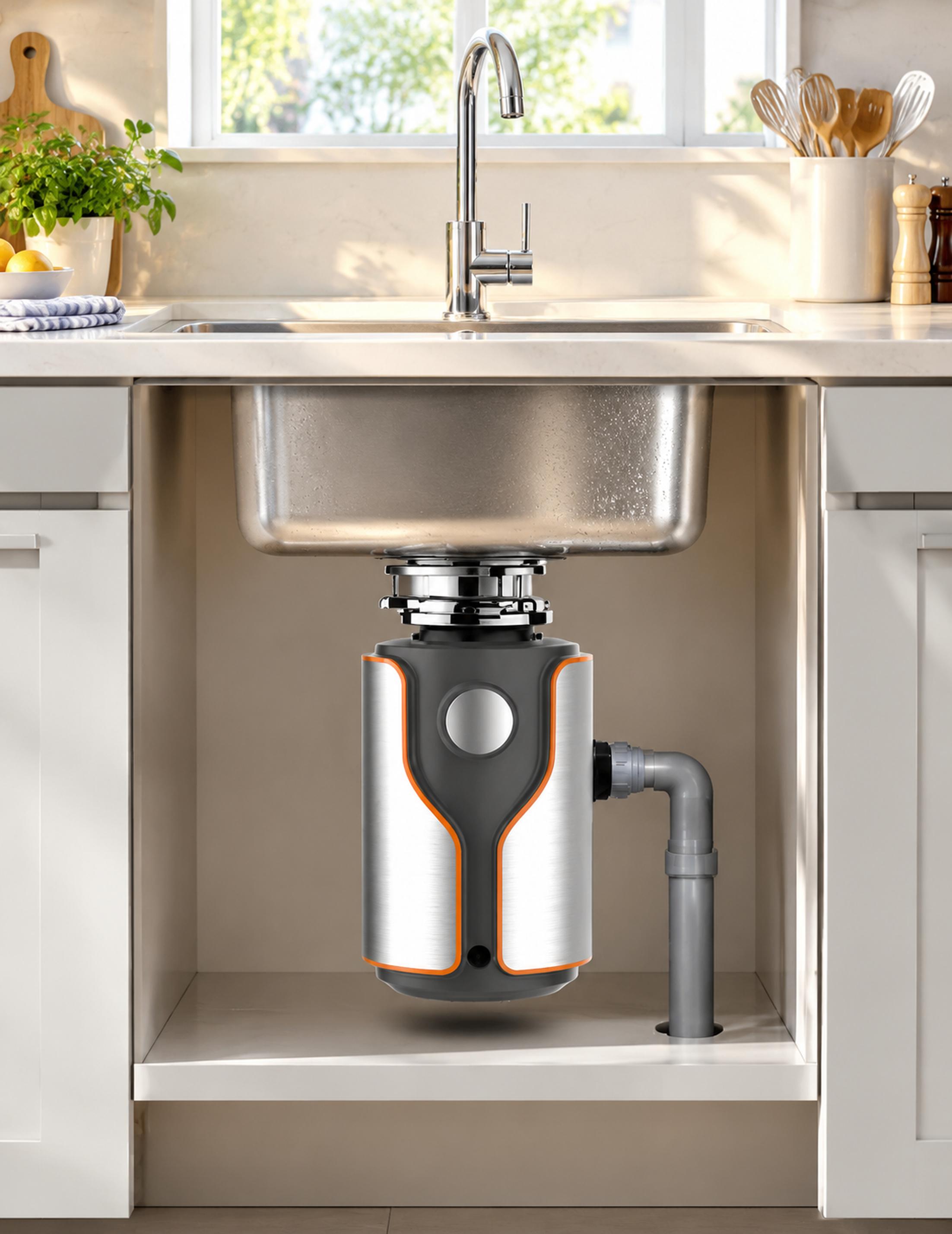
A disposer only delivers on its specifications if it fits the kitchen it's installed in. Continuous feed units, like the FCD-722, are designed to accept waste while running continuously, rather than requiring a batch-and-grind cycle, which suits households that generate scraps steadily while cooking or cleaning up.
Several installation details decide whether a unit integrates smoothly:
- Mounting system: A three-point flange mounting setup is designed for compatibility with standard sink openings, easing retrofit installs.
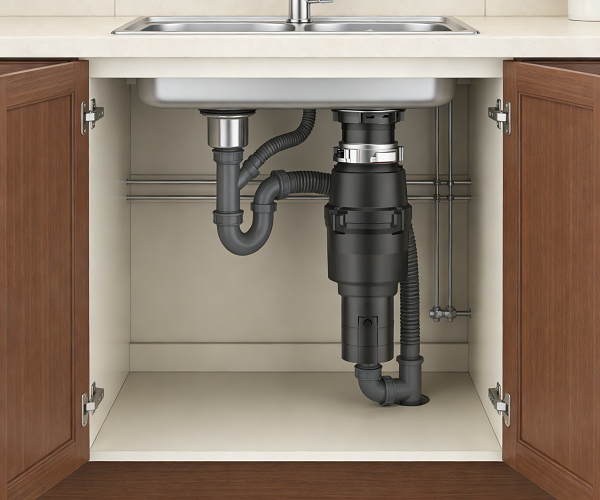
- Dishwasher interface: Built-in dishwasher connection ports allow dishwasher drainage to route through the disposer, avoiding a separate drain line.
- Control method: Support for air switch or remote control operation gives flexibility depending on counter layout and whether a wall switch is practical.
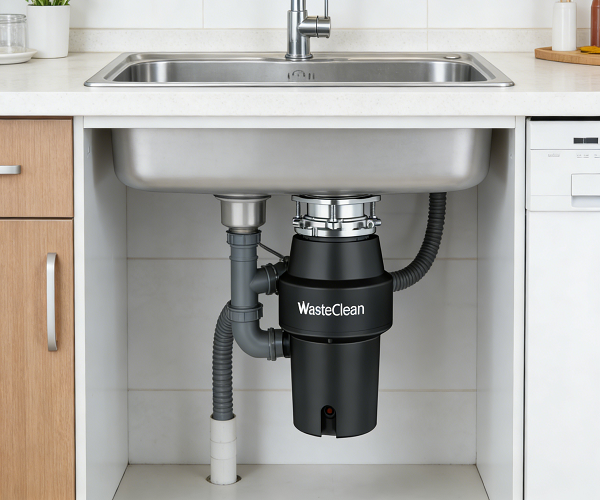
- Footprint: At 184 x 184 x 350mm and 5.6kg, the FCD-722 is compact enough for cabinets with limited under-sink clearance.
Comparing Core Specifications at a Glance
| Specification | FCD-722 Detail |
|---|---|
| Motor Type | PMDC motor |
| Power Rating | 0.75HP / 560W |
| Grinding System | 2-stage (Multigrind) |
| Grinding Capacity | 1200ml |
| Noise Level | 61dB |
| No-load RPM | 3800 |
| Load RPM | 2500 |
| Dimensions | 184 x 184 x 350mm |
| Net Weight | 5.6kg |
| Frequency | 50/60 Hz |
Tables like this matter during the selection process because grinding capacity, motor type, and noise level don't always move together. A unit can be powerful but loud, or quiet but underpowered for bones. Reviewing specifications side by side, rather than relying on a single headline number, gives a clearer picture of real-world performance.
Choosing the Right Disposer for Your Kitchen's Waste Habits
Not every household needs the same configuration, and the decision usually comes down to what actually goes down the drain.
- Mostly soft produce and liquids: A single-stage or lower horsepower unit may be sufficient, since there's less resistance to overcome.
- Mixed waste including small bones or fibrous skins: A two-stage grinding system becomes important, since it's built to handle variable density in one pass.
- Shared walls or open kitchen layouts: Prioritize noise rating, since a quiet unit under 65dB is less disruptive during normal household activity.
- Existing dishwasher setup: Confirm the disposer includes a dishwasher interface, so plumbing doesn't require a separate drain modification.
- Limited cabinet space: Check unit dimensions and weight before purchase, especially in older cabinetry built around smaller plumbing fixtures.
Frequently Asked Questions
Can kitchen waste disposers grind bones safely?
Small, soft bones, like those from chicken or fish, can be processed by units with multi-stage grinding systems designed for tougher waste. Large or dense bones from red meat are generally discouraged across the industry, regardless of motor power, since they risk jamming the grinding mechanism.
Does a louder disposer mean it's more powerful?
Not necessarily. Noise is influenced more by motor balancing and sound insulation than by raw horsepower. A well-balanced motor can be powerful and still operate at a moderate noise level, while a poorly insulated unit can be loud despite modest power.
How often does the grinding chamber need cleaning?
Even chambers designed with bacteriostatic properties benefit from periodic rinsing with cold water and occasional use of ice cubes or citrus peels, which help dislodge residue mechanically rather than relying solely on the chamber's surface properties.
Is continuous feed better than batch feed?
Continuous feed units allow waste to be added while the motor runs, which suits ongoing kitchen prep. Batch feed units require waste to be loaded before switching on, offering a safety advantage since the drain opening is covered during grinding. The right choice depends on cooking habits and household safety priorities.
Kitchen waste disposers aren't a one-size-fits-all appliance, and the differences between models often come down to how they're engineered to handle resistance, noise, and hygiene over years of daily use. For households dealing with mixed food waste, a two-stage grinding system paired with a torque-sustaining motor tends to hold up better than simpler single-stage designs. Foshan ZAL Intelligent Home Appliance Co., Ltd. has spent over two decades manufacturing kitchen food waste disposers for international brands, and that long production history is reflected in details like chamber hygiene design and sound insulation that address the practical frustrations buyers actually report. Whether you're sourcing a single model or comparing specifications across a product line, matching the disposer's grinding capability and noise profile to your kitchen's real waste habits remains the most reliable way to choose well.
Related News
SUBSCRIBE
INQUIRY