
Evaluating a Garbage Disposal for Apartment Living: Sizing, Plumbing, and Practical Requirements
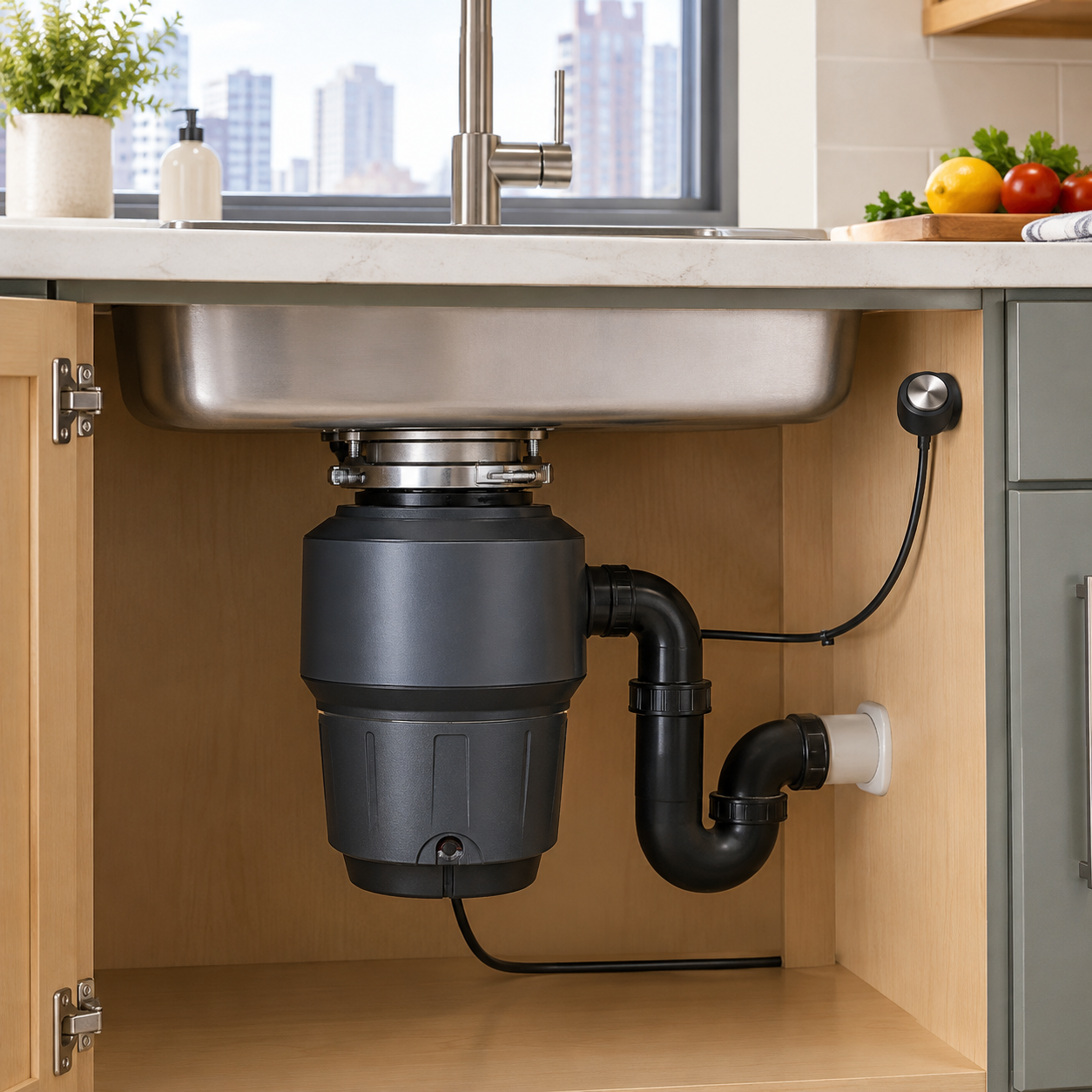
Finding an appropriate garbage disposal for apartment living involves managing tight physical boundaries, strict lease obligations, and communal plumbing infrastructure. In multi-family buildings, kitchen layouts rarely allow the generous under-sink cabinet volume seen in single-family residential properties. Installing an apartment garbage disposal demands attention to motor profile, drain slope clearance, and sound transmission through adjoining walls.
Food scraps can cause noticeable odors if left in indoor kitchen bins, especially when trash is not removed frequently in compact living quarters. While kitchen disposers process everyday meal scraps mechanically, choosing an incompatible appliance can lead to pipe obstructions, electrical overloads, or building code violations. A practical approach balances mechanical capability, physical cabinet dimensions, and careful operation within multi-unit environments.
Multi-Family Structural and Rental Considerations
Navigating Lease Rules and Tenant Alterations
Living in a rented unit places structural control in the hands of property owners and building managers. Most rental agreements treat additions to drainage lines or under-sink electrical wiring as physical alterations requiring explicit written management approval. Tenants must review lease clauses governing fixture modifications before purchasing any under-sink food waste disposer.
Plumbing leaks in multi-story residential buildings can penetrate subfloors and cause water damage to ceiling structures in neighboring apartments below. For this reason, property managers often require certified tradespeople to perform kitchen plumbing work. Unauthorized installations risk forfeiture of security deposits or sudden demands for complete restoration when vacating the property.
Plumbing Rough-In Elevation and Gravity Discharge
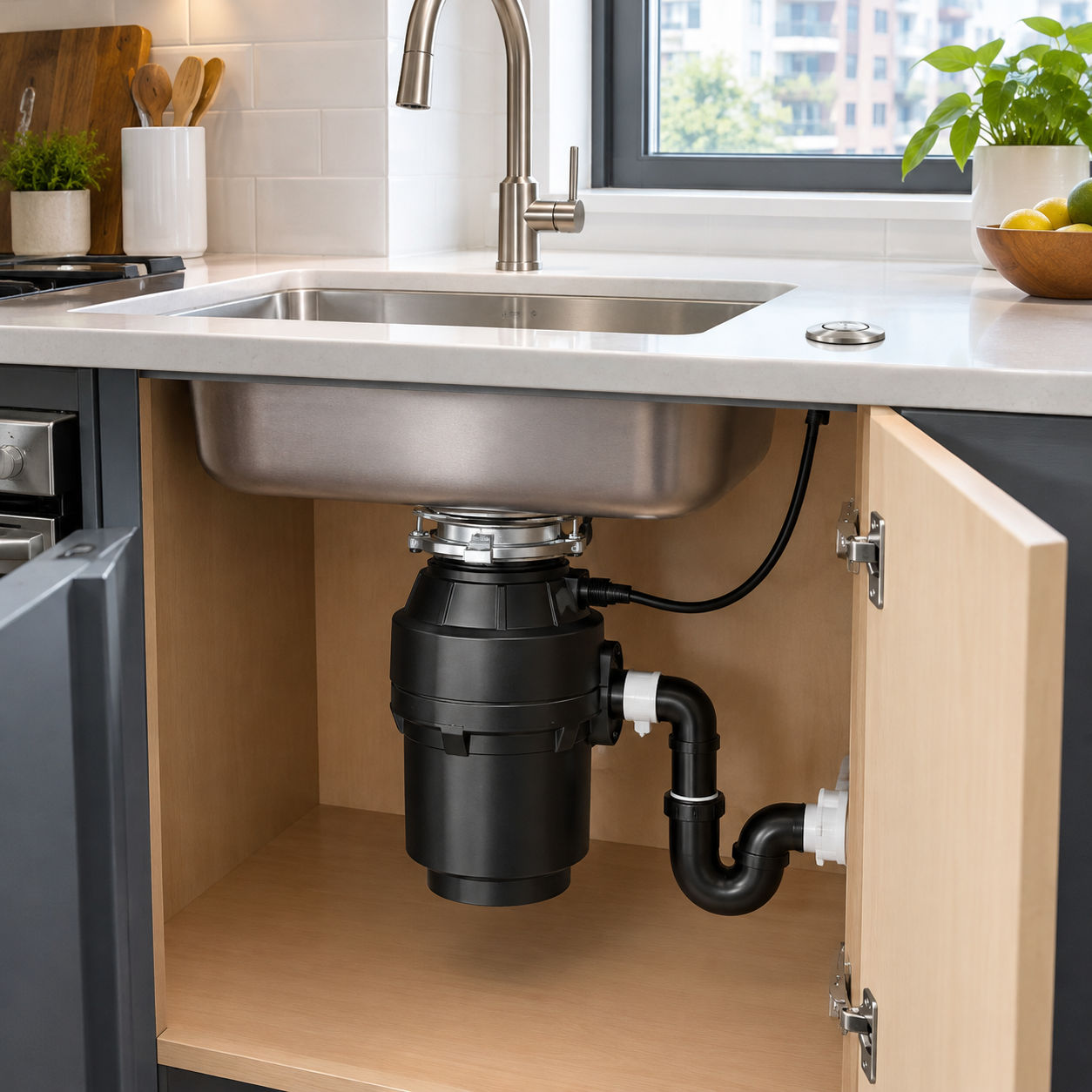
A common mechanical obstacle in compact rental kitchens involves the wall rough-in height for the waste line. Residential food disposers rely strictly on gravity drainage; the appliance does not pump wastewater out under mechanical pressure. The internal grinding chamber drains through a lateral outlet that must remain elevated above the wall waste connection point.
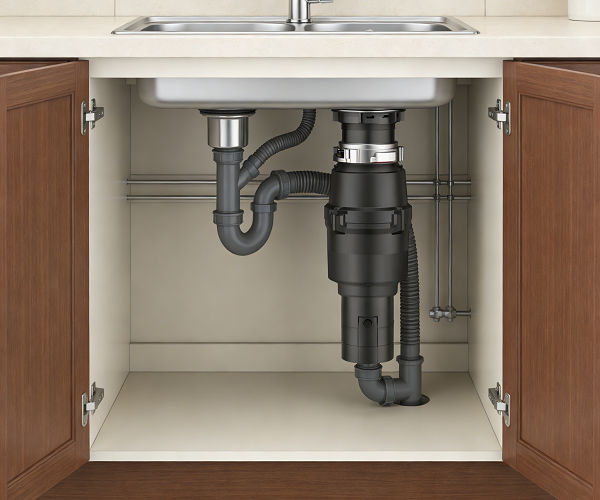
Disposer installation guidelines require that the wall drain connection sit lower than the disposer discharge outlet, maintaining a continuous downward slope. If the wall outlet is rough-in too high relative to the sink basin depth, water can pool inside the housing rather than running off freely. An improperly pitched drain line risks standing water, which can contribute to premature corrosion, unpleasant odors, or leakage.
Vertical Soil Stacks and Neighboring Run Clearances
Multi-family buildings feed multiple apartment drainage branches into shared vertical soil stacks. If a downstream lateral run encounters heavy solids, backed-up wastewater can emerge in neighboring units connected to that common horizontal waste branch. Apartment occupants must exercise caution regarding the quantity and consistency of ground food scraps introduced into the line.
Unlike standalone single-family homes where drainage blockages affect only one household, shared pipe stoppages can disrupt several adjoining dwellings and trigger building-wide plumbing repairs. Selecting equipment with controlled multi-stage grinding mechanisms helps shred food matter into finer particles, decreasing the likelihood that suspended organic solids settle along horizontal multi-unit branch lines before reaching the main stack.
Acoustic Isolation and Motor Mechanics
Airborne Versus Structure-Borne Resonance
Operating a food waste disposer inside an apartment creates two distinct acoustic transmission pathways: airborne sound and structure-borne vibration. Airborne noise escapes upward through the open sink drain, directly entering the living area. Meanwhile, mechanical vibrations radiate through the metal sink deck directly into adjacent kitchen cabinetry and shared interior partition walls, potentially disturbing residents in adjoining units.
When an unbalanced motor runs against a lightweight stainless steel sink deck, the basin can behave like a sounding board. Sound and vibration can travel through structural framing studs directly into adjacent rooms or neighboring apartments. Rubber isolation gaskets, balanced rotating assemblies, and factory acoustic wraps help reduce physical vibration transfer across adjoining surfaces.
Motor Technologies: AC Motors Versus DC Motors
Disposer drive units commonly use either alternating current (AC) motors or permanent magnet direct current (DC) motors. Both motor designs offer different mechanical characteristics across domestic installations:
- AC Motors: Often operate at fixed speeds governed by electrical line frequency, delivering steady operational torque across standard domestic kitchen tasks.
- DC Permanent Magnet Motors: Typically start with high initial rotational speed, utilizing permanent magnets to achieve compact internal physical dimensions within the appliance housing.
Actual operating speeds, torque delivery, and acoustic noise levels vary depending on individual product engineering, power supply frequency, sink mounting rigidity, and internal sound insulation rather than motor category alone. Consequently, apartment residents should review a specific model's rated sound output, structural mounting design, and electrical specifications instead of relying on broad generalizations about motor types.
Electrical Configurations and Countertop Switching
Circuit Sizing and Voltage Compatibility
Before purchasing a garbage disposal for apartment kitchens, examine the electrical outlet and electrical circuit available beneath the sink. Consult the specific appliance instructions and have a qualified electrician confirm that the existing under-sink circuit is suitable for the disposer; do not assume a dedicated branch circuit is required unless stipulated by manufacturer specifications or local electrical codes.
Export equipment and regional rental markets involve critical differences in utility voltage and frequency. In the United States, many residential branch circuits provide nominal 120V power at 60Hz. In contrast, many European, Asian, and Oceanic high-rise apartments utilize 220–240V utility systems at 50Hz. A disposer rated exclusively for 220–240V at 50Hz cannot be plugged directly into a standard U.S. 120V household outlet.
Pneumatic Air Switches and Integrated Controls
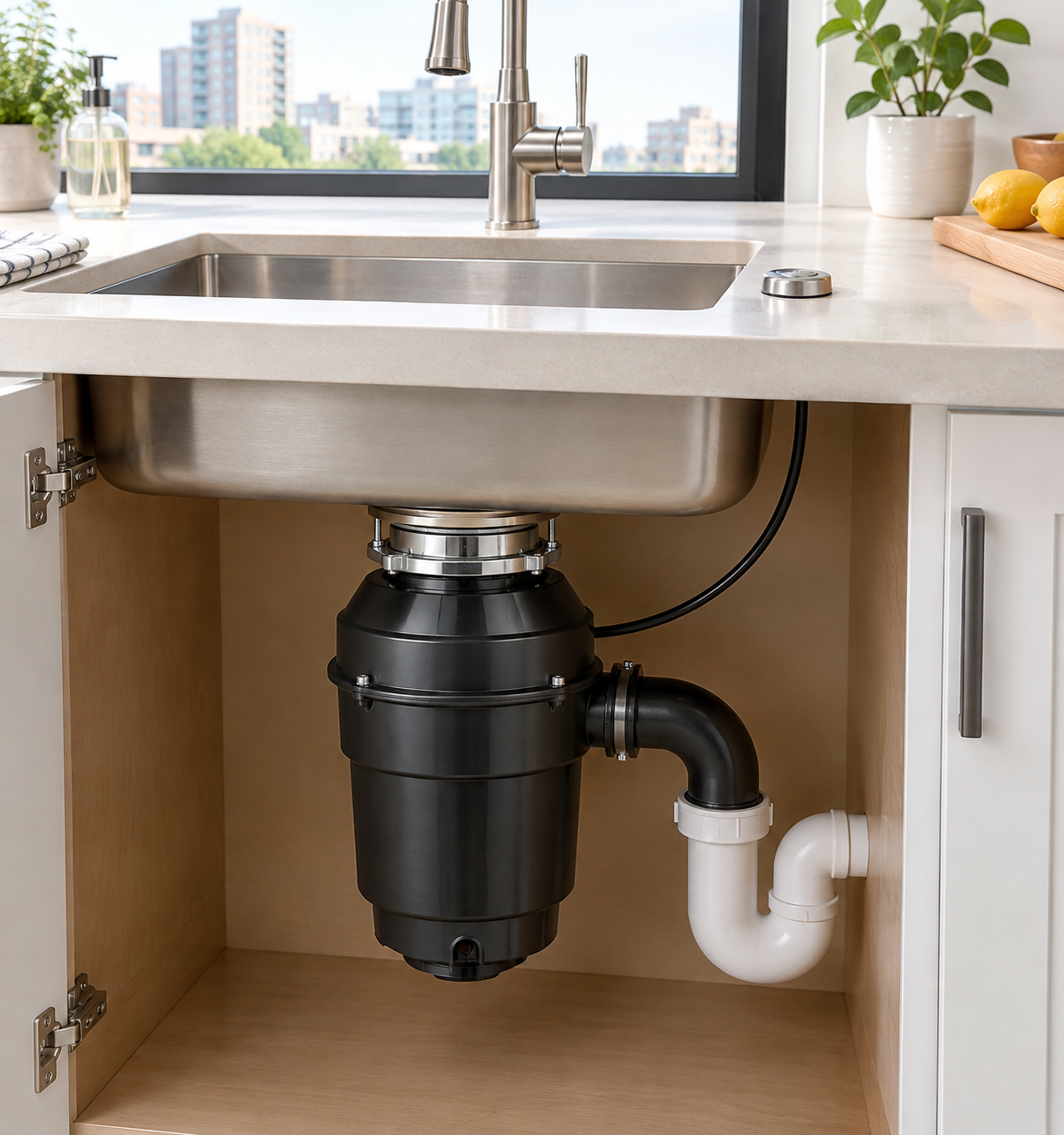
Older rental buildings rarely feature an existing wall switch placed safely near the sink basin to run an auxiliary disposal motor. Cutting into tiled kitchen backsplashes or running extra conduits through rental drywall constitutes invasive electrical work that building owners generally prohibit. Integrated pneumatic air switches offer a self-contained operational alternative.
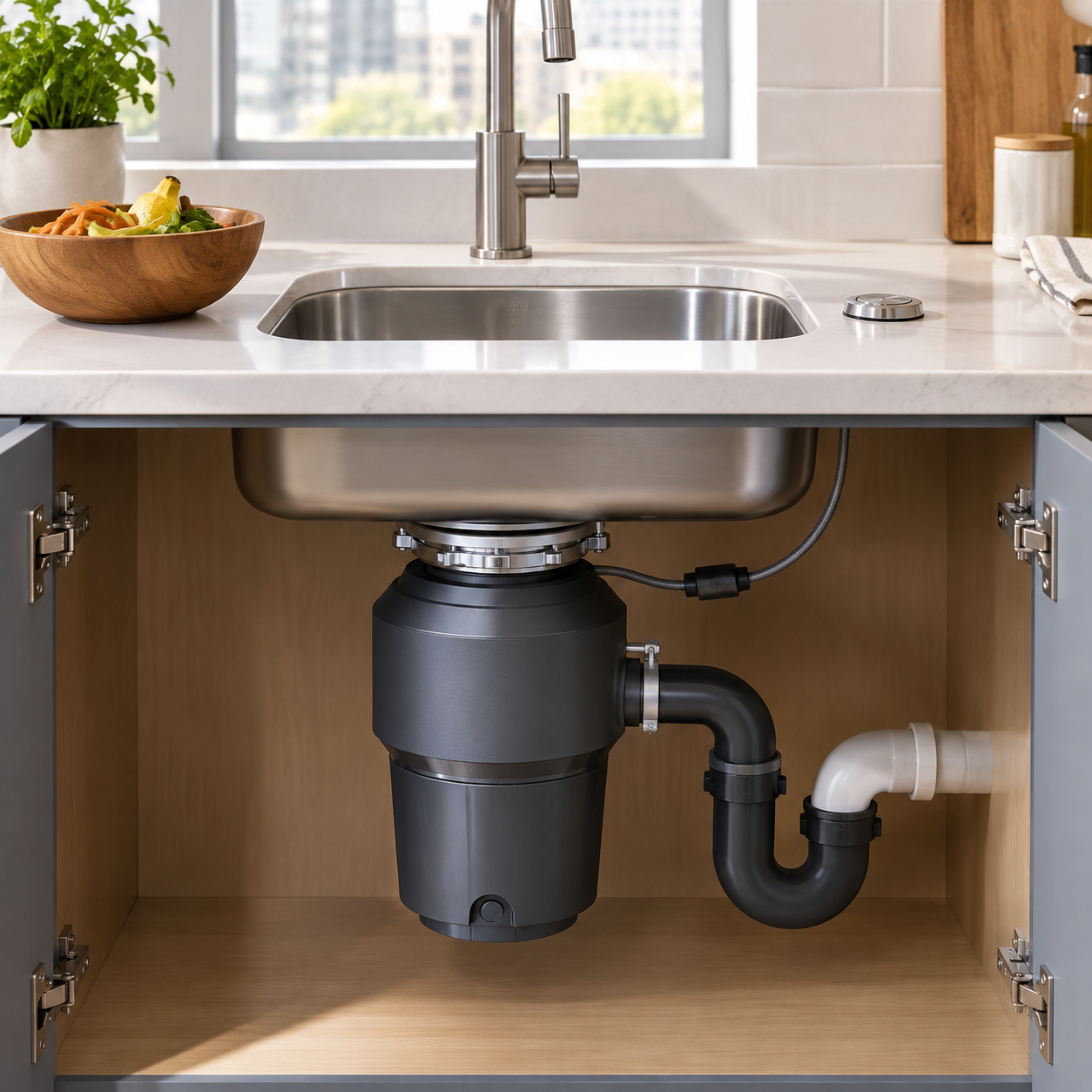
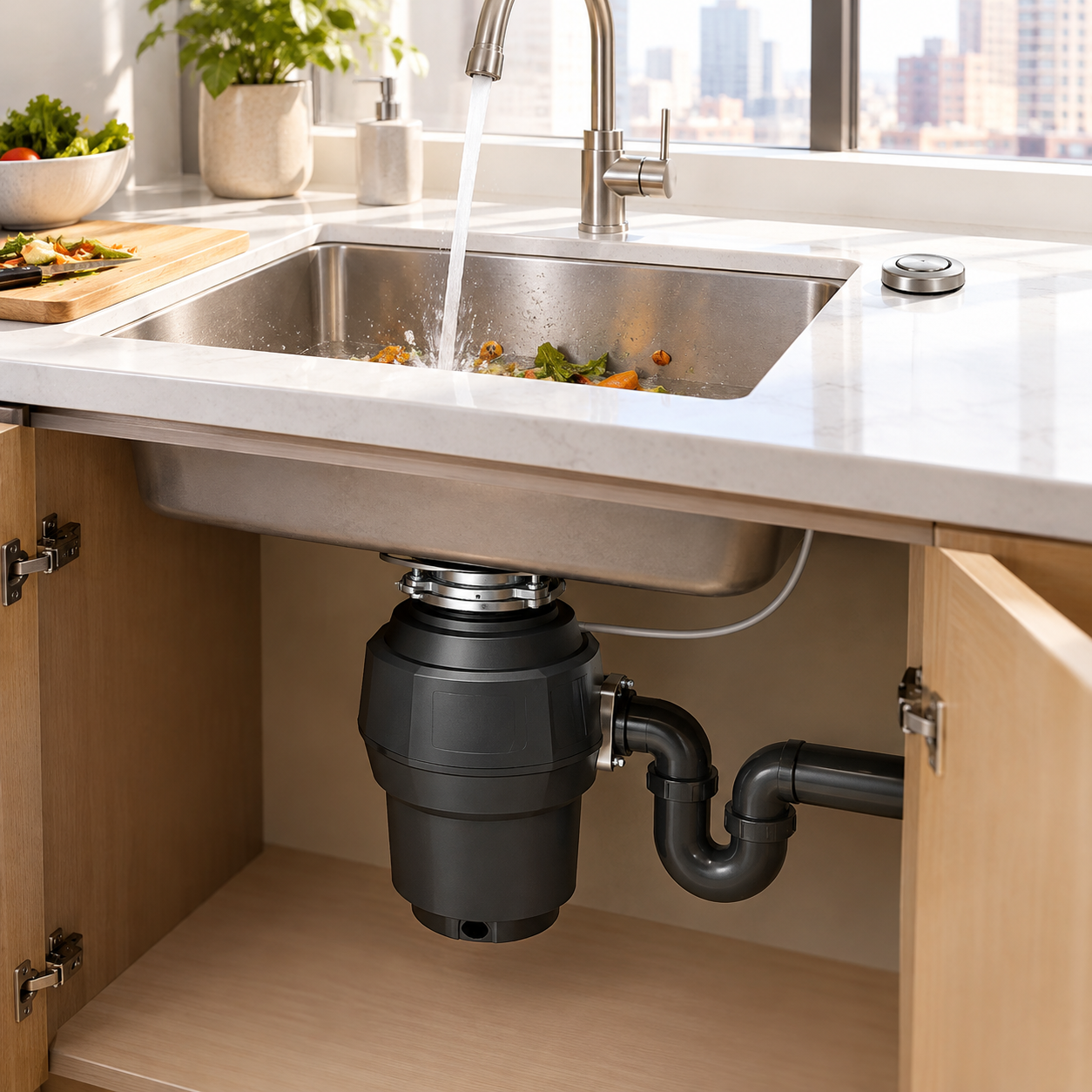
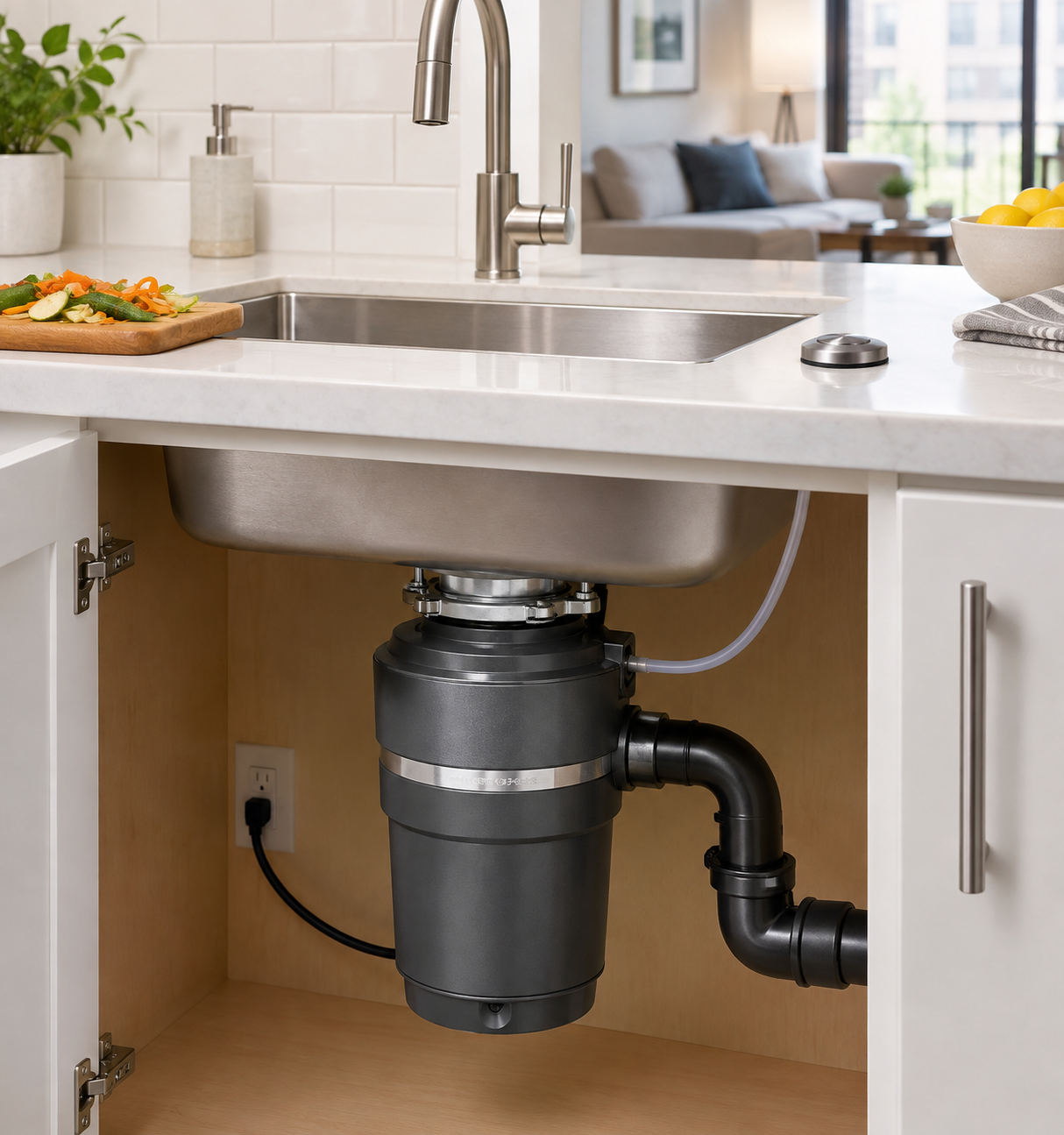
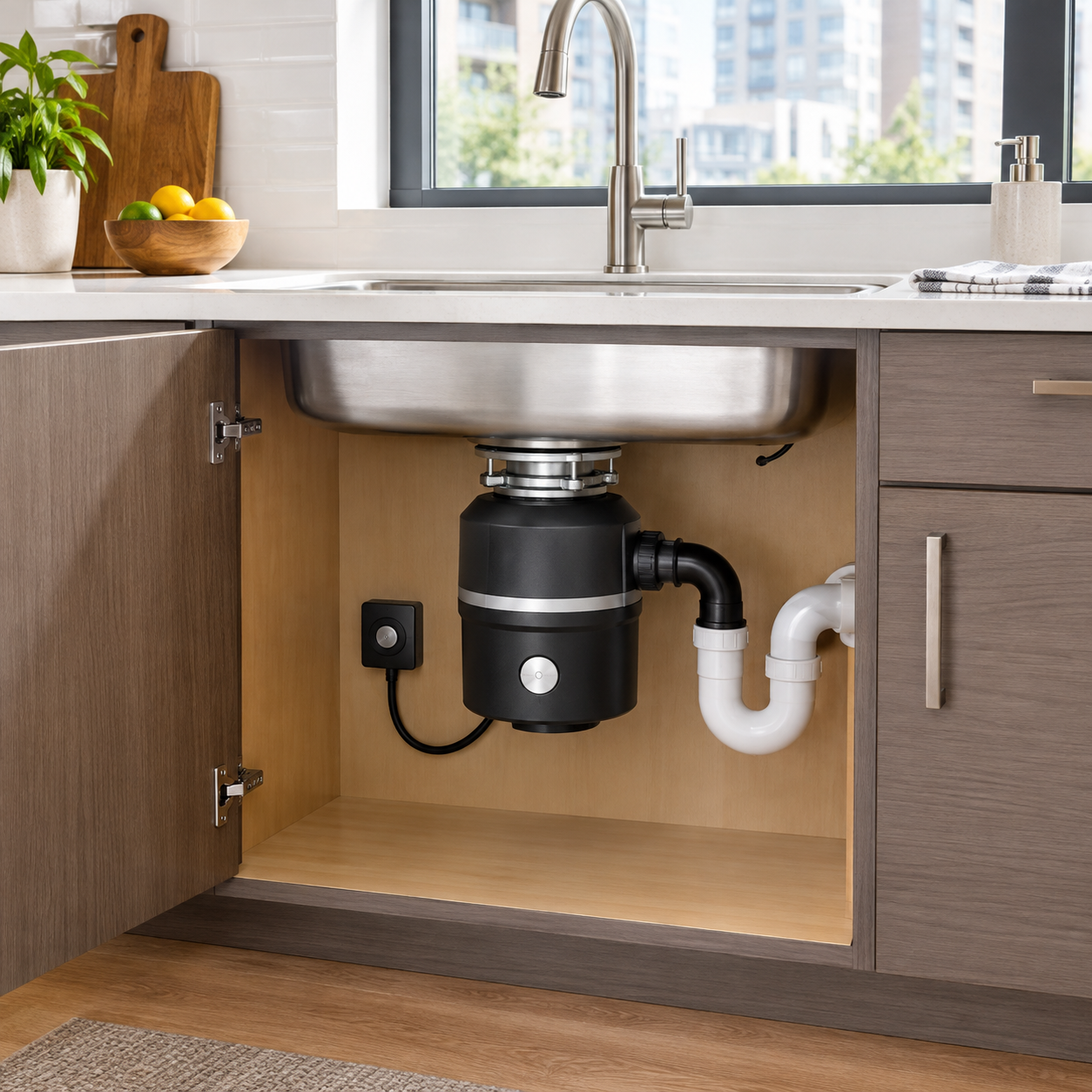
Pneumatic air switch assemblies rely on air pressure rather than direct electrical wiring on the countertop. Depressing the push-button sends a burst of air through a small, non-conductive flexible tube to an internal relay switch module. This pneumatic approach isolates the sink basin rim from live voltage lines, offering a clean setup without requiring alterations to rental room wiring.
Technical Profile: The Wasteclean FCA-520C
Motor and Grinding Parameters
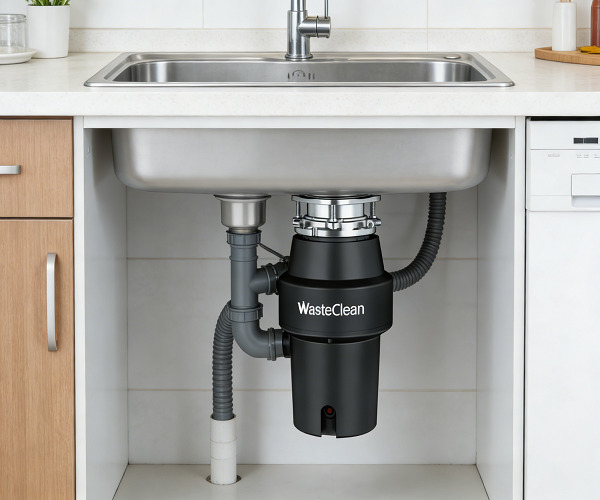
The Wasteclean FCA-520C manufactured by Foshan ZAL Intelligent Home Appliance Co., Ltd. provides a compact solution suited for apartment and condominium kitchens. Drawing on over 20 years of manufacturing experience, for us, product development centers on multi-family appliance integration across an annual production capacity exceeding 200,000 units and more than 30 distinct models.
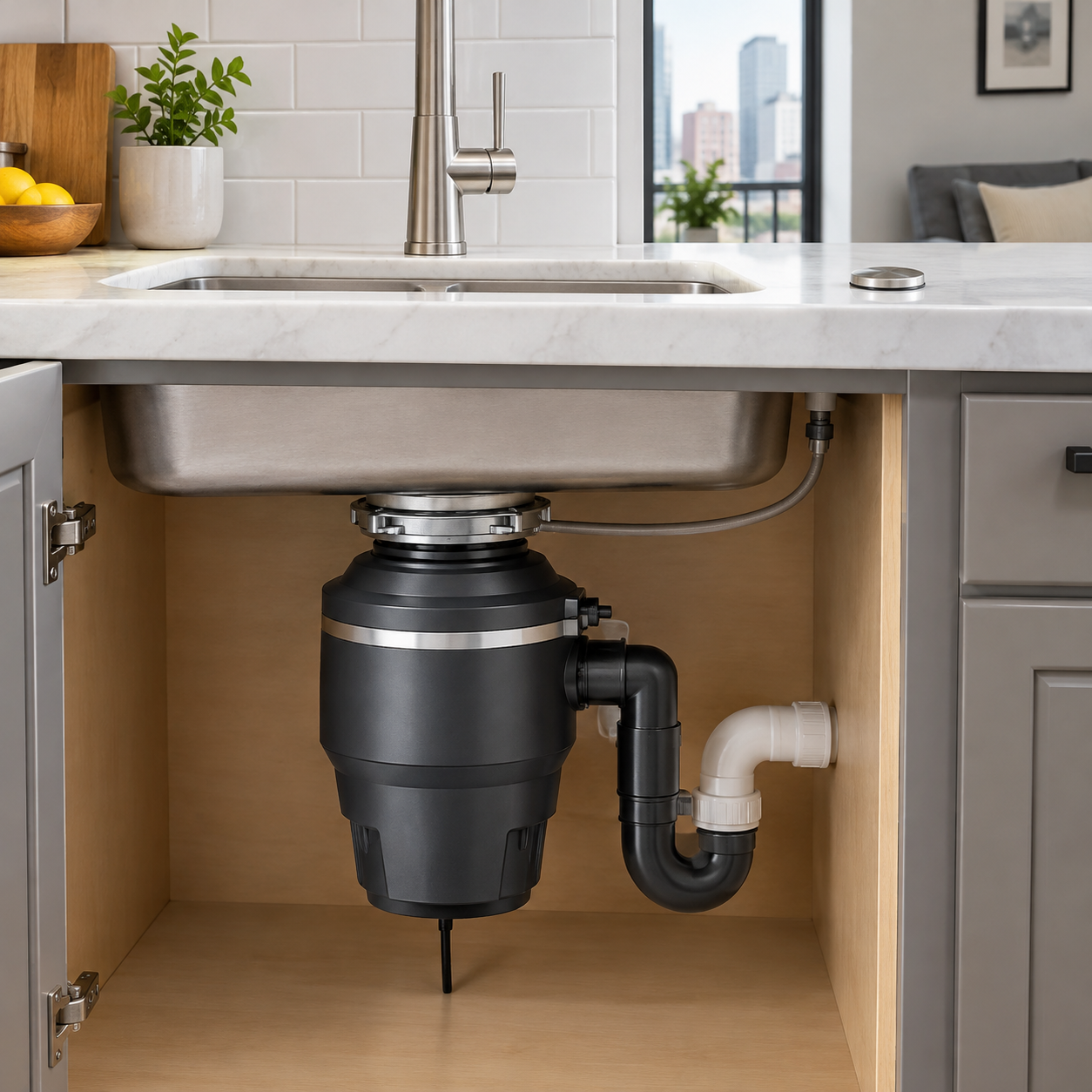
The FCA-520C operates on an AC motor rated at 370W (1/2 HP), engineered specifically for 220–240V electrical supplies at 50Hz. Under zero-load conditions, the motor reaches a specified 1425 RPM, settling to an operating speed of 1200 RPM under load. The model incorporates a 2-stage grinding mechanism with stainless steel swivel impellers. Product technical specifications list an operational sound rating of 58 dB, supported by internal silent design construction.
Material Composition and Dimensions
Cabinet constraints in urban rentals require controlled physical dimensions. The FCA-520C measures 175 mm in outer width by 325 mm in vertical height, maintaining a net weight of 6.7 kg for manageable under-sink positioning. The structural hopper is molded from polypropylene reinforced with 30% glass fiber (PP+GF30%), as detailed in the manufacturer technical specifications.
Key wet contact components—including the grind ring, turntable, sink flange, and stopper—are constructed from stainless steel, matching the product specifications for components exposed to culinary water and food scraps. In addition, the manufacturer specifications list an integrated air switch, with exact actuator and switching module placement determined by the model's installation instructions.
Engineering Specification Breakdown
| Feature Parameter | Wasteclean FCA-520C Specification |
|---|---|
| Motor Power Output | 370W (1/2 Horsepower) |
| Motor Architecture | AC Motor |
| Electrical Rating | 220–240V, 50Hz |
| Operating Speed | 1425 RPM (No Load) / 1200 RPM (Load) |
| Grinding System | 2-Stage Grind with Stainless Steel Swivel Impellers |
| Manufacturer Sound Rating | 58 dB |
| Exterior Dimensions | 175 mm width × 175 mm depth × 325 mm height |
| Total Net Weight | 6.7 kg |
| Material Construction | PP+GF30% Hopper; Stainless Steel Grind Ring, Turntable, Flange, Stopper |
| Operational Switch | Integrated Air Switch |
| Manufacturer Warranty | 1 Year Whole Unit, 3 Years Main Parts |
Practical Steps for Selecting an Apartment Disposer
Systematic Verification Sequence
To determine if an apartment garbage disposal will mount correctly and operate reliably under your kitchen sink, follow this step-by-step verification process:
- Check Lease and Management Policies: Confirm that food waste disposers are permitted under your residential lease contract and identify any installation licensing requirements.
- Verify Drain Drop and Rough-In Height: Measure the sink base against the wall drain inlet to ensure the disposer discharge sits higher than the wall opening with proper downward pitch.
- Confirm Flange and Sink Mounting Dimensions: Check your sink basin drain opening and mounting assembly dimensions against the FCA-520C product documentation to verify physical fit before mounting.
- Inspect Electrical Supply: Confirm whether the outlet beneath the sink delivers matching voltage and frequency (such as 220–240V at 50Hz for the FCA-520C) and have an electrician check circuit capacity.
- Assess Countertop Hole Availability: Determine whether an open faucet accessory hole exists or check if your rental agreement permits drilling a hole for the air switch button.
Evaluating Under-Sink Spatial Encroachment
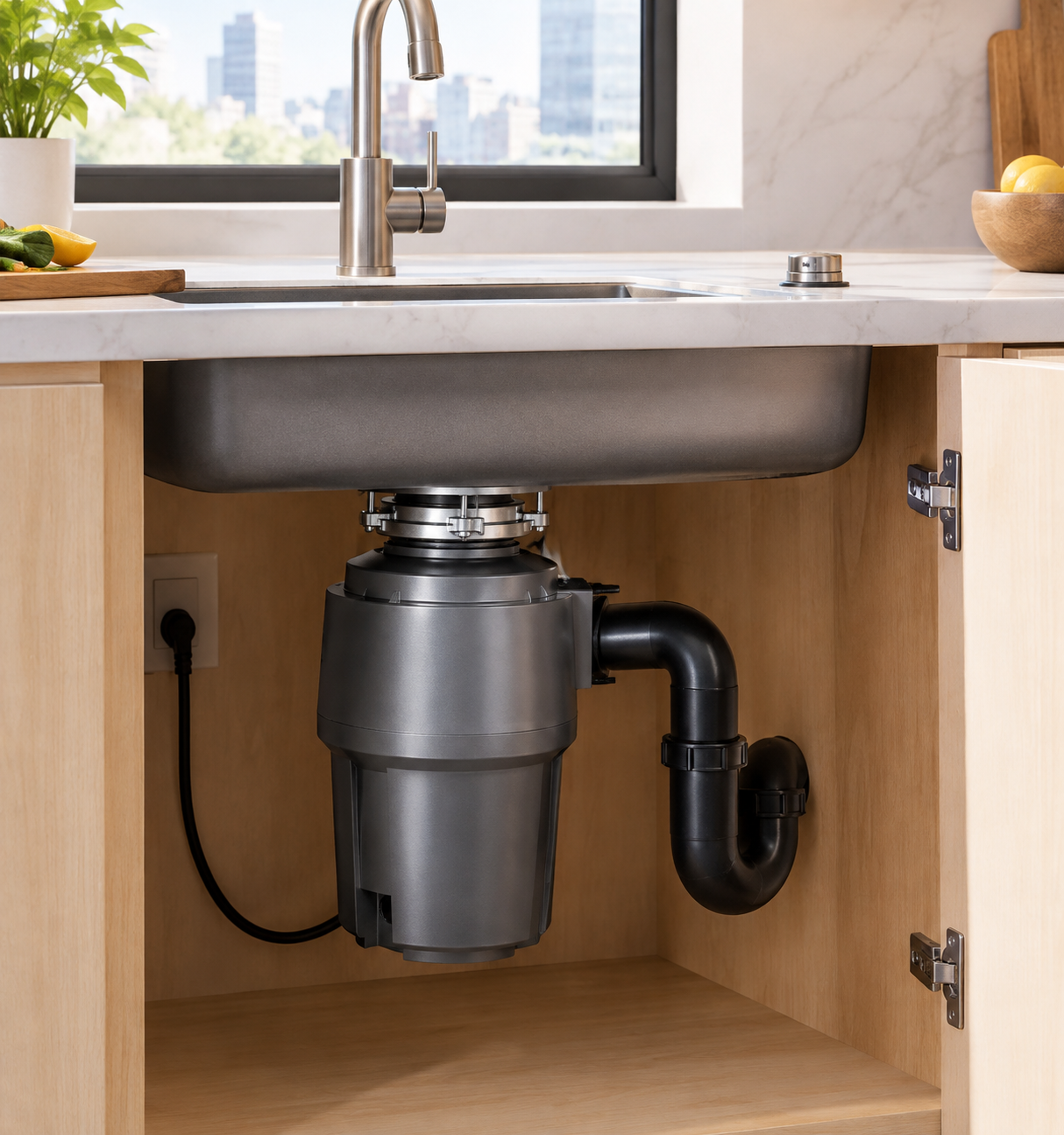
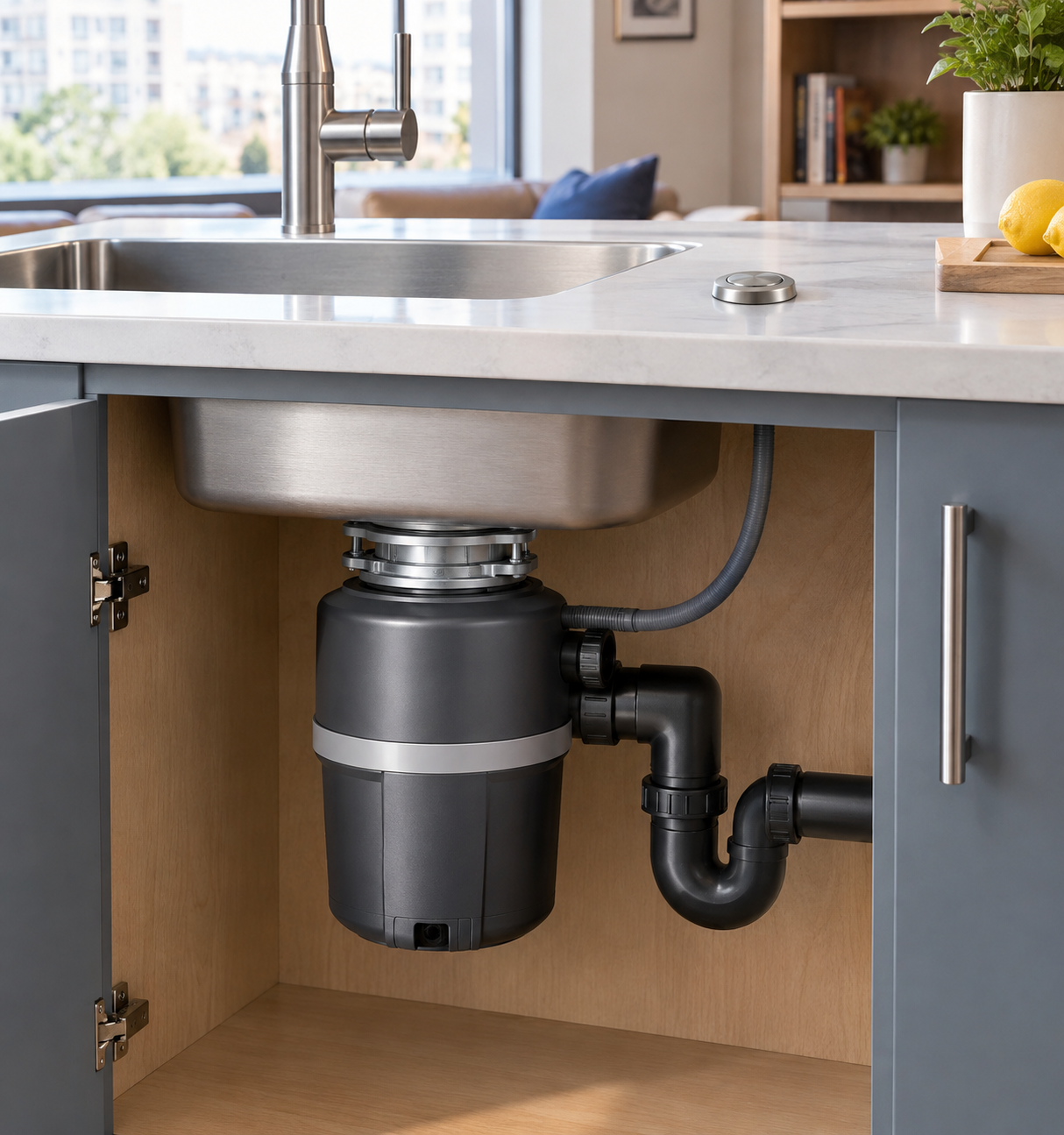
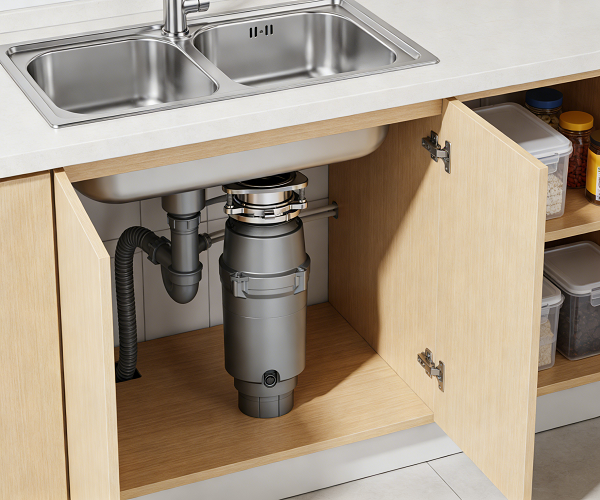
Beyond external height and diameter, an apartment sink cabinet must accommodate surrounding plumbing and storage fixtures. Modern kitchens frequently house pull-out trash slide rails, drinking water purification canisters, or instantaneous under-sink water heating tanks in the same enclosed cabinet volume, leaving restricted clearance for retrofitted appliances. A compact cylindrical profile, such as the 175 mm width of the FCA-520C, leaves practical clearance around the P-trap for ongoing drain inspection and plumbing access. By contrast, oversized disposer housings can crowd the cabinet floor, forcing connecting waste pipes into awkward angles that impair smooth gravity drainage.
Multi-Family Suitability Assessment Matrix
Evaluating an apartment layout requires weighing space availability against building characteristics. The following decision matrix assists in assessing whether a compact disposer matches your multi-family setup:
| Assessment Category | Ideal Apartment Conditions | Challenging Conditions / Action Required |
|---|---|---|
| Drainage Alignment | Wall drain connection is below the disposer discharge, with the downward pitch and trap geometry required by the model's installation instructions and local plumbing requirements. | Wall rough-in is level with or higher than discharge; re-piping or a shallower basin configuration is necessary. |
| Electrical Matching | Grounded outlet matches unit rating (e.g., 220–240V 50Hz for FCA-520C). | Voltage or frequency mismatch: select a disposer rated for the available supply; obtain professional verification before installation. |
| Sink Basin Space | Standard under-sink cabinet with minimal storage fixtures beneath the drain. | Cabinet crowded with water heaters or filters; measure spatial clearances prior to purchase. |
| Building Policy | Written landlord authorization or disposers permitted by building bylaws. | Modification prohibited by lease; use countertop composting or external organic bins. |
Wastewater Management and Clog Prevention
Multi-Unit Drainage Care Rules
Careful daily habits when using a garbage disposal for apartment plumbing protect shared multi-family drainage stacks from costly blockages. Horizontal branch runs in multi-story residential buildings collect sediment easily if waste is flushed with insufficient water. Users should follow clear kitchen management protocols:
- Run Cold Water Generously: Start a strong stream of cold water before activating the unit, maintain water flow during grinding, and keep water running for 10 to 15 seconds after grinding ends to flush the trap.
- Exclude Fibrous and Tough Scraps: Keep celery stalks, corn husks, artichoke leaves, and onion skins out of the grinding chamber; fibrous strands can pass through shredder holes and bind rotating impellers.
- Keep Fats, Oils, and Grease Out: Never pour liquid cooking fats or grease into the sink; warm oils cool inside common horizontal pipes, congealing into solid blockages that catch passing solids.
- Limit Dense Expandable Starches: Do not feed large quantities of rice, pasta, or potato skins into the disposer; these starches absorb moisture inside plumbing bends, creating thick obstructions.
Environmental Impact and Local Waste Management
Processing food scraps through a kitchen disposer introduces organic slurry into municipal wastewater treatment infrastructure rather than sending solid waste to landfills. Environmental outcomes depend heavily on local municipal wastewater treatment systems. When municipal facilities operate anaerobic digestion processes, collected sewage sludge can be converted into methane biogas for energy generation or processed into soil conditioning products.
However, in communities with combined storm and sewer overflow systems or aging wastewater infrastructure, heavy organic loading places substantial oxygen demand on treatment plants. The EPA categorizes drain disposal as having distinct environmental trade-offs compared to preferred strategies such as source reduction or organized municipal composting programs. Disposers provide practical daily convenience for perishable kitchen prep scraps, while bulk organic disposal should follow local composting guidelines where available.
Frequently Asked Questions (FAQs)
Can I install a garbage disposal in a rental apartment?
Installation depends on your lease agreement, local housing regulations, and existing plumbing configuration. Many rental property managers restrict tenant modifications to plumbing systems due to water damage liabilities. You should obtain written landlord permission, ensure that the building allows food waste disposers, and have a licensed professional confirm both plumbing pitch and circuit suitability.
What motor size is practical for typical apartment cooking?
A 370W motor (approximately 1/2 HP), such as the AC motor on the Wasteclean FCA-520C, is suitable for daily meal preparation in small households. It delivers sufficient power to grind soft fruit trimmings, vegetable scraps, and small plate remnants while keeping physical cabinet encroachment minimal compared to larger, heavier commercial-grade units.
How does a pneumatic air switch function?
A pneumatic air switch operates without running electrical wires to the sink deck. When the user depresses the countertop button, a pulse of air travels through a flexible air tube to a pressure-activated switching module. This air pulse triggers an internal microswitch to activate or deactivate the motor safely, isolating electrical contacts from wet fingers near the sink.
Why is my disposer humming without grinding?
Humming without rotation can indicate a mechanical jam, an electrical fault, or a starting component issue. Turn the disposer off and disconnect the power supply immediately before inspecting the unit. Never place your hands inside the grinding chamber; use a flashlight to check for blockages and follow the manufacturer-approved unjamming and manual reset instructions specified in the product manual. If the turntable rotates freely yet the motor continues to hum without running, or if humming persists after following the approved reset procedure, stop attempts and contact a qualified service technician.
What is the difference between 115V and 220V disposer models?
Disposer models are engineered for specific regional power standards. Common U.S. residential outlets supply 120V at 60Hz, whereas the Wasteclean FCA-520C is built for 220–240V systems operating at 50Hz, typical of European, Asian, and international electrical grids. Connecting a 220V appliance to a standard U.S. 120V outlet will cause the motor to underperform or fail, making voltage verification essential.
How should I clean and maintain an under-sink food waste disposer?
Turn the disposer off and disconnect the power supply before performing any surface cleaning or inspection. To maintain the unit, follow the cleaning and maintenance procedures specified in your model's user manual. Never insert your fingers into the grinding chamber, and avoid pouring caustic commercial drain cleaners or industrial acids into the machine, as corrosive chemicals can damage rubber splash baffles and internal seals.
Making an Informed Decision for Your Kitchen
Selecting an appropriate garbage disposal for apartment kitchens requires evaluating physical sink clearances, shared multi-family drainage dynamics, and regional electrical compatibility. Compact dimensions, an AC motor, and integrated pneumatic air switching make models like the Wasteclean FCA-520C an attractive option for modern multi-unit residences. Before buying an apartment garbage disposal, check your lease contract, verify proper drain drop height, and ensure your building's plumbing and electrical systems support reliable daily operation.
Related News
SUBSCRIBE
INQUIRY