
BLDC Garbage Disposals: Why Motor Type Changes How Your Kitchen Sink Performs
Anyone shopping for a new sink appliance eventually runs into a confusing split: induction motors versus BLDC garbage disposals. The difference sounds technical, almost irrelevant, until you've lived with a unit that stalls on a chicken bone or hums loud enough to interrupt dinner conversation. Motor architecture is the quiet variable behind noise, longevity, and jam resistance. Understanding it turns a guessing game into an actual decision.
What Makes a BLDC Motor Different
A brushless DC motor, or BLDC, swaps the physical brushes and commutator found in traditional brushed DC motors for electronic switching. There's no metal-on-metal contact spinning thousands of times a minute, which is the main source of friction, heat, and wear in brushed motor designs. Fewer moving parts in contact means less to degrade over years of daily use.
This isn't a marginal engineering footnote. Brushed motors lose efficiency as the brushes wear down, and that wear is cumulative and irreversible. BLDC motors sidestep that failure mode entirely, which is why they've become standard in everything from drones to electric vehicle components before trickling down into kitchen appliances.
The Jam Problem and How Reversal Solves It
Every disposal owner has experienced it: a fibrous vegetable or a stray fruit pit wedges the impellers, the motor whines, and nothing happens except a rising sense of dread. Traditional single-direction motors have no real answer to this besides manual intervention, often with a hex key jammed into the bottom of the unit.
BLDC garbage disposals address this with automatic forward and reverse rotation. When resistance spikes, the motor controller reverses direction momentarily, often dislodging whatever caused the blockage without the user touching anything. It's a software-driven response to a mechanical problem, which is a cleaner solution than brute force alone.
This matters more than it might seem on paper. Jams are the single most common reason people call a plumber for a disposal issue that didn't need one. Reducing jam frequency reduces service calls, which is a tangible, bank-account-level benefit rather than a vague performance claim.
A Closer Look: 1200W BLDC Disposer Specifications
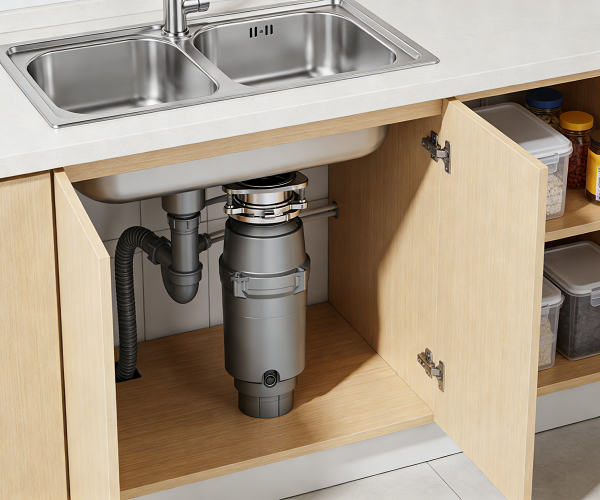
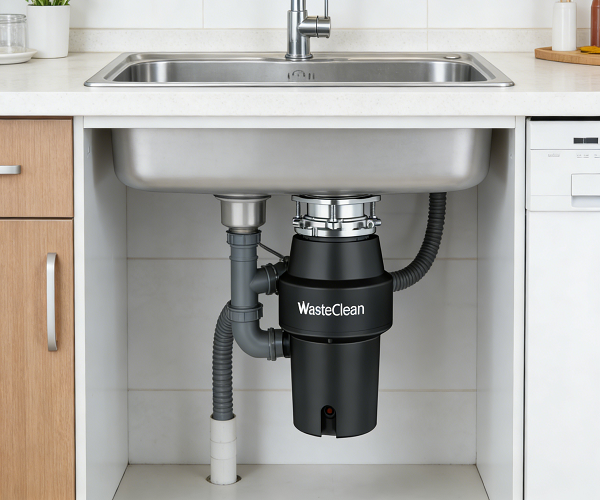
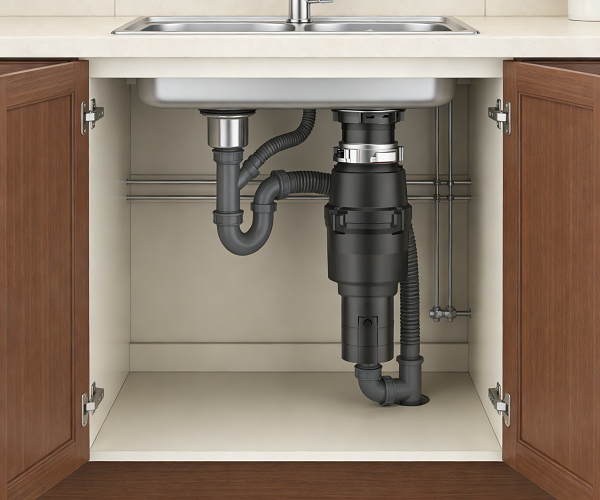
One example worth examining in detail is a 1200W household unit built around BLDC motor technology, designed specifically for sink installation. Its specifications illustrate what this motor category looks like in practice.
| Specification | Detail |
|---|---|
| Model | PCD-1200TS |
| Power | 1200W |
| Motor Type | Brushless DC (BLDC) |
| No-load RPM | 1500 |
| Load RPM | 3000 |
| Grinding System | 2-Stage Grind |
| Grinding Capacity | 1300ml |
| Noise Level | 45dB |
| Control Options | Air switch / customized remote control |
| Product Dimensions | 165 x 165 x 300mm |
| Net Weight | 5.5kg |
The jump from 1500 RPM at no-load to 3000 RPM under load is worth pausing on. It means the motor controller actively ramps up speed the moment it senses resistance, rather than running at a flat speed regardless of what's being ground. That's a form of adaptive control that fixed-speed motors can't replicate as easily.
Noise: The Underrated Deciding Factor
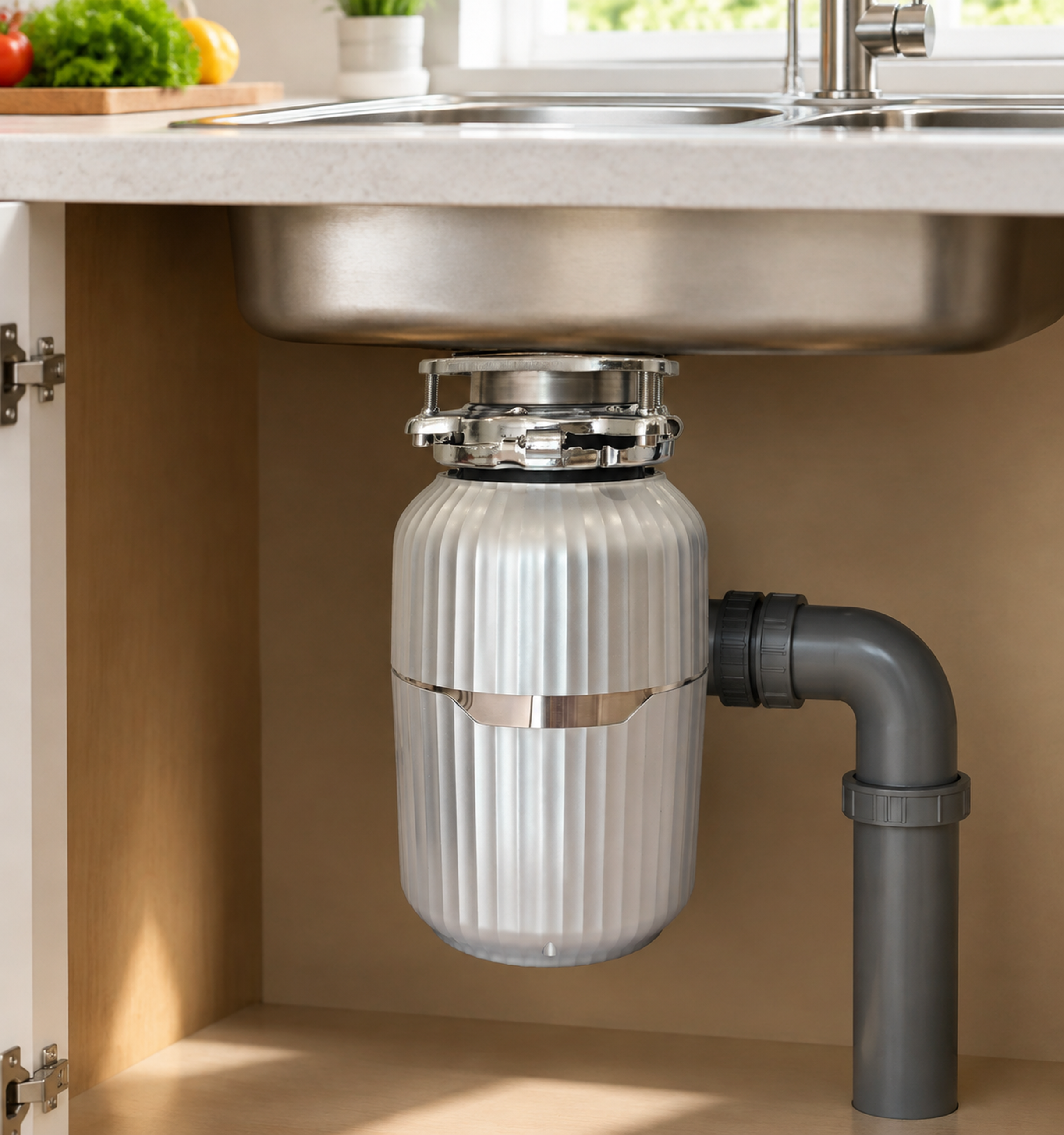
Open-plan kitchens have made disposal noise a bigger issue than it used to be. A unit grinding away at 70dB plus is disruptive during a phone call or a quiet breakfast. According to the product specifications above, this BLDC unit operates around 45dB, which sits closer to a quiet conversation than a vacuum cleaner.
Lower noise with BLDC motors isn't accidental. Without brushes scraping against a commutator, a major source of mechanical vibration and whine disappears. The grinding chamber and shredding process still make noise, obviously, but the motor itself contributes far less to the overall racket than older designs.
Smart Shutdown and Why It Matters for Safety
Beyond jam resistance, intelligent grinding control is another feature tied to BLDC architecture. The motor's electronic controller can monitor load and automatically shut the unit down once grinding is complete, rather than relying entirely on the user to judge when the job is done.
This has a practical safety angle too. Disposals left running empty, or running longer than necessary, waste energy and accelerate wear on the grinding components. A system that senses completion and powers down reduces that risk without requiring the household to pay close attention every single time.
Choosing Between Air Switch and Remote Control
Most BLDC garbage disposals, including the 1200W model referenced here, offer dual control: a traditional air switch mounted on the counter, or a customized remote control. Deciding between them comes down to a few practical questions.
- Is counter space limited, where a compact air switch button is easier to integrate than a separate remote?
- Does the household include anyone who struggles with reaching under-counter buttons, where a remote offers more flexibility?
- Is the kitchen prone to wet countertops, where an air-activated switch (which uses air pressure rather than direct electrical contact at the button) adds a layer of safety?
There's no universally correct answer. Air switches are simpler and have a long track record. Remote control adds convenience but introduces another small device to keep track of.
Grinding Capacity and Everyday Kitchen Use
A 1300ml grinding capacity, paired with a two-stage grinding system, positions this unit for standard household food scrap volumes: vegetable peels, coffee grounds, small bones, and similar organic waste. Two-stage grinding typically means waste passes through an initial shredding phase before a finer secondary pass, which helps prevent larger pieces from escaping only partially broken down.
For a typical family kitchen, this capacity range handles daily cooking waste without requiring multiple grinding cycles for a single meal's cleanup. Larger households or commercial kitchens would need to look at higher-capacity, heavier-duty equipment, but for residential sink installation this falls within a sensible, well-matched range.
Where BLDC Disposers Fit in a Modern Kitchen
Three scenarios tend to come up most often when people are deciding whether to upgrade:
- Replacing an aging, noisy disposal that jams frequently and has started drawing complaints from the rest of the household.
- Renovating a kitchen and wanting appliances that align with a broader smart-home upgrade, where quieter and more responsive hardware fits the rest of the setup.
- Managing daily organic kitchen waste more efficiently, particularly in households that cook from scratch and generate consistent vegetable and food scrap volume.
In each case, the underlying motor technology is doing more work than people initially realize. It's not just about raw power; it's about how that power is delivered, moderated, and reversed when something goes wrong.
Frequently Asked Questions
Does a BLDC motor last longer than a standard motor in a disposal?
Brushless designs avoid the brush wear that limits traditional brushed motors, which generally supports a longer practical service life, though actual longevity also depends on usage patterns, installation quality, and maintenance.
Will a 1200W BLDC disposer handle bones and fibrous vegetables?
The combination of a 2-stage grinding system and auto forward/reverse rotation is specifically designed to manage tougher or stringier waste that would otherwise jam a single-direction motor.
Is a quieter disposal always a BLDC model?
Not necessarily, since cabinet insulation and installation also affect perceived noise, but BLDC motors remove a significant mechanical noise source compared to brushed alternatives, which is reflected in the 45dB rating noted above.
Can the remote control be customized for different markets?
According to the product specifications, the remote control option is offered as a customizable feature, which suits OEM and ODM buyers needing region-specific configurations.
Sourcing BLDC Disposal Units for Distribution
For importers, distributors, and brands evaluating this motor category for their own product lines, manufacturing background matters as much as the spec sheet. Foshan ZAL Intelligent Home Appliance Co., Ltd. has spent over two decades focused specifically on food waste disposers, running an annual production capacity above 200,000 units across more than 30 models.
For us, that experience translates into practical support: low minimum order quantities, OEM and ODM customization including branded components and packaging, and compatibility with international certification requirements across multiple voltage and plug standards. Brands sourcing BLDC garbage disposals for new markets are working with a product category that still has room to differentiate, through control options, grinding capacity, and build quality, rather than one that has already been commoditized into sameness.
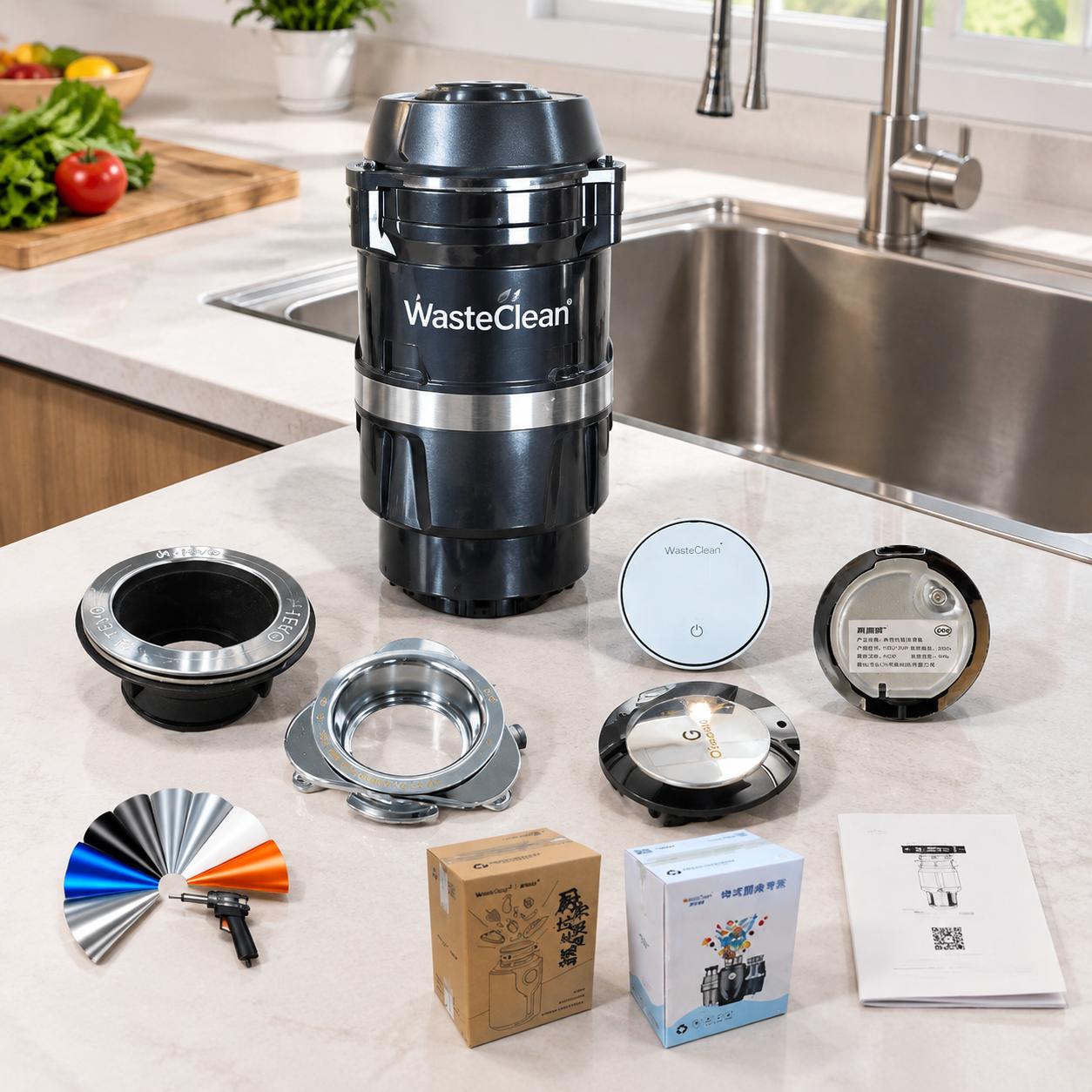
The motor inside a disposal unit rarely gets a second thought until something goes wrong, a jam, a burnout, an unbearable whine during a quiet dinner. BLDC garbage disposals were built around solving exactly those failure points, trading mechanical wear for electronic control and giving both households and the brands that sell to them a more dependable foundation to build on.
Related News
SUBSCRIBE
INQUIRY