
Behind the Sink: Understanding and Selecting a Kitchen Waste Disposer
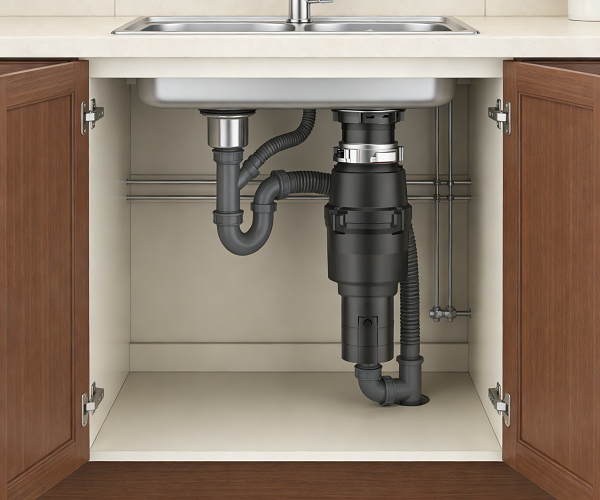
Dealing with food scraps often leads to foul odors and messy trash bins. A kitchen waste disposer mounts directly under your sink, grinding food particles into flushable pieces. Finding the right unit requires more than just picking the highest horsepower available.
Why Do Drains Still Clog After Installation?
Many homeowners assume any disposal unit handles all organic matter. This misconception often results in severe plumbing blockages. Fibrous foods like celery or starchy potato peels wrap around internal impellers, creating dense blockages within the chamber.
Think of a lawnmower attempting to cut thick, wet ropes. The blades spin quickly, but the material simply tangles and stops the motor entirely. Modern units avoid sharp blades, using blunt metal impellers to sheer waste against a stationary grinding ring.
Even with thorough grinding, inadequate water flow causes hidden issues. Particles need a specific water velocity to travel down horizontal drain pipes. Without sufficient flushing, heavy food slurry settles at the bottom of the PVC pipes, hardening over time.
DC vs. AC Motors: Matching Power to Cooking Habits
Motor design dictates how your kitchen waste disposer handles daily loads. High-speed continuous feed units behave differently from batch feed models. Understanding these physics helps prevent unexpected jams during heavy dinner preparation.
Direct Current (DC) motors achieve maximum RPM almost instantly. They excel at quickly pulverizing lighter, mixed food scraps before jams can even occur. This rapid speed creates a powerful centrifugal force, throwing waste aggressively against the outer shredding ring.
Alternating Current (AC) motors operate at lower speeds but deliver significantly higher torque. This sustained twisting force handles dense materials like chicken bones with much less vibration. Heavy-duty AC motors usually weigh more, requiring robust sink flanges for proper structural support.
Technical Specs That Actually Matter
Evaluating technical parameters helps bridge the gap between marketing claims and real-world performance. You should focus on specific interior components rather than the exterior housing aesthetic.
-
Grind Stage: Multi-stage grinding reduces particle size significantly, which prevents municipal sewer line blockages.
-
Chamber Capacity: Standard household usage typically requires a grinding chamber between 900ml and 1200ml.
-
Noise Insulation: Look for closed-cell acoustic foam damping rather than basic plastic exterior shields.
-
Component Material: Stainless steel grinding components resist corrosion far better than galvanized steel in high-moisture environments.
| Specification | Standard Home Use | Heavy Cooking Use |
|---|---|---|
| Motor Power | 1/2 HP | 3/4 HP to 1 HP |
| Grind Stages | 1 to 2 stages | 3 stages |
| Chamber Size | Under 1000ml | Over 1200ml |
A Manufacturer's Perspective on Global Sourcing
Behind the retail labels, producing reliable appliances relies on rigorous supply chain management. Different geographical markets require specific voltages, distinct plug types, and stringent safety certifications.
For us, over 20 years of research and large-scale manufacturing experience means we confidently provide OEM and ODM services. Supplying global international brands, importers, and distributors requires producing over 200,000 units annually while maintaining strict quality control.
We support low minimum order quantities and flexible customization across more than 30 different models. Being a core supplier for leading home appliance brands like Midea validates our large-scale production reliability, independent manufacturing capabilities, and stable delivery times.
Frequently Asked Questions on Daily Operation
How much water should I use during operation?
Always run a steady stream of cold water before, during, and after the grinding process. Cold water solidifies animal fats, allowing the grinding ring to shatter them easily. Hot water melts grease, which later coats and clogs your plumbing pipes.
What causes unexpected motor hum without any grinding?
A humming sound indicates a jammed flywheel. A small foreign object usually wedges between the rotating impeller and the shredder ring. An Allen wrench inserted into the bottom motor shaft often clears this tension manually.
Are septic systems compatible with these sink appliances?
Yes, but proper sizing and usage habits matter immensely. Micro-organisms in septic tanks need time to break down solid matter. Certain specialized models inject bio-enzymes during each cycle to accelerate this decomposition process safely.
Effective Long-Term Maintenance and Care
Proper usage dictates the overall lifespan of your sink appliance. Tossing citrus peels and a handful of ice cubes periodically helps scour the grinding chamber naturally. This abrasive action removes hidden residue and eliminates lingering sink odors.
Avoid chemical drain cleaners at all costs. Harsh acidic liquids deteriorate the internal rubber seals, eventually causing water leaks directly into the motor housing.
Disclaimer: The plumbing and maintenance advice provided in this article is based on general industry knowledge and is for reference only. Always consult your specific local municipal codes regarding food waste discharge.
Related News
SUBSCRIBE
INQUIRY